


Safe Night Driving: Avoid a Crash With These Tips
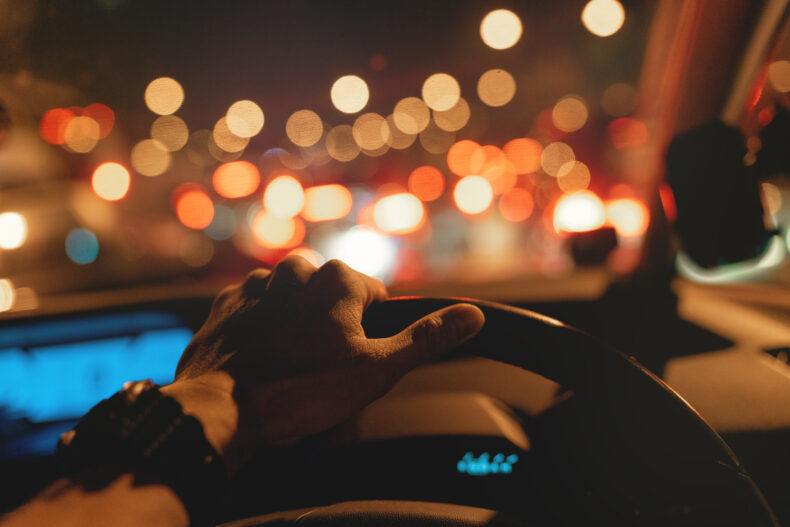
It’s “Fall Back” time! When Daylight Saving Time ends, clocks will be pushed back an hour. For many commuters, this means driving home from work or school in the dark.
Driving at night presents many challenges, including a lack of depth perception and peripheral vision. Nighttime driving also signals an uptick in accidents caused by fatigue and impairment. Although most driving is done during the day, roughly half of all fatal car accidents occur at night. Weekends, especially Saturday nights, pose the highest risk.
However, with an awareness of common dangers and some precautionary measures, you can drive safely at night.
Risks of Night Driving
Driving at night is dangerous—even for experienced drivers. Your vision is worse at night, making it harder to see and respond to sudden movement.
Impaired Night Vision
As we age, our ability to see in low-light conditions worsens. Adults over 60 may find driving at night even more challenging due to cataracts, age-related macular degeneration (AMD), and glaucoma. According to the American Optometric Association (AOA), these are ways older drivers can stay safe while driving in darkness:
- Be careful at intersections
- 降低速度
- Take a driving course for seniors
- Have an annual eye exam
Fatigue
Drowsy driving is very prevalent at night, as many workers are returning home after a long day at work. According to the Centers for Disease Control (CDC), drowsiness affects your judgment, slows your reaction time, and makes you less able to pay attention to the road. The frequency of drowsy driving also makes it much more dangerous. In a survey, the CDC reported that 1 in 25 adult drivers admitted to falling asleep while driving in the last 30 days. Combat driver fatigue by drinking caffeine, turning on the radio, or pulling over in a safe area.
Drunk Driving
In 2023, there were 12,429 DUI fatalities. According to traffic safety research, a majority of fatal crashes involving drunk drivers happen on weekends between the hours of 12 a.m. and 3 a.m. In California, as well as most other states in the U.S., drivers are considered to be alcohol-impaired when their blood alcohol concentration (BAC) is 0.08% or higher. Drivers 21 to 24 years of age have the highest level of involvement in drug and alcohol-related crashes. If you plan on consuming alcohol, call a rideshare service or ask a sober friend for a ride home.
Rush Hour
Evening rush hour, which is around 4 p.m. to 7 p.m., means more congested roads, agitated drivers, and speeding. In fall and winter, these problems can intensify because it gets darker earlier. L.A., San Francisco, and San Diego have some of the worst rush-hour traffic in the country. To avoid an accident during rush hour, drive defensively, leave enough room between you and the vehicle in front of you, and eliminate distractions.
Wildlife
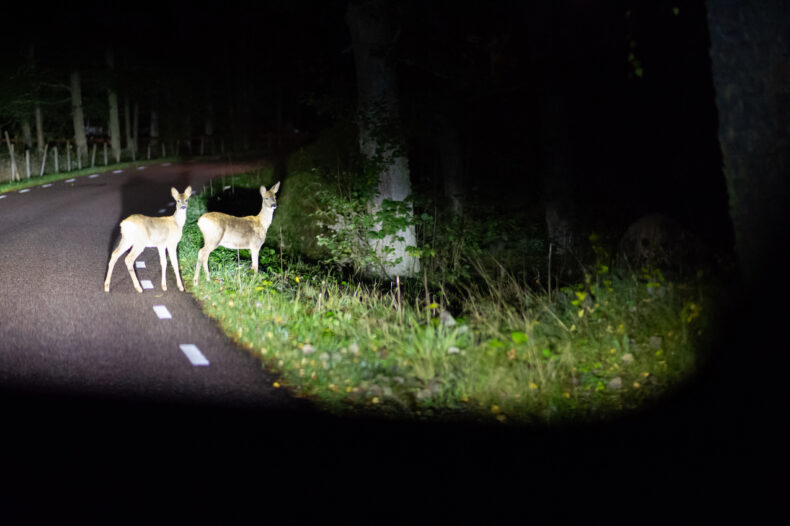
If you live in a city or a densely populated area, you probably aren’t at risk of encountering any wildlife. However, in more rural areas, you may encounter deer or other animals. If you see an animal on the road, slow down and stop. Avoid swerving, as you will likely lose control of your vehicle.
Safety Tips for Nighttime Driving
Driving at night can be safe as long as you are taking the proper precautions. Follow these tips for a smooth and secure nighttime drive:
Slow Down and Use Signals
This is why you need to slow down to compensate for limited visibility and reduced stopping distances. You also need to use your turn signals and brake lights to communicate your intentions to other motorists. Avoid sudden or erratic movements that may confuse or startle other drivers.
Take Care of Your Eyes
If you wear glasses, make sure they have an anti-reflective coating, which stops unnecessary light from reflecting inside your lenses. While yellow-tinted night driving glasses supposedly reduce glare and enhance contrast, they also make distinguishing objects and road hazards more difficult, so they are not recommended. When driving at night, avoid looking directly at oncoming headlights or bright streetlights, as they can temporarily blind you or cause eye fatigue. Blink frequently and keep your eyes moving if your eyes feel strained or dry.
Use High Beams If There Is No Oncoming Traffic
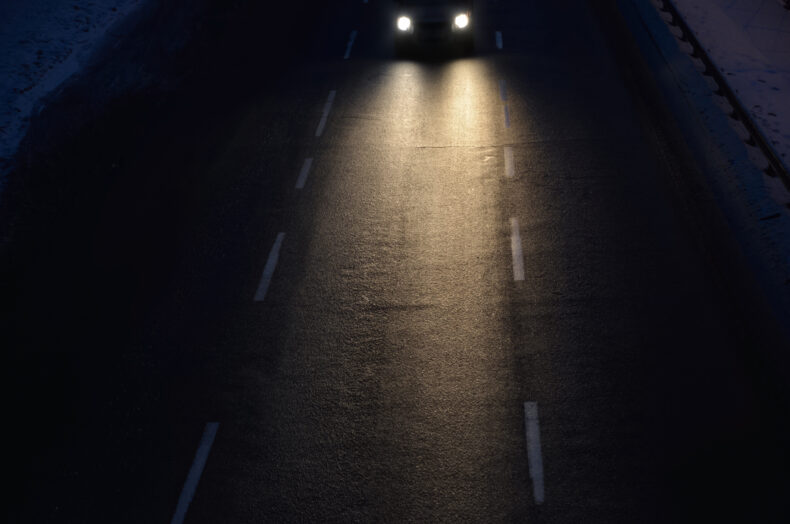
For rural or open roads, you can use your high beams to improve your visibility and see farther ahead. However, you should never use your high beams while driving behind another car or when there is an oncoming vehicle, as you may blind oncoming drivers and create a hazard. Switch to low beams when you see another car approaching or when you are within 500 feet of another car.
Adjust Your Headlights
Make sure your car’s headlights are properly aligned and aimed. If they are too high or too low, they may not illuminate the road well or may blind other nighttime drivers. You should also keep your headlights clean and replace them if they burn out. Check your car’s owner’s manual for instructions on how to adjust and properly aim your headlights. Don’t stare at oncoming lights.
Keep Your Windshield and Mirrors Clean
A dirty windshield and exterior mirrors can worsen the glare and decrease visibility. Eliminate streaks, dust, and dirt by cleaning your windshield and mirrors regularly with a microfiber cloth or newspaper. You should also replace your windshield wipers if they are worn out or damaged.
Avoid Two-Lane Highways
Two-lane highways are more dangerous at night, as drivers are more likely to be impacted by headlight glare from oncoming cars. These roads also have more head-on collisions, as drivers may drift into the opposite lane or try to pass other vehicles without enough visibility. If possible, avoid driving on two-lane highways at night and opt for a safer route.
Dim Your Cabin Lights
The bright light of an infotainment screen can make it harder to spot objects on the road. Glancing from the dashboard to the dark road ahead can also be disorienting. Dim your interior lights at night so they do not become distracting. You can also set your cell phone and other devices to night mode.
Were You in a Nighttime Car Accident?
Let’s face it: car accidents are stressful. If you suffered injuries as a result of someone else’s negligence, you may be able to recover financial compensation in a car accident claim.
DK Law is here to assist you in recovering everything you need to return your life to normal. We have locations in 科斯塔梅萨, 阿纳海姆, 以及 艾恩伍尔. Call us to schedule a free case evaluation by phone at (844) 223-9975 or fill out this online contact form.
DK 一路走来


从您的案件到赔偿,我们全程为您服务。
安排免费咨询
在专家法律咨询处获得专业法律建议 零成本。.
在DK Law,我们与您同在—— 全程都在。.
立即与我们的专家免费咨询!

事故发生后时间很重要
事故发生后越早与律师联系,你的索赔就越有胜算。及早行动有助于保全证据并维护你的权益。.
无需支付费用即可获得法律援助 | 24×7全天候服务