America’s AI Data Center Boom: The 8 Warning Signs to Watch
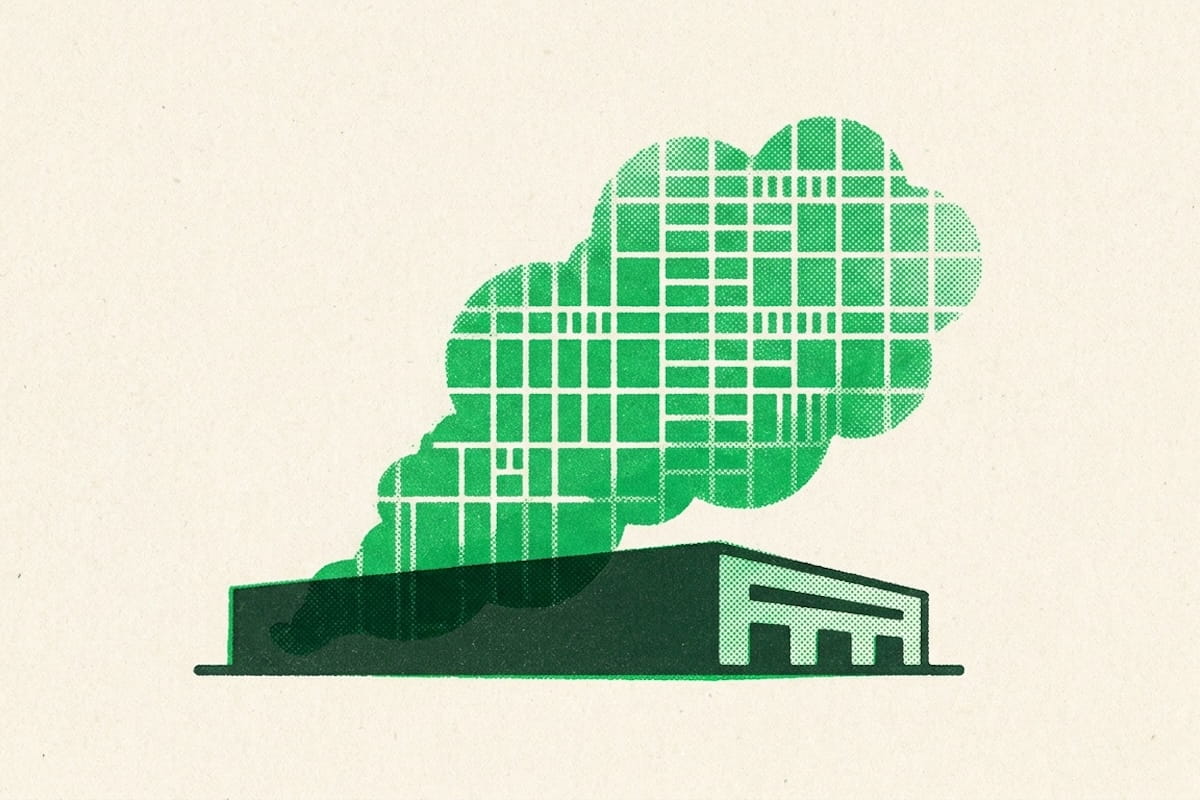
Standfirst (dek): Governments in Ireland, the Netherlands, Singapore, and Canada moved to restrict data centers years before anyone called it an AI boom. In June, voters in one Los Angeles County city did it themselves.
In July 2019, the city of Amsterdam did something no major technology hub had done. Without warning, it froze all new data center construction inside its borders, along with neighboring Haarlemmermeer. The Dutch data center industry, which had spent a decade marketing itself as a sustainability success story, was blindsided. Singapore imposed its own moratorium that same year. Ireland’s grid operator stopped issuing new connections around Dublin in early 2022 and kept that freeze in place until December 2025, by which point data centers were consuming 22 percent of Ireland’s metered electricity, more than every home in the country combined.
Then it started happening in Canada. British Columbia announced in October 2025 that it would permanently bar new crypto mining from the BC Hydro grid and cap what AI facilities could draw. Quebec, which had already shut the door on crypto miners, passed legislation consolidating ministerial control over who gets electricity. And this past June, Manitoba’s premier killed a 500-megawatt project proposed south of Winnipeg, one that would have run six natural gas turbines around the clock. His stated reason was blunt: a big threat to the environment, not much benefit to the economy.
None of those were activists chaining themselves to fences. Those were governments, utilities, and elected officials, some acting years before the phrase “AI data center” entered common use.
California has approved more of this infrastructure than almost anywhere on earth. What the state did in October 2025 was pass SB 57, which directs the Public Utilities Commission to study whether the cost of serving data centers is being pushed onto everyone else’s electricity bill. Findings are due January 1, 2027. Earlier versions of that bill would have actually done something. Those provisions were stripped.
So Californians did it themselves. On June 2, voters in Monterey Park passed Measure NDC, banning data centers citywide. The proposal that started it was a quarter-million-square-foot facility on Saturn Street that residents were told would have tripled the entire city’s electricity use. The developer withdrew before the vote. “We had a victory landslide,” said Steven Kung, who co-founded the opposition group. His next target is City of Industry, where officials are courting a facility of their own.
There is a version of this story everyone already thinks they know, and it involves Erin Brockovich, a water utility, and a cancer cluster in the desert. Hold that thought, because the real Hinkley case is not what the movie taught people, and the difference is the whole point.
Here is what can and cannot be said right now. Nobody has shown that a data center has made anyone sick. That claim is not available, and anyone making it is ahead of the evidence. But every environmental scandal that turned out to be real shared three features: an exposure with established health effects, a documented record of concealment, and a latency period long enough that nobody could prove harm while it was happening. The scares that turned out to be nothing were missing the first two. Data centers currently have all three at once. That is not proof of harm. It is the precise set of conditions that has historically kept harm from being found until decades too late.
Eight signs, roughly ordered by how well documented each one is.
1. The secrecy is not incidental. It is the operating model.
In Rosemount, Minnesota, officials spent more than a year discussing something called “Project Bigfoot.” The city rezoned land without publicly saying what would go on it. Meta worked through a front company called Jimnist LLC, and a company representative emailed the University of Minnesota under the alias “Ken Confidential.” In Beaver Dam, Wisconsin, the local economic development corporation signed a nondisclosure agreement with a shell called Balloonist LLC in December 2023 that referred only to “a project.” Residents found out roughly fourteen months later.
Louisiana went further. Governor Jeff Landry personally signed an NDA with Meta covering the $50 billion Hyperion campus, negotiated through a shell named Laidley LLC. The confidentiality terms reached financial and tax provisions, meaning public money. The document also treated its own existence as a secret.
2. The exposures are ordinary, and their health effects are not in dispute.
Hyperscale campuses run diesel backup generators by design, often hundreds per site. The California Air Resources Board identified diesel exhaust particulate as a Toxic Air Contaminant in 1998, and its current accounting attributes roughly 520 of every 730 excess cancer cases per million from California’s airborne toxics to diesel alone. That is about seventy percent of the state’s air toxics cancer risk from one source category.
Facilities burning gas instead emit nitrogen oxides, which the EPA has concluded causally contribute to asthma developing in children, plus fine particulate matter, for which the agency tightened the national standard in February 2024 from 12.0 to 9.0 micrograms per cubic meter on cardiovascular and mortality evidence.
None of that is contested science. It is the ordinary regulatory consensus on the pollutants these buildings are licensed to release.
3. What is permitted and what is happening are very different numbers.
This one needs unpacking, because it is easy to state badly.
Loudoun County, Virginia holds roughly 4,700 permitted backup generators. Virginia’s own legislative research arm found data centers were running them at an average of about seven percent of what their permits allow. The industry points to that and says, correctly, that the generators mostly sit idle. Fine. But a permit shows what’s legally allowed, not what’s actually happening day to day. It’s a ceiling, not a current reading. Having unused capacity like this isn’t unusual for backup infrastructure of any kind; hospitals, factories, and data centers typically hold permits well above their routine use, since backup systems exist for rare events.
What matters here is that facilities could scale up toward that remaining ninety-three percent without applying for a new permit, undergoing additional review, or notifying anyone. The authorization is already granted and already sitting there.
That gap only matters if the ceiling is likely to be approached. So watch which direction the rules move. In December 2025, Virginia’s environmental agency proposed letting those generators run during planned outages, not just emergencies. That expands when they may legally fire. In the most data-center-dense county on earth, the movement is toward more permitted running, not less.
4. Environmental review is being skipped, including here.
Alberta waived the environmental impact assessment outright for its Wonder Valley project, a facility approved to draw six million cubic meters of water a year.
California has its own version. The Imperial County project, a roughly 950,000-square-foot facility next to a housing development and within a mile of schools and parks, advanced on a ministerial grading permit paired with a Notice of Exemption, the filing an agency makes under the California Environmental Quality Act to declare that a project falls outside environmental review entirely. No impact report, no study of air quality or water draw. Developer Sebastian Rucci’s position is that data centers fit the existing industrial zoning, so approval is his by right.
The City of Imperial sued over the CEQA review. The Sierra Club sued. Residents formed a group and gathered more than 3,400 signatures. And in June, the county reversed itself, declaring a 45-day moratorium and convening a commission to write actual zoning rules. Rucci moved immediately for a restraining order against the moratorium, calling it defective, and has separately sued the City of Imperial for what he describes as sabotage.
The ballot measure is worth being precise about, because it has not worked. Residents filed the Imperial County Data Center Prohibition Act with the Registrar of Voters on April 2, proposing to bar facilities drawing five megawatts or more in unincorporated parts of the county. On April 30, five other county residents sued to stop it from circulating at all, arguing it violates California’s single-subject rule by bolting an ethics code and criminal penalties onto a land-use ban. It has not reached signature gathering. It has not halted the project. Monterey Park’s measure passed because a city council drafted it narrowly and put it on the ballot itself. Imperial County’s is stuck in court.
5. If a health problem emerged, nobody would catch it.
This is the structural sign, and the one that should worry people most.
There is no ambient air monitoring around most of these facilities. No baseline health data is gathered before they open. No agency assesses cumulative impact when several campuses cluster in one airshed. Most jurisdictions have no noise standard capable of measuring the tonal hum residents actually complain about.
Monterey Park is the exception that proves the rule. The city had to vote to commission an environmental impact report itself, because nothing in the ordinary process was going to produce one.
Cancer registries exist, and they work, but they detect large signals late. The apparatus for catching a slow, distributed, moderate effect near an industrial neighbor does not meaningfully exist in this country.
6. The political money is enormous, and the local spending is more interesting than the federal.
At the federal and national level, spending is large, but outcomes for industry have been mixed. Meta spent $26.29 million on federal lobbying in 2025, more than any other company in any industry. A super PAC called Leading the Future launched in August 2025 with more than $100 million from Andreessen Horowitz, OpenAI president Greg Brockman, and others, raising $125 million in its first year.
To be clear about what that money has and has not accomplished: Congress has twice declined to preempt state AI regulation. The Senate stripped a preemption provision by a vote of 99 to 1 in July 2025, a month before the super PAC existed. The industry lost that fight badly. What it did instead was go to the executive branch, and in December an order created a Justice Department task force to challenge state AI laws in court. That order specifically carves out state and local rules governing data center infrastructure, so the preemption effort is aimed at AI regulation, not siting.
At the local level, where actual siting decisions happen, the numbers are much smaller but arguably more consequential. In Imperial County, the developer put $10,000 behind his own spokesperson’s campaign for the board of the region’s public water and power utility, the body that would decide what the project gets to draw. Ten thousand dollars is nothing to a hyperscale developer. In a local utility board race, it is a great deal of money.
7. The public is paying for it, at a spectacular price per job.
A Good Jobs First study of eleven data center megadeals found subsidies averaging $1.95 million per job. More than thirty-six states now offer data-center-specific tax exemptions, some running forty years. Texas and Virginia each forgo roughly a billion dollars annually. Several states that bothered to calculate return on investment concluded they lose money on the arrangement.
8. And when something goes wrong, the response tells you what you need to know.
Beverly and Jeff Morris live about a thousand feet from Meta’s data center in Newton County, Georgia. After construction began, their water pressure dropped, then their taps ran dry, then what came out carried grit. They spent roughly $5,000 trying to fix it. A replacement well runs about $25,000.
It’s worth being clear about what’s actually contested here before going further. A dropping water table can pull sediment into a well pump for reasons unrelated to a nearby facility, and nobody with subpoena power has investigated which explanation fits this case. Causation here is genuinely contested, and the company’s defense is not frivolous.
Meta sent a community relations manager, offered a well study, fixed some lighting, and took no responsibility for the water issue. When Beverly Morris said she was afraid to cook with the water, the employee suggested boiling it. Meta disputes that account of the conversation.
The Morrises were never going to be able to prove hydrogeology against a company with Meta’s resources, and so far, no one with the authority to compel an independent investigation has tried.
What would have to be true for all of this to be nothing
Public alarm about environmental exposure doesn’t always turn out to be warranted, and those cases are worth understanding too. Wind turbine syndrome is one example: reported symptoms don’t line up with how close people actually live to turbines, and the research points more toward expectation than to infrasound itself. Power lines and childhood leukemia, cell phones and brain cancer, and silicone breast implants and autoimmune disease followed a similar path: initial concern followed by larger, more rigorous studies that didn’t confirm the link.
What these cases have in common is that no one ever established a plausible way the exposure could cause the harm, and no evidence ever surfaced that a company or agency had hidden what it knew. The concern came first, and the underlying mechanism never caught up to it.
Now compare the ones that were real.
Leaded gasoline. Workers died at a New Jersey refinery in 1924. A federal review two years later found no danger and the bans were lifted. A geochemist named Clair Patterson raised the alarm again in 1959. The Senate held hearings in 1966. Regulation began in 1973 and the ban was not complete until 1996. Roughly fifty years from first bodies to finished job.
Or take the chemicals now known as PFAS, short for per- and polyfluoroalkyl substances, the “forever chemicals” that made Teflon nonstick, Scotchgard stain-resistant, and firefighting foam effective. They do not break down, and they accumulate in human blood. Internal company documents later showed 3M understood by the 1970s that these compounds were toxic and building up in people’s bodies. A 1981 DuPont memo recorded that among children born to women working with the chemicals at its Parkersburg, West Virginia plant, some had birth defects. None of that reached the public for roughly two decades. It surfaced through litigation in the early 2000s, became widely known through the case dramatized in the film Dark Waters, and in 2023 3M agreed to pay up to $10.3 billion to settle drinking water claims from American utilities.
The pattern in both is not that scientists missed something. It is that somebody knew, said nothing, and the clock ran.
The industry’s strongest counterargument deserves stating plainly: measured emissions near data centers have generally come in low. In Memphis, the city’s own testing found pollutant levels below thresholds even as the NAACP sued xAI over 27 gas turbines it says were installed without permits. That lawsuit is worth watching for a separate reason. The Justice Department has moved to intervene and dismiss it, arguing that enforcing the Clean Air Act belongs to the executive branch rather than to private citizens.
What the movie got wrong
Everyone remembers Hinkley as a cancer cluster. It was not one. The California Cancer Registry examined the town and found 196 cancers where 224 would have been expected. No excess. The epidemiology never delivered the smoking gun the film implies.
Six hundred forty-eight people recovered $333 million anyway, in a 1996 arbitration, because the case was never really about proving what chromium did to any particular body. It was about what Pacific Gas and Electric knew, what it told people, and the distance between those two things. Brockovich won on the documents, not the diagnoses.
She now runs a crowdsourced map of data center complaints, and it is worth saying that a self-reported map proves nothing about any individual facility. What it shows is where people are asking questions.
There is no data center case right now. Not in California, not anywhere. Anyone telling injured Californians otherwise is selling something.
But the question was never whether these buildings cause cancer. It is whether anyone would be positioned to find out if they did. Right now the answer is no, and the documents are being signed under NDA. Monterey Park’s answer to that was to stop waiting for someone else to check.
What could your case be worth?
Get a quick estimate in under 2 minutes
내게 필요한 정보 찾기
가까운 지점 정보, 교통사고 대처 상식, 상해 종류 별 정보 등 교통사고 관련 모든 정보를 한 곳에 모았습니다.
내 주변 지점 찾기
여러분 가까이에서 DK Law가 함께하는 지역을 찾아보세요

DK Law 전문 분야 찾기
교통사고부터 부당한 사망까지, DK Law의 주요 전문 분야를 직접 확인해보세요.

DK Law에서 함께 합니다.
DK all the way
지금 바로 교통사고 전문 변호사와 무료 상담을 받아 보세요!

교통사고 보상, 시간이 관건입니다!
사고 후 대처가 빠를수록, 교통사고 보상 더 잘 받을 수 있습니다. 사고의 초기 대응이 증거 보존 및 피해자 권리 보호에 큰 도움이 됩니다.
승소하지 않으면 변호사 선임료 $0 | 24시간 상담 가능