


기업들은 비즈니스 환경을 위해 텍사스로 이주했다. 하지만 법적 환경을 확인한 사람은 아무도 없었다.
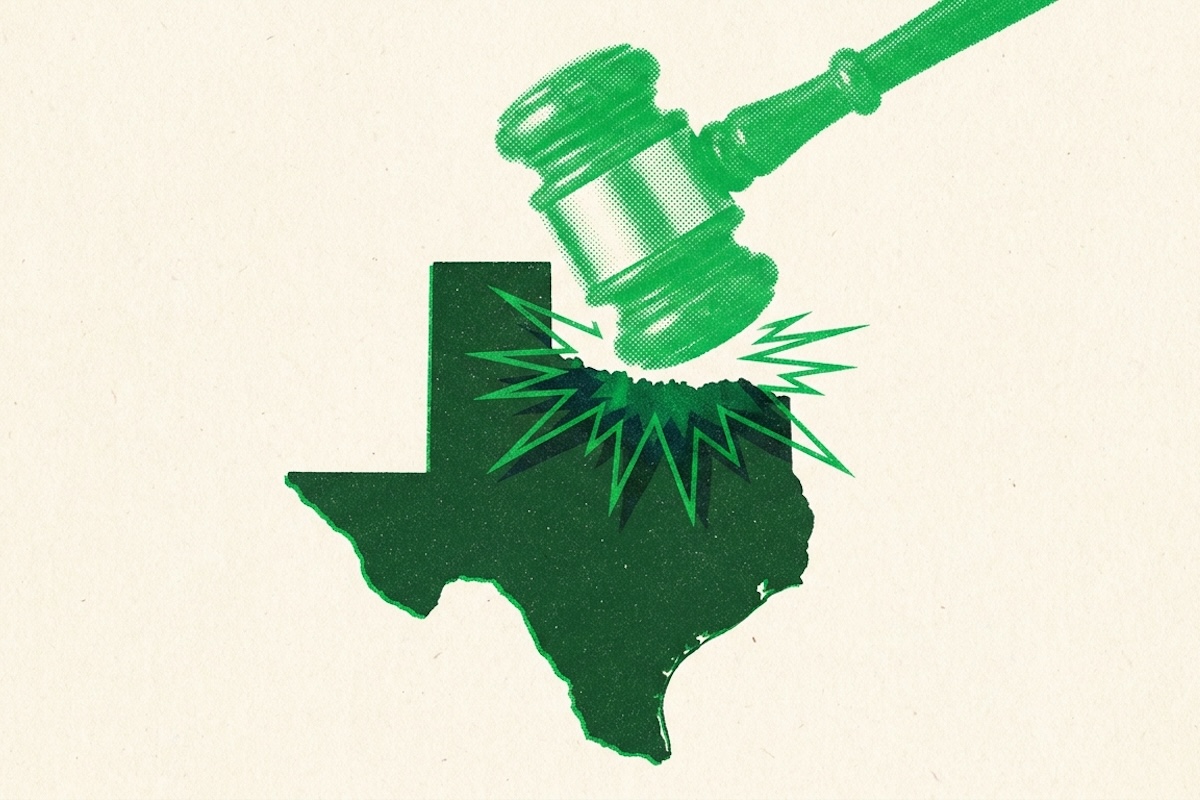
Since 2020, roughly 200 corporate headquarters have relocated to Texas, and liability risk hasn’t appeared in a single one of their public rationales. Given the state’s own verdict data, that omission may prove costly down the line.
The pitch writes itself. No state income tax. Light regulation. A $2.9 trillion economy that grew faster than the nation in 2025 and now hosts more Fortune 500 headquarters than any other state. Since 2020, roughly 200 companies have relocated their headquarters to Texas, more than half of them from California in the peak years: Tesla, Oracle, Chevron, Charles Schwab, CBRE, Hewlett Packard Enterprise, SpaceX. Ask any of them why, and the answers are nearly identical. Taxes. Regulation. Cost.
Ask what role liability exposure played in the decision, and the relocation announcements are silent on it, it simply isn’t part of the public rationale.
That’s worth pausing on, because the state these companies moved to leads the nation in a category that appears in none of the relocation press releases. Since 2009, Texas has produced more nuclear verdicts, jury awards of $10 million or more, than any state in the country: 207 of them totaling roughly $45 billion, according to data compiled by Marathon Strategies and cited by the American Tort Reform Foundation. In 2025 alone, the top 13 personal injury verdicts in Texas each exceeded $100 million, roughly $3.3 billion combined. A Bexar County jury returned $831 million in a dram shop case. A Harris County jury awarded $640 million against a crane company found grossly negligent in a worker’s death.
Texas built its business brand on tort reform. It also built the biggest verdict environment in America. Both things are true at once, and the companies arriving by the hundreds appear to have priced in only the first.
The decision-making blind spot is real, and it’s measurable
To be clear about what the evidence shows: there is no credible sign that liability risk is deterring corporate relocation to Texas. The claim gets made, mostly by tort reform advocates. The U.S. Chamber’s Institute for Legal Reform surveys corporate counsel and reports that 89 percent say a state’s litigation environment is likely to influence where their company locates or does business. But that’s lawyers describing an attitude, not companies revealing a behavior. When neutral site-selection surveys like Area Development’s annual corporate survey rank what actually drives location decisions, the list is power availability, skilled labor, permitting speed, incentives, and taxes. Litigation climate doesn’t crack the rankings.
So the honest version of the story isn’t “lawsuits are scaring businesses away from Texas.” It’s stranger than that. Companies are making nine-figure relocation decisions without the legal environment entering the calculus at all, in either direction. They’re not weighing the verdict data and accepting the risk. They’re not weighing it, period.
Except for one industry, which has no choice.
Trucking is the preview
Trucking companies can’t ignore liability, because their insurers won’t let them. Commercial auto insurance has lost money for roughly fourteen consecutive years nationally, and the response has landed hardest on fleets operating in high-verdict states. According to the American Transportation Research Institute’s June 2026 report on rising insurance costs, trucking liability premiums rose 18.6 percent between 2021 and 2024, to 10.2 cents per mile, outpacing inflation by more than five percentage points. Excess coverage layers, the ones that respond to catastrophic verdicts, rose 34 to 45 percent in the same window.
Here’s the detail that should stop you: over that same period, heavy-duty truck crash rates fell. The trucks got safer. The coverage got more expensive anyway, because insurers aren’t pricing crashes. They’re pricing what happens after crashes, in counties like Harris and Bexar.
The behavioral changes follow the money. Many insurers now refuse to quote fleets that won’t install dashcams and telematics; the systems run $800 to $1,500 per truck and have become, in the words of one insurance executive, a condition of underwriting access. Venue-risk mapping, literally scoring counties by verdict history, is now a standard claims-management product. Fleets are buying excess layers far above the federal minimum liability floor of $750,000, a figure unchanged since 1980 and now a rounding error against the median nuclear verdict.
None of this deterred trucking companies from operating in Texas. All of it changed how they operate there. That distinction, adaptation rather than avoidance, looks like the more accurate story here, and trucking is simply the industry where the adaptation showed up first because insurance renewal notices arrive annually whether you’re paying attention or not.
The workers’ comp question companies aren’t asking
The relocating companies that skipped the liability question will eventually meet it in forms they didn’t anticipate. Texas is the only state in the country where private employers can opt out of the workers’ compensation system entirely. About a quarter of Texas private employers are “non-subscribers,” per Texas Department of Insurance data, and the list reportedly includes some of the largest employers operating in the state. Opting out looks like savings until an employee gets hurt: non-subscribers can be sued directly for negligence, and Texas law strips them of the classic defenses, including contributory negligence.
Since 크로거 컴퍼니 대 켄 in 2000, that has meant the employee’s own carelessness can’t reduce the recovery at all; as between employer and worker, an employer whose negligence played even a minor causal role is on the hook for the full loss. The Legislature designed it as the penalty for opting out, and the dollar figures track: a running tally of reported injury settlements we maintain includes a $39 million settlement this year for workers burned in a South Texas well blowout, in a state where a quarter of the private employers writing those checks chose to face juries rather than carry comp.
A company relocating from California, where workers’ comp is mandatory and its exclusive-remedy bargain is settled doctrine, has no institutional memory for this. Neither does its risk department, necessarily. The same goes for premises liability exposure at Texas retail and industrial sites, and for the state’s bifurcated-trial rules in commercial vehicle cases under 2021’s HB 19, which reshaped how trucking cases get tried without doing much to shrink the verdicts. The legal environment a company inherits when it moves is not a footnote. It’s an operating condition, the same as the power grid or the labor pool, and it’s the only one on that list that nobody appears to have diligenced.
The fair counterargument, and why it only goes so far
The defense-side rejoinder is that headline verdicts overstate reality, and it’s partly right. The $831 million Bexar County award is likely uncollectible; the bar that got hit with it has closed. Nearly three-quarters of the $640 million crane verdict is punitive damages, a category appellate courts routinely cut down. And the Texas Supreme Court has shown it will act as a backstop: in June 2025 it threw out the $90 million Werner Enterprises verdict entirely, holding the carrier bore no responsibility for a crash caused by a vehicle sliding across a median. Verdicts are not collections, and Texas’s highest court is not shy about saying so.
But remittitur and reversal are lagging correctives, and insurance markets don’t wait for them. Premiums price the verdict, not the eventual appellate haircut, which is why trucking costs climbed while crash rates fell. The correction happens years later in an appellate opinion. The cost happens now, on the renewal notice.
This is the beginning, not the aftermath
The 2025 Texas legislative session was supposed to fix this for business. Senate Bill 30, authored by Sen. Charles Schwertner and backed by Texans for Lawsuit Reform, took aim at the two inputs that make verdicts large. On the medical side, it would have limited what juries could hear and award to amounts actually paid for care, and where no payment had been made, capped the benchmark at roughly 300 percent of Medicare rates.
The real target was letters of protection, the arrangement where providers treat injury victims on a promise of payment from the eventual recovery. If that mechanism sounds familiar to Californians, it should: it’s the Texas cousin of lien-based care, and SB 30 tried to do to it what California’s SB 623 just did to liens, cap the recoverable amount at an outside benchmark.
On the pain-and-suffering side, the bill would have carved noneconomic damages into defined subcategories with restrictive jury instructions and judicial review of awards for “reasonableness,” which supporters called codifying existing case law and opponents called caps wearing a costume. Every provision moved money from injured people to defendants and their insurers. It died in the House, stripped to a disclosure requirement. The reform coalition has promised to return in 2027.
Until then, the companies that moved to Texas for its business climate are living in its legal climate too, and the gap between the two is where the next several years of corporate risk management will be spent.
Two states, same fight, opposite outcomes
From where we sit in California, watching this unfold has a particular resonance. The two states just ran the same fight over litigation-funded medicine to opposite conclusions: California enacted its compromise, Texas couldn’t pass one at all. Texas is the state running the longer experiment, decades of reform, record verdicts anyway, and a business community discovering that the brochure and the courtroom are different documents. Juries, it turns out, decide what negligence costs. Legislatures only decide how loudly companies get to complain about it.
The 200 relocated headquarters will likely learn this the same way the trucking industry did, one renewal notice and one Harris County summons at a time.
귀하의 사건의 가치는 어떻게 될 수 있나요?
2분 이내에 빠른 견적을 받아보세요
내게 필요한 정보 찾기
가까운 지점 정보, 교통사고 대처 상식, 상해 종류 별 정보 등 교통사고 관련 모든 정보를 한 곳에 모았습니다.
내 주변 지점 찾기
가까운 DK Law 지점을 찾아보세요.

DK Law 전문 분야 찾기
교통사고부터 사망사고까지, DK Law의 주요 전문 분야를 확인해보세요.

DK Law에서 함께 합니다.
DK all the way
지금 바로 교통사고 전문 변호사와 무료 상담을 받아 보세요!

교통사고 보상, 시간이 관건입니다!
사고 후 대처가 빠를수록, 교통사고 보상 더 잘 받을 수 있습니다. 사고의 초기 대응이 증거 보존 및 피해자 권리 보호에 큰 도움이 됩니다.
승소하지 않으면 변호사 선임료 $0 | 24시간 상담 가능