


Lost Wages Calculator
Lost wages after an accident go beyond missed paychecks – our free calculator helps you estimate the financial impact on your claim.
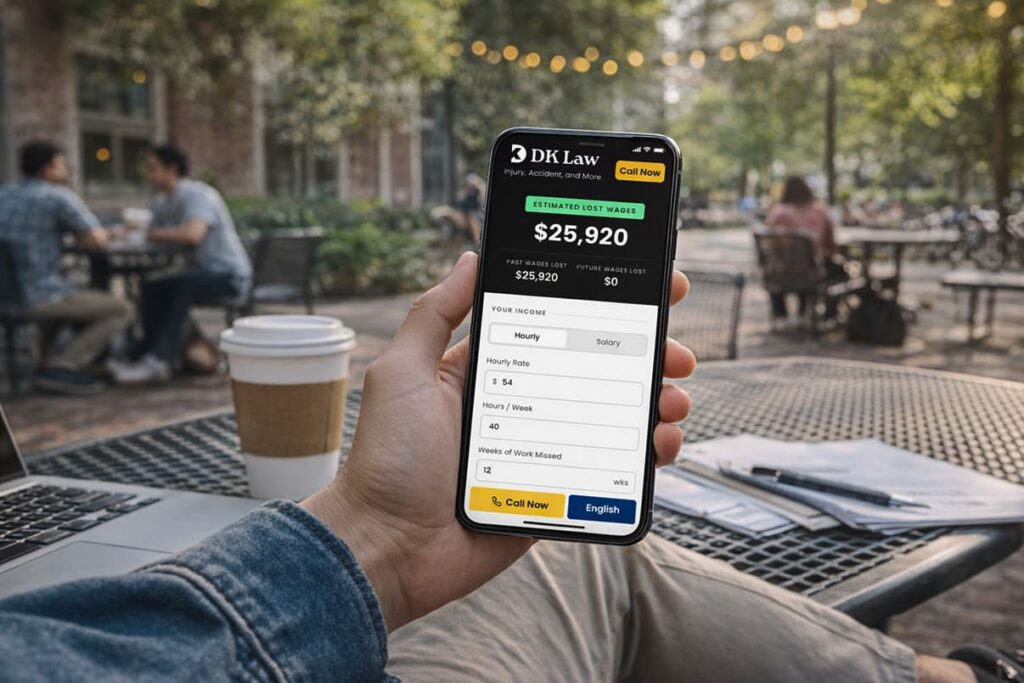
This calculator provides a rough estimate only and does not account for overtime, benefits, raises, or present-value discounting. Actual lost wages in a California personal injury case may be significantly higher. Consult an attorney for an accurate assessment.
Why This Matters
Missing work after an accident is stressful enough. Then you start doing the math on what you’re actually losing, and it gets worse.
Most people underestimate the real number because “lost wages” covers more than missing paychecks. It’s a bundle of economic losses – past earnings, future earnings, and something called lost earning capacity.
We built the calculator below to help you get a clearer picture. Here’s how it works and what goes into the math.
The Three Parts of a Lost Wages Claim
Most people only think about the first one:
- Past lost earnings are what you would have earned between your injury date and today (or the date of settlement). This is the straightforward part. Your hourly rate or salary, multiplied by the time you missed.
- Future lost earnings cover income you’re reasonably certain to lose going forward. If your doctor says you can’t return to full duty for another six months, that’s future lost earnings.
- 미래 소득 능력 상실 is the one that people tend to overlook. Even if you return to work, your injury may limit what you’re able to earn long-term. A construction worker who can no longer do heavy lifting might have to take a lower-paying desk job. That gap between what you could have earned and what you can earn now? That’s lost earning capacity, and California law says you can recover it even without a strong work history.
What Actually Goes Into the Calculation
Your base pay is the starting point, but it’s not the whole picture. The calculator accounts for:
- The overtime you would have worked. If you regularly put in extra hours, those lost overtime wages count. California uses a 1.5x multiplier for most overtime.
- Bonuses and commissions you missed. That quarterly bonus you were on track to receive? It’s part of your loss.
- Benefits your employer was paying for. Health insurance, retirement contributions, paid time off. Benefits typically add 30% or more on top of your base wages. Most people leave this money on the table.
- Mitigation offsets. If you earned any income during recovery – light-duty work, freelance, anything like that – it gets subtracted from your lost wages. California law requires you to make reasonable efforts to work if you’re able to, but nobody expects you to push through work that would worsen your injury.
Why Future Losses Get Complicated
Projecting future earnings means factoring in wage growth (what raises you likely would have received) and then discounting that number back to its present value. A dollar twenty years from now is worth less than a dollar today, and California requires future economic damages to be reduced to “present cash value.”
The calculator handles this math for you. You plug in your current earnings, expected growth rate, and how many working years you have left. It runs the present value formula, so you don’t have to.
One thing worth knowing: California is one of the states that prohibits reducing your lost earnings estimate based on race, ethnicity, or gender. Your calculation should reflect your individual earning potential, period.
Self-Employed? It Still Works
If you’re self-employed, the inputs are different, but the logic is the same. Instead of pay stubs and W-2s, you’re working from tax returns, 1099s, and Schedule C filings. The calculator lets you toggle between hourly, salaried, and self-employed modes so the math fits your situation.
The Calculator Is a Starting Point. Not a Substitute for Legal Advice.
A calculator gives you a useful ballpark, but some things don’t fit neatly into a formula – like whether your employer would have promoted you, how long your recovery will actually take, or what vocational options are realistically available given your specific limitations.
If you’ve been injured and you’re losing income, run your numbers below. Then call DK Law for a free consultation. We can look at the full picture together and help you understand what your claim is actually worth.
내게 필요한 정보 찾기
가까운 지점 정보, 교통사고 대처 상식, 상해 종류 별 정보 등 교통사고 관련 모든 정보를 한 곳에 모았습니다.
내 주변 지점 찾기
가까운 DK Law 지점을 찾아보세요.

DK Law 전문 분야 찾기
교통사고부터 사망사고까지, DK Law의 주요 전문 분야를 확인해보세요.

DK all the way
사고 직후부터 보상까지 all the way 함께
상담 예약
1:1 맞춤 한국어 상담 무료로 진행하기
DK Law에서 함께 합니다.
DK all the way
지금 바로 교통사고 전문 변호사와 무료 상담을 받아 보세요!

교통사고 보상, 시간이 관건입니다!
사고 후 대처가 빠를수록, 교통사고 보상 더 잘 받을 수 있습니다. 사고의 초기 대응이 증거 보존 및 피해자 권리 보호에 큰 도움이 됩니다.
승소하지 않으면 변호사 선임료 $0 | 24시간 상담 가능