Hit by a Waymo? Here’s What Actually Happens With Your Claim
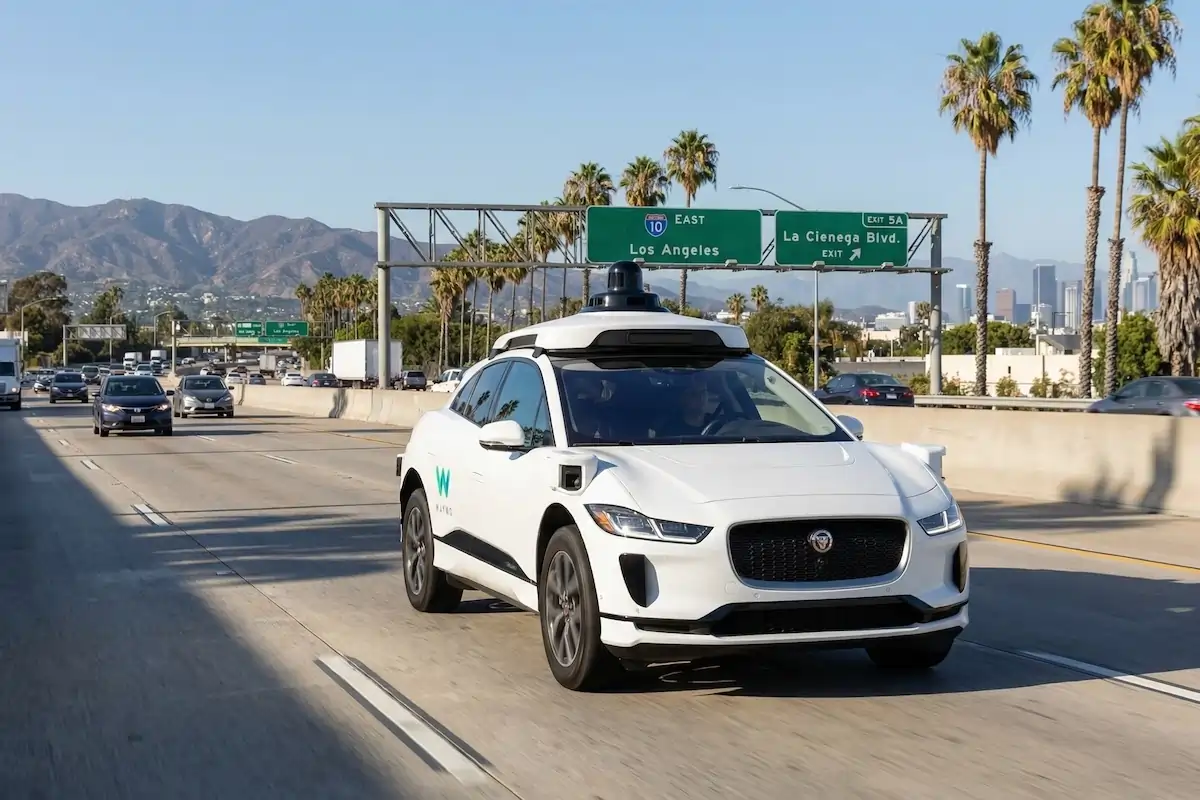
You just got hit by a car with no driver.
No one rolls down the window. No one hands you an insurance card. No one even apologizes. The white Jaguar just sits there, cameras whirring, while you’re on the ground trying to figure out what happened. It’s a bizarre, disorienting experience that a growing number of people in California are dealing with. And the legal process that follows? It looks nothing like a normal car accident.
Waymo’s driverless fleet is expanding fast. They’re completing over 450,000 rides per week across six U.S. cities, and that number is climbing. More rides mean more accidents. And when those accidents happen, injured people are left asking a question that didn’t exist five years ago: Who exactly do I sue when a robot hits me?
핵심 요약
- Waymo is legally the driver. Under California law, the company that deploys autonomous technology is the operator. There’s no human driver to hold accountable. Your claim goes directly against Waymo (and its parent company, Alphabet).
- You can file under both negligence AND product liability. This is a major difference from a traditional car accident. The vehicle’s software is a product, and if it’s defective, California’s strict liability laws apply.
- Insurance works differently from Uber or Lyft. Waymo carries a $5 million liability policy required by the California DMV. No coverage gaps. No tiered system based on app status.
- No public Waymo settlement amounts exist yet. Every known resolution has been confidential. But structural factors suggest AV accident values will exceed typical car accident settlements.
- The evidence is incredible, but Waymo controls it. These vehicles record everything: 360-degree cameras, LiDAR, radar, and internal decision logs. Getting access to that data requires immediate legal action.
Where Does Waymo Operate Right Now?
Waymo runs a fully driverless commercial service in Phoenix, San Francisco, Los Angeles, Austin, Atlanta, and Miami. The company operates roughly 2,500 Jaguar I-PACE vehicles across these cities and is testing without safety drivers in Dallas, Houston, Orlando, Las Vegas, San Diego, and several other metros.
The expansion pipeline is aggressive. Waymo raised $16 billion in February 2026 at a $126 billion valuation and is targeting 1 million rides per week by the end of 2026. They’re adding new cities in Texas and Florida throughout the year. More vehicles on more roads in more cities means the question of what happens when a Waymo hurts someone is going to come up a lot more often.
How Often Do Waymo Accidents Happen?
More than you’d think. NHTSA’s crash database shows roughly 1,500 incidents involving Waymo vehicles operating in autonomous mode between 2021 and 2025, resulting in over 100 reported injuries and 2 fatalities.
The important context: most of those crashes were caused by other drivers, not Waymo’s system. A detailed analysis of the 45 most serious crashes found that 37 out of 41 driving-error collisions were mostly or entirely the fault of other humans on the road.
But “mostly safe” and “always safe” are two different things.
Waymo has issued four software recalls since 2024. One covered collisions with gates, chains, and barriers (1,200 vehicles). Another covered school bus stop-arm violations in Austin and Atlanta (3,067 vehicles). And in January 2026, a Waymo struck a child near a Santa Monica elementary school, triggering both an NHTSA and NTSB investigation. The child suffered minor injuries. Waymo said the system braked from 17 mph to under 6 mph before contact, but a child still got hit.
The pattern is clear enough: Waymo is statistically safer than human drivers. A Swiss Re study found 88% fewer property damage claims and 92% fewer bodily injury claims compared to humans. But “safer on average” doesn’t help you if you’re the one lying on the pavement.
Who Is Liable When a Driverless Car Hits You?
This is where things get fundamentally different from a normal accident or a rideshare crash.
In a regular car accident, the at-fault driver is liable. In an Uber or Lyft crash, the driver is liable, with the company’s insurance kicking in depending on app status. With Waymo, there is no human driver. The company is the driver.
California Vehicle Code § 38750 defines the “operator” of an autonomous vehicle as the entity that causes the technology to engage. Waymo owns the car. Waymo built the software. Waymo deployed it on public roads. That makes Waymo the legally responsible party from the moment of impact.
This opens two tracks for a personal injury claim:
Negligence. Waymo owed you a duty of care as the operator of the vehicle. If the system failed to stop for a school bus, didn’t see a pedestrian, or drove into a barrier, that’s a breach of duty. Pretty similar to how you’d approach a claim against any driver, except the “driver” is a corporation.
Product liability. This is the bigger deal. Under California’s strict product liability doctrine, a manufacturer of a defective product is liable even without proving negligence. Waymo’s autonomous system is a product. If a software defect caused the crash, three theories of defect apply: design defect (the system was inherently unsafe), manufacturing defect (a sensor failed or software was corrupted), and failure to warn (Waymo didn’t adequately disclose known risks to passengers or nearby pedestrians).
California’s pure comparative negligence system also matters here. Even if you were partially at fault (jaywalking, for example), you can still recover. If a jury finds you 30% responsible, you collect 70% of your damages.
How Is This Different From an Uber or Lyft Accident?
If you’ve read our rideshare accident guide, you know that Uber and Lyft claims are complicated by a tiered insurance system and the independent contractor defense. Waymo’s claims are structurally different in several important ways.
No coverage gaps. Uber and Lyft only provide $1 million in coverage when a ride has been accepted or a passenger is on board. If the driver is offline or between rides, coverage drops dramatically. Waymo’s $5 million liability policy is always active when the vehicle is operating. No tiers. No gaps.
No independent contractor shield. Uber and Lyft classify drivers as independent contractors, which limits the companies’ direct liability. With Waymo, the company IS the driver. There’s no intermediary. Your claim goes directly against a corporate defendant backed by Alphabet, which has a market cap north of $2 trillion.
Better evidence, harder to get. Waymo vehicles record everything: 360-degree LiDAR, radar, cameras, and internal decision-making logs. California law requires autonomous vehicles to store at least 30 seconds of pre-collision data. This evidence can reconstruct exactly what the car “saw” and how it responded, second by second. That level of detail simply doesn’t exist in a typical car accident case. The catch? All that data belongs to Waymo, and they’ve fought hard to keep it private. Your attorney needs to send a preservation demand immediately.
Product liability theories open bigger doors. A standard Uber claim is negligence-based: the driver was distracted, speeding, or impaired. A Waymo claim allows you to pursue strict product liability alongside negligence. In California, the median product liability verdict runs around $3 million, compared to roughly $16,000 for standard auto negligence. That’s a meaningful difference.
What Kind of Compensation Can You Recover?
No one has published a Waymo-specific settlement figure. Not one. Every resolution to date has been confidential, which tells you something about how badly Waymo wants to avoid setting a public precedent.
For context on what autonomous vehicle cases can be worth: GM’s Cruise robotaxi unit settled for a reported $8 to $12 million after one of its vehicles dragged a pedestrian in San Francisco. And a jury hit Tesla with a $329 million verdict ($129 million compensatory, $200 million punitive) in a case involving defective Autopilot software. Tesla had rejected a $60 million settlement offer before trial.
In a California Waymo accident, you can pursue economic damages (medical bills, lost wages, future care costs, property damage), non-economic damages (pain and suffering, emotional distress, loss of enjoyment of life), and potentially punitive damages if Waymo knowingly deployed defective software or concealed known safety issues. California has no cap on punitive damages, and juries can consider the defendant’s financial resources when setting the amount.
Each recall documenting a known defect strengthens the argument for punitive damages. Four recalls in under two years give plaintiffs something to work with.
What to Do If You’re Hit by a Waymo
The first few minutes after a Waymo accident feel strange because everything you’d normally do involves interacting with another driver, and there isn’t one. So what to do?
- Call 911 and get medical attention. Even if your injuries seem minor, get checked. Some of the most serious accident injuries, like traumatic brain injuries or spinal damage, don’t show symptoms immediately.
- Document the vehicle. Photograph the license plate, vehicle identification numbers, any visible damage, and the Waymo branding. Note whether the vehicle was carrying passengers or was empty. Grab contact info from any witnesses.
- Contact Waymo directly. Call 1-844-263-9885 or email [email protected] to report the collision. Their system auto-detects crashes, but you want a paper trail.
- Do not give a recorded statement to Waymo or their insurers without a lawyer. This is standard advice for any accident, but it’s especially important here because Waymo’s legal team is well-funded and experienced.
- Get a preservation demand sent immediately. The sensor data, camera footage, LiDAR point clouds, and decision logs are the most critical evidence in your case. But they belong to Waymo and may be destroyed under routine data retention if not legally preserved.
- Talk to a personal injury attorney who understands autonomous vehicle cases. These claims require a broader expert team than a standard car accident: AI specialists, software engineers, LiDAR experts, and digital forensics professionals alongside the usual medical and economic experts. That makes AV litigation more expensive to bring, but the potential recovery reflects that complexity.
The statute of limitations in California is 2 years for personal injury and 3 years for property damage. Don’t wait.
The Road Ahead
Waymo accident law is being written right now. There’s no established body of case law governing fully driverless vehicles, and the first major cases will shape the legal landscape for decades. What we know so far: you’re dealing with a corporate defendant, not a human driver. The legal strategy requires combining product liability with negligence in ways that standard accident practice doesn’t touch. And Waymo’s preference for confidential settlements tells you they’d rather pay than set a precedent.
If you’ve been injured by a Waymo or any driverless vehicle in California, DK Law can help.
Contact us for a free consultation to understand your options. You won’t pay anything unless we recover compensation for you.
DK All the way


사고 직후부터 보상까지 all the way 함께
무료 상담 예약하기
교통사고 전문 변호사와 한국어 상담이 가능합니다. 무료 상담
DK Law에서 함께 합니다.
DK all the way
지금 바로 교통사고 전문 변호사와 무료 상담을 받아 보세요!