


If Airbags Are Deployed Is the Car Totaled?
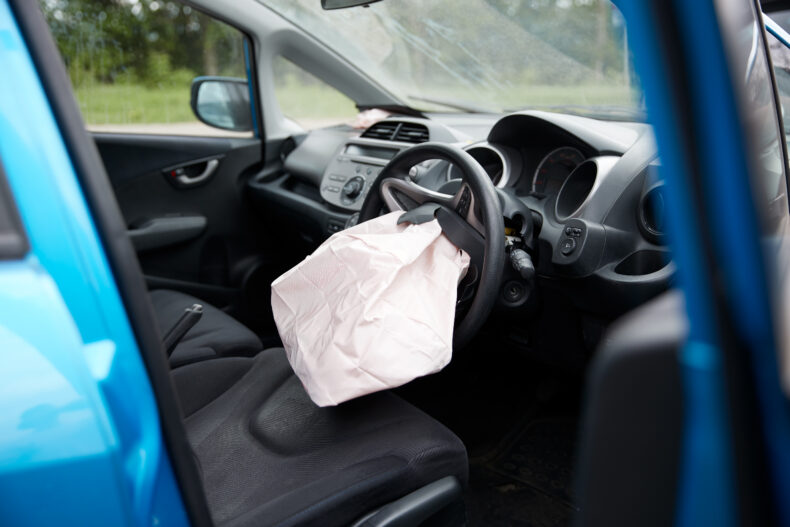
After a crash, many California drivers wonder: “If my airbags deployed, is my car a total loss?” The short answer: not necessarily.
Airbag deployment alone doesn’t trigger a total loss. Under California law, your insurer makes that call by comparing the cost of repairs (including airbag replacement) to your vehicle’s actual cash value using a specific statutory formula, and California’s rule is different from what you may have read on insurance industry websites or out-of-state law firm blogs.
Here’s how the calculation actually works under California Vehicle Code §544, what to do if you disagree with the insurer’s decision, and when airbag deployment may signal you have a personal injury or product liability claim separate from your vehicle damage claim.
TL;DR
- Airbag deployment doesn’t automatically total your car
- California uses the Total Loss Formula (TLF) codified in CA Vehicle Code §544: your car is totaled when repair cost + salvage value ≥ actual cash value — not a fixed percentage threshold like Florida (80%) or Texas (100%)
- Airbag replacement runs $1,000–$1,500 per airbag; multi-airbag jobs can exceed $5,000 once sensors, modules, and seatbelts are factored in
- Front airbags typically deploy at impacts equivalent to 8–14 mph into a fixed barrier (or roughly a 16–28 mph crash with another vehicle of similar size)
- Insurance covers replacement under collision, comprehensive, or the at-fault driver’s liability policy
- Deployed airbags cannot be reused. They must be replaced before the car is roadworthy
If Airbags Deploy, Is the Car Totaled?
Airbags are designed to deploy in moderate to severe crashes, particularly frontal or near-frontal impacts. When they do deploy, it signals that the crash involved significant force, but it doesn’t guarantee that your car is totaled.
Whether a vehicle is “totaled” depends on the rules in your state. Many states use a percentage threshold (often 70%–80% of the vehicle’s actual cash value, or ACV; Texas requires 100%), but California uses a different statutory approach explained in the next section.
예시:
If your car is worth $10,000 and repairs cost $8,000, the insurer may deem the vehicle a total loss.
While airbag deployment increases costs (since airbags must be replaced and can’t be reused), it’s just one factor that insurance companies consider when assessing a totaled vehicle.
How California Decides If Your Car Is a Total Loss
California Vehicle Code §544 defines a “total loss salvage vehicle” using a two-part test:
- The vehicle has been wrecked, destroyed, or damaged so badly that the leasing, lending, or insurance company considers it uneconomical to repair, AND
- The vehicle is not repaired following the damage.
To determine whether repair is “uneconomical,” California insurers apply the Total Loss Formula (TLF):
Cost of Repairs + Salvage Value ≥ Actual Cash Value (ACV) → Total Loss
Unlike Florida (80%), Virginia (75%), or Texas (100%), California has no fixed percentage threshold. The TLF is what insurers use in practice to operationalize the §544 standard.
예시:
Your car’s pre-crash ACV is $15,000. Repairs are estimated at $10,000, and the salvage value is $6,000. Add the repair cost and salvage value: $10,000 + $6,000 = $16,000. Because $16,000 exceeds the $15,000 ACV, your insurer must declare the vehicle a total loss under California law.
Airbag deployment factors heavily into this calculation. Replacing an airbag system isn’t just the airbag itself — it usually includes new sensors, a new control module, replacement seatbelts (which lock during deployment), and sometimes a new steering column or dashboard panel. On lower-value vehicles, airbag deployment alone can push the formula over the line into total-loss territory.
California also gives policyholders the right to dispute the ACV the insurer assigns. You can submit comparable vehicle listings, maintenance records, or an independent appraisal to push for a higher payout — a process explained in detail in the dispute section below.
(Reference: California DMV — Total Loss Salvage & Non-Repairable Vehicles)
What Affects Your Car’s Actual Cash Value (ACV)
Because California’s total loss decision hinges on ACV, understanding how insurers calculate it matters. ACV factors include:
- Pre-crash market value: Recent sale prices for comparable vehicles in your local market (year, make, model, trim, mileage, condition)
- Diminished value: California recognizes three types of diminished value that can affect a vehicle’s worth after a crash:
- Immediate diminished value — the difference between the vehicle’s value right before vs. right after the accident
- Inherent diminished value — the reduced value caused by the stigma of having been in a major accident, even after full repairs
- Repair-related diminished value — the reduced value caused by less-than-perfect repairs
- Maintenance history: Documented service records can support a higher ACV
- Condition factors: Wear and tear, cosmetic issues, aftermarket upgrades
- Local supply and demand: A relatively rare or in-demand vehicle may command a higher ACV than the standard “book value”
Insurance adjusters often default to industry pricing tools that miss these factors. Documenting them yourself is one of the most effective ways to push back on a low offer.
Why Airbags Deploy (and When They Should)
Airbags are triggered by sensors that detect a sudden deceleration or impact. Per NHTSA, frontal airbags are designed to deploy in moderate to severe crashes — generally those equivalent to hitting a fixed barrier at 8–14 mph (roughly a 16–28 mph collision with a parked car of similar size).
Deployment is meant to protect occupants, especially in front-seat positions, from serious injury. According to the Insurance Institute for Highway Safety, frontal airbags have saved an estimated 70,000+ lives through 2019, with about 4,330 lives saved in 2019 alone. Used in combination with a lap-and-shoulder belt, an airbag reduces the risk of death in a frontal crash by approximately 61%.
What If My Airbags Didn’t Deploy?
If your airbags didn’t deploy in a crash where you believe they should have, this could point to:
- A sensor malfunction
- An airbag defect
- A collision that didn’t meet the threshold for deployment
In such cases, especially when serious injuries have occurred, it’s essential to consult with a personal injury attorney. You may be able to file a defective product claim against the manufacturer if a faulty airbag system contributed to your injuries.
Do I Have to Replace Airbags After Deployment?
Yes. Once airbags deploy, they must be replaced. They are single-use safety systems and cannot be reset or reused. If your car isn’t totaled, you’ll need to ensure the airbags are fully replaced and functional before driving again.
How Much Does Airbag Replacement Cost?
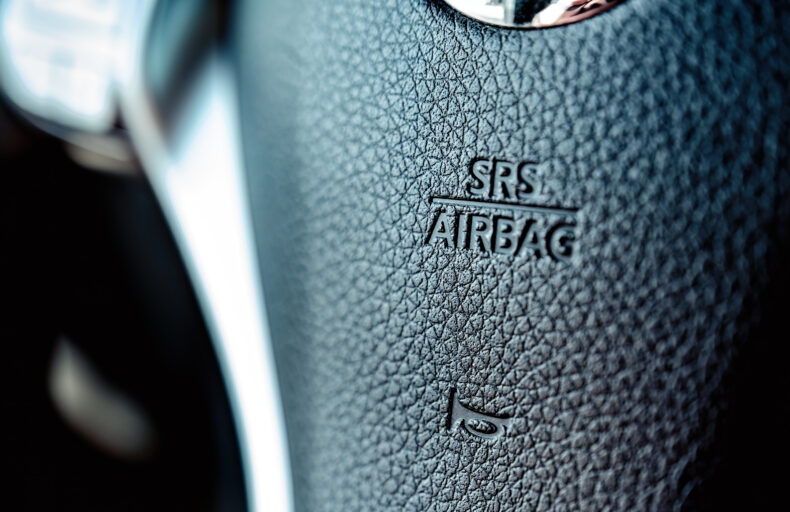
Replacing airbags is not cheap. Costs vary depending on:
- The number of airbags deployed
- Your vehicle’s make and model
- Additional parts like sensors or control modules
Replacing deployed airbags requires removing the entire airbag module and installing a new one. If the airbag was located in the steering wheel, you might also need to replace the wheel and steering column.
On average, replacing a single airbag can cost between $1,000 and $1,500. For accidents involving multiple airbags, the total cost could exceed $5,000.
Will Insurance Pay for Airbag Replacement?
If you have collision or comprehensive coverage, or if another driver was at fault, insurance will typically cover airbag replacement. However, you may be responsible for a deductible.
Because airbag deployment significantly increases repair costs, it can push the total estimate close to or beyond the car’s value, leading the insurer to total the vehicle.
What Happens If the Insurance Company Totals My Car?
If your car is totaled after the airbags deploy, your car insurance company will usually pay your vehicle’s actual cash value before the accident, minus any deductible.
They’ll assess:
- The extent of damage
- The vehicle’s salvage value
- Repairs (including airbags, sensors, and any structural work)
If you believe the insurance company is undervaluing your vehicle or making the wrong call, speak with a car accident attorney for help.
Do I Have a Personal Injury Claim If the Airbags Deployed?
If the accident was caused by another driver’s negligence and you were injured, you may be eligible for compensation. A personal injury claim can help you recover:
경제적 손해
- 의료비용
- 소득 손실
- 재산 피해
- Ongoing treatment costs
비경제적 손해
- 신체적, 정신적 고통
- 정서적 피해
- Reduced quality of life
When to Contact a Car Accident Lawyer

If your car airbags deployed and:
- You were seriously injured
- The accident wasn’t your fault
- You’re struggling with insurance claims or unclear liability
It’s time to consult an attorney. We offer a free, no-obligation consultation and can help you understand your rights and next steps. Whether your car was totaled or not, we’re here to help you recover the compensation you deserve.
Call us at (800) 719-9779 or fill out a quick form to schedule your free case evaluation.
DK All the way


사고 직후부터 보상까지 all the way 함께
상담 예약
1:1 맞춤 한국어 상담 무료로 진행하기
DK Law에서 함께 합니다.
DK all the way
지금 바로 교통사고 전문 변호사와 무료 상담을 받아 보세요!

교통사고 보상, 시간이 관건입니다!
사고 후 대처가 빠를수록, 교통사고 보상 더 잘 받을 수 있습니다. 사고의 초기 대응이 증거 보존 및 피해자 권리 보호에 큰 도움이 됩니다.
승소하지 않으면 변호사 선임료 $0 | 24시간 상담 가능