Understanding the Latest California Traffic Laws: What You Need to Know
Whether you live in California or are just visiting, it is important to understand the laws that apply to drivers. In 2023, Governor Gavin Newsom approved several new California traffic laws for 2024. Unless otherwise stated, these laws take effect January 1, 2024.
Parking Adjacent to Crosswalks (AB 413)
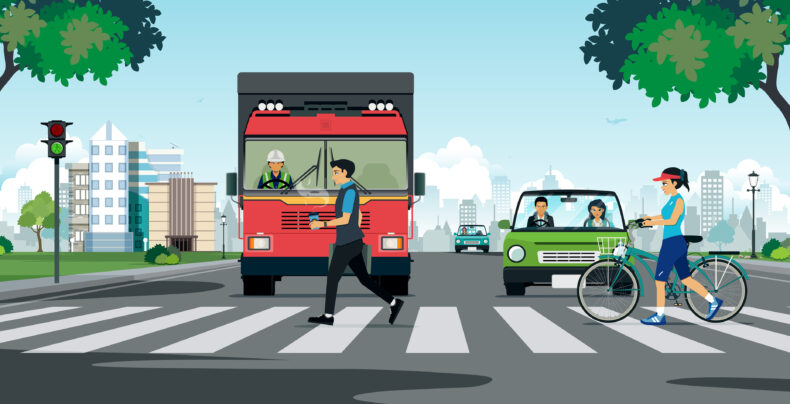
To address California’s high pedestrian fatality rate, Assembly Bill 413 makes it illegal for motor vehicles to park, stop, or stand within 20 feet of a marked or unmarked crosswalk. This is known as “daylighting.”
When drivers park vehicles near a crosswalk, it reduces visibility for other vehicles approaching the crosswalk or intersection. Many deadly pedestrian accidents in California occur at intersections. Children are at a high risk for these types of collisions, as they are more likely to be hidden behind a parked car.
If drivers violate this new law, they will receive a warning. Starting in 2025, authorities will issue citations. By passing this bill, California joins over 40 states that currently have similar laws that require vehicles to maintain a 20-foot distance from crosswalks.
Cruising (AB 436)
Southern California’s long history with cruising and low rider culture is now officially legal.
Assembly Bill 413 prohibits cities and counties from banning cruising on city streets or driving vehicles that have been modified to a certain height (e.g., lowriders). According to the California Highway Patrol, the new law replaces the existing one, allowing local governments to pass anti-cruising ordinances.
Low rider cruising is a popular pastime, particularly in East Los Angeles along Whittier Boulevard. Other popular cruising boulevards are Van Nuys Boulevard, Sunset Boulevard, Hollywood Boulevard, and Crenshaw Boulevard.
Speed Cameras (AB 645)

While red light cameras are common throughout California, several cities will soon introduce a new type of camera: a speed camera.
AB 645 implements a five-year pilot program in six cities: Los Angeles, Long Beach, Glendale, Oakland, San Jose, and San Francisco. The new law authorizes the placement of speed cameras in school zones, on streets with illegal street racing, and on streets with high rates of fatal and injury crashes. The law does not allow cameras on freeways or expressways.
If a driver is speeding, the camera will capture a photo of their license plate. Then, a citation will be sent in the mail. Violations will be based on how much a driver exceeds the speed limit:
- $50 for 11 to 15 mph after the first warning notice
- $100 for 16 to 25 mph
- $200 for 26 mph
- $500 for exceeding 100 mph
The bill aims to reduce speeding, which is the top cause of severe and fatal car accidents. Pedestrian deaths account for a large majority of speed-related crashes.
Traffic Stops (AB 2773)
The days of a police officer asking, “Do you know why I pulled you over?” are over. AB 2773 requires law enforcement officers to state the purpose of their interaction during a traffic stop. The bill aims to reduce “pretextual stops,” in which an officer can use a minor charge as an excuse to search for a more serious crime. The only exception to this new law is if the officer believes there is an immediate danger to a person or property.
A related bill (AB 256) restricts a peace officer from pulling a driver over for an expired registration sticker unless more than two months have passed. If the registration sticker date is more than two months old, an officer may pull over the driver. Late registration fees from the DMV will still apply. This law will go into effect on July 1, 2024.
Electric Bicycles (SB 381)
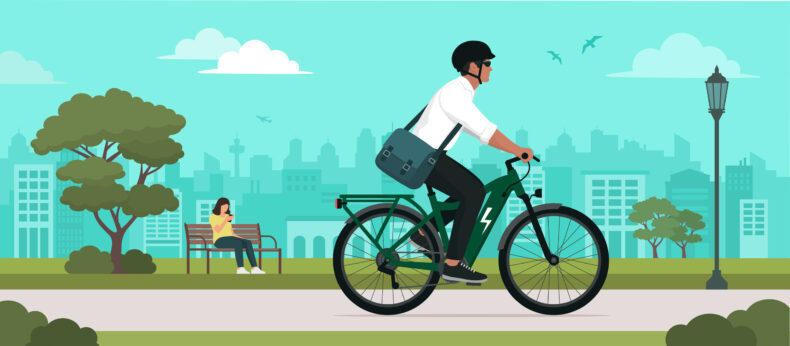
Electric bicycles (e-bikes) have exploded in popularity in recent years. An estimated one million e-bikes were sold in the U.S. in 2023. California also offers a rebate program that gives qualifying applicants a voucher. A voucher is worth either $1,000 or $1,750 to buy an e-bike. However, the laws governing e-bikes in California are unclear. While they are treated the same as non-electric bicycles, their speed makes a huge difference.
Senate Bill (SB) 381 authorizes the Mineta Transportation Institute at San Jose State University to conduct a study on electric bicycle safety. This study comes at a time when bike accidents, emergency room visits, injuries, and deaths are on the rise.
Bicycle Lane Parking (AB 361)
Under AB 361, bicycle lane safety and accessibility are enhanced. The law allows local agencies to install cameras on city-owned parking enforcement vehicles. The cameras will take images of vehicles unlawfully parked in bicycle lanes. Currently, California motorists can park in bike lanes unless there is a “No Parking” sign.
This law joins a similar law for buses, which issues citations for parked cars in transit lanes.
Failure To Attend Traffic School (AB 466)

Many drivers in California attend traffic violator school to keep points off their driving record. In many cases, a driver must take a traffic school course to resolve a traffic violation, such as a speeding ticket.
AB 466 states that failure to attend traffic school will no longer be classified as a misdemeanor. Not attending traffic school does not count as a new offense.
California Personal Injury Lawyers
If you were involved in a motor vehicle accident in California, it is important to understand the traffic safety laws that apply to you and the other driver involved. If their negligence caused you to suffer injuries and other damages, you may be able to recover compensation from them.
When you speak to a personal injury lawyer, you can understand what legal recourse is available to you and how to proceed with a personal injury claim. Most personal injury lawyers work on a contingency, meaning they do not collect legal fees unless they win your case. Call DK Law, a top personal injury law firm with offices across California, for a 무료 상담.
DK All the way


사고 직후부터 보상까지 all the way 함께
무료 상담 예약하기
교통사고 전문 변호사와 한국어 상담이 가능합니다. 무료 상담
DK Law에서 함께 합니다.
DK all the way
지금 바로 교통사고 전문 변호사와 무료 상담을 받아 보세요!