


If You Hit Someone Jaywalking, Who Is at Fault?
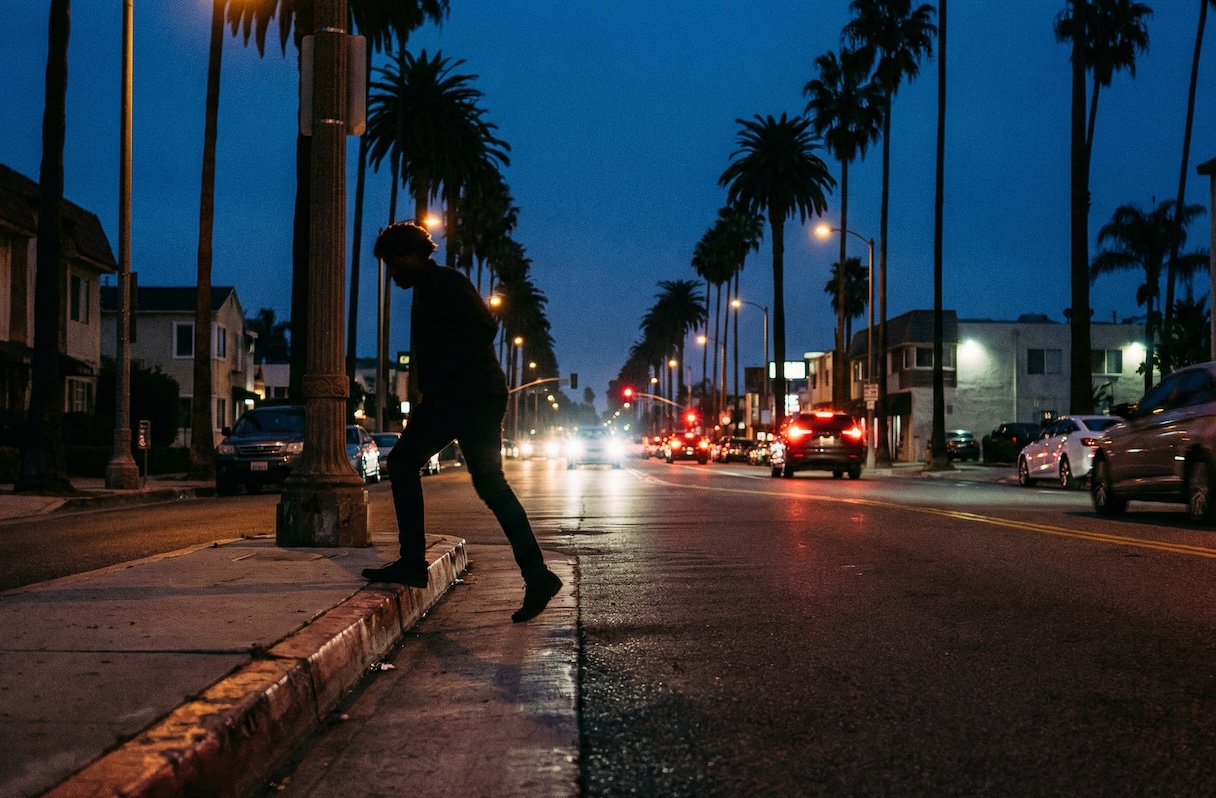
It’s every driver’s nightmare. You’re traveling down a California street, and suddenly a pedestrian steps into traffic. Not at a crosswalk. Mid-block. Before you can react, there’s an impact.
Your heart races as you pull over. Am I automatically at fault because I hit them? Will I be sued? Could I lose everything?
If you’ve found yourself in this situation, you’re not alone. The question of fault when a driver hits a jaywalking pedestrian is one of the most misunderstood areas of California traffic law. Let’s break down what really happens.
Understanding Jaywalking Under California Law
First, what exactly counts as jaywalking? In California, jaywalking occurs when a pedestrian crosses a street illegally. This includes crossing outside of marked or unmarked crosswalks, crossing against a traffic signal, or walking in the roadway when a sidewalk is available.
California Vehicle Code Sections 21949-21971 establish the rules for pedestrian behavior. Section 21954 requires pedestrians crossing outside crosswalks to yield to vehicles. Section 21955 prohibits mid-block crossing between signal-controlled intersections.
Here’s a wrinkle many people don’t know about: California passed the Freedom to Walk Act (AB 2147) in January 2023. Police can no longer cite pedestrians for jaywalking unless there’s an immediate danger of collision. Jaywalking is still technically unlawful, but enforcement has changed significantly.
But none of this means the driver is automatically off the hook. California law recognizes that traffic situations are rarely black and white.
Who’s Really at Fault? California’s Comparative Negligence System
This is where things get interesting. California follows what’s called “pure comparative negligence,” established by the California Supreme Court in Li v. Yellow Cab Co. (1975). Fault can be shared between multiple parties in an accident.
For example. A pedestrian crosses mid-block at night wearing dark clothing. A driver who’s slightly exceeding the speed limit hits them. In this scenario, the pedestrian may be found 60% at fault for jaywalking in poor visibility conditions. The driver is 40% at fault for speeding and not maintaining proper vigilance.
Under California’s system, if the pedestrian suffers $100,000 in damages, they could still recover $40,000 from the driver. That’s the portion attributed to the driver’s fault. And if the driver’s vehicle sustained $5,000 in damage, they could theoretically recover $3,000 from the pedestrian.
This system acknowledges that both drivers and pedestrians have responsibilities on our roads.
How California Compares to Other States
Not every state handles these cases the same way. If you were in Texas, Florida, or Illinois, the outcome could be dramatically different.
Texas uses modified comparative negligence with a 51% bar. If you’re more than half at fault, you get nothing. A jaywalking pedestrian found 51% responsible recovers zero dollars, no matter how serious their injuries.
Florida made a major change in March 2023. The state shifted from pure comparative negligence (like California) to modified comparative negligence under HB 837. Now, any pedestrian more than 50% at fault is completely barred from recovery. Under the old law, a pedestrian 70% at fault recovered 30% of damages. Under the new law, they recover nothing.
Illinois operates similarly to Texas with a 50% threshold. Cross that line, and you’re barred entirely.
New York follows California’s approach with pure comparative negligence. A jaywalking pedestrian found 80% at fault can still recover 20% of their damages.
The takeaway? California’s system is actually more favorable to injured parties than most large states. But that cuts both ways for drivers involved in these accidents.
Factors That Determine Fault in Jaywalking Cases
When determining fault, several critical factors come into play.
The Driver’s Actions: Was the driver speeding, distracted by their phone, driving under the influence, or failing to maintain a proper lookout? Even if a pedestrian was jaywalking, drivers have a legal duty to exercise reasonable care to avoid hitting pedestrians when possible.
The Pedestrian’s Behavior: Was the pedestrian crossing in a particularly dangerous location? Were they intoxicated or distracted? Did they suddenly dart into traffic without warning? Were they visible to approaching drivers?
Road and Environmental Conditions: What was the lighting like? Was visibility reduced by weather? Was there adequate signage? These factors can significantly impact fault determination.
Available Evidence: Police reports, witness statements, traffic camera footage, and accident reconstruction all play crucial roles in establishing what actually happened.
The Reality of Pedestrian Accidents in California
California leads the nation in pedestrian fatalities. According to NHTSA’s 2023 pedestrian traffic safety data, California recorded 1,106 pedestrian deaths that year alone. That accounts for roughly 15% of all pedestrian fatalities nationwide.
UC Berkeley’s SafeTREC reports that pedestrian violations were the primary crash factor in 48.6% of fatal and serious injury crashes in California in 2023. This highlights that pedestrian behavior contributes to many accidents. But it also means more than half of serious crashes involve other factors.
Most pedestrian deaths happen after dark. NHTSA data shows 77% of fatalities occur in low-light conditions. And 84% happen in urban areas where foot traffic and vehicle traffic constantly intersect.
What Drivers Should Know About Their Rights and Responsibilities
If you’re a driver who has hit a jaywalking pedestrian, it’s natural to feel overwhelmed. Here’s what you need to know.
Even though the pedestrian was jaywalking, you still had a duty to exercise reasonable care. California law expects drivers to be vigilant and to take evasive action when possible. But this doesn’t mean you’re automatically liable just because you were behind the wheel.
Immediately after an accident:
- Stop and remain at the scene. Leaving is a crime.
- Call 911 to get medical help and police to the scene.
- Document everything with photos and notes.
- Get contact information from witnesses.
- Avoid admitting fault or making statements about what happened.
- Contact an experienced personal injury attorney.
Insurance companies will often try to place 100% of the blame on drivers in 보행자 사고, even when the pedestrian was clearly violating traffic laws. Don’t let them intimidate you into accepting full responsibility without a proper investigation.
What Pedestrians Need to Understand
If you’re a pedestrian who was hit while jaywalking, you might think you have no legal recourse. This isn’t necessarily true.
Thanks to California’s pure comparative negligence system, you may still be entitled to compensation even if you were partially at fault. Your recovery will be reduced by your percentage of fault, but you won’t be completely barred from it.
If you’re found 30% at fault and your medical bills, lost wages, and pain and suffering total $200,000, you could still recover $140,000. That’s a significant difference from states like Texas or Florida, where crossing the 50% threshold means you get nothing.
When You Need Legal Help
Whether you’re a driver who hit a jaywalking pedestrian or a pedestrian who was injured while jaywalking, these cases are complicated. Fault determination involves detailed investigation, evidence gathering, witness interviews, and often expert testimony.
At DK Law, we understand that accidents involving pedestrians are traumatic for everyone involved. These cases are rarely straightforward. Having an experienced personal injury attorney who understands California’s comparative negligence laws can make a real difference in protecting your rights and securing fair compensation.
We’ve seen how insurance companies exploit confusion about fault in jaywalking cases. Sometimes they refuse to pay pedestrians who deserve compensation. Other times they try to hold drivers 100% responsible when they shouldn’t be. Our role is to fight for the truth and ensure that fault is fairly determined based on the actual facts.
The Bottom Line
If you hit someone jaywalking in California, fault is rarely all-or-nothing. Both drivers and pedestrians have legal duties to exercise reasonable care. Both can be held accountable when they fail to do so. California’s pure comparative negligence system ensures that compensation reflects each party’s actual degree of fault.
Whether you’re a driver or a pedestrian involved in one of these accidents, don’t assume you know how fault will be assigned. These cases require thorough investigation and often benefit significantly from experienced legal representation.
If you’ve been involved in a pedestrian accident, reach out to our team at DK Law for a free consultation. We’ll review your case, explain your rights, and help you understand your options moving forward.
DK All the way


사고 직후부터 보상까지 all the way 함께
상담 예약
1:1 맞춤 한국어 상담 무료로 진행하기
DK Law에서 함께 합니다.
DK all the way
지금 바로 교통사고 전문 변호사와 무료 상담을 받아 보세요!

교통사고 보상, 시간이 관건입니다!
사고 후 대처가 빠를수록, 교통사고 보상 더 잘 받을 수 있습니다. 사고의 초기 대응이 증거 보존 및 피해자 권리 보호에 큰 도움이 됩니다.
승소하지 않으면 변호사 선임료 $0 | 24시간 상담 가능