Why AI Will Never Replace Personal Injury Lawyers
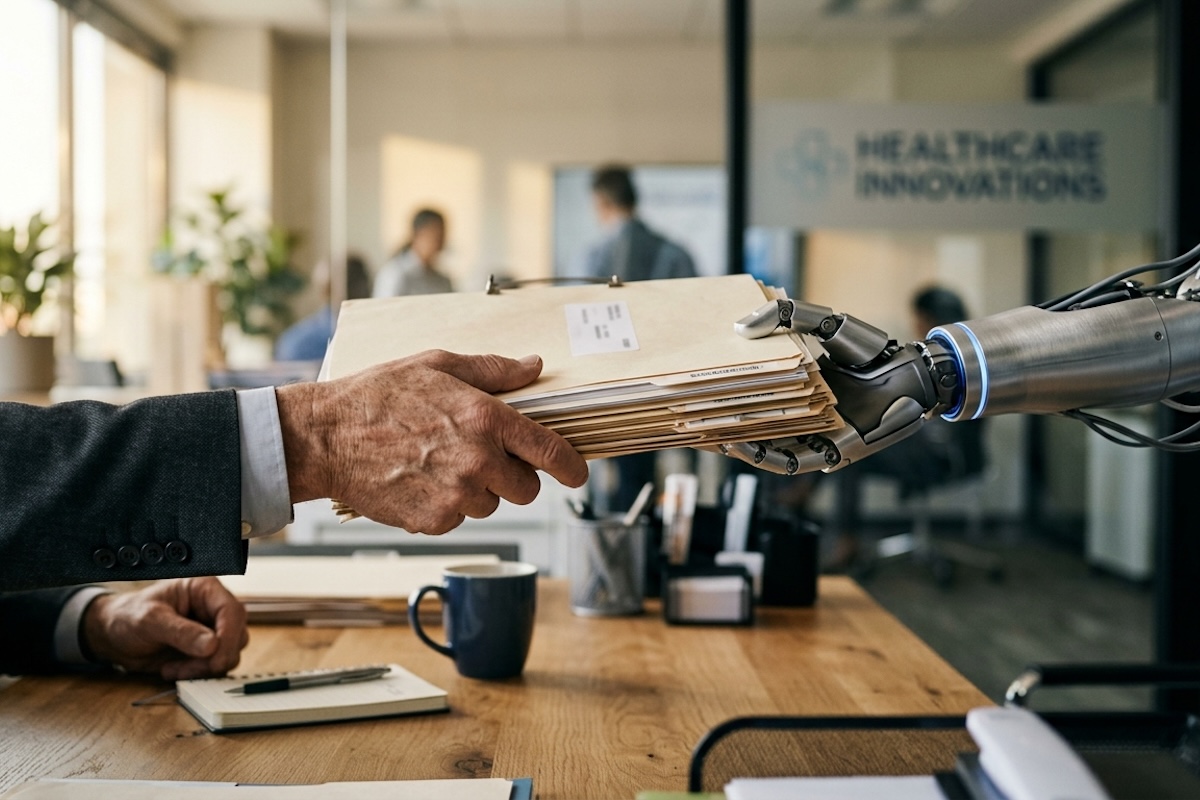
AI likely won’t replace personal injury lawyers. Not in five years, not in twenty, and probably not ever in any form that matters. The work a PI lawyer actually does. Building trust with a frightened client, negotiating with a specific adjuster at a specific carrier, standing in front of a jury. It’s not the kind of work AI is good at. The parts AI can do well, like summarizing medical records and drafting demand letters, are the parts that support the lawyer, not replace them.
This is not a defensive take. EvenUp raised $150 million at a $2 billion valuation in October 2025 specifically to automate parts of personal injury practice. Supio claims 97% accuracy on medical chronologies.
AI is absolutely coming for the PI workflow, and firms that ignore it will lose ground to firms that don’t. But coming for the workflow is not the same as replacing the lawyer. What follows is a walk through the nine phases of a typical PI case, with an honest read on what AI handles well, what it fails at, and why the human stays at the center of every phase that matters.
Conclusiones principales
- AI is already taking over significant portions of personal injury workflow, particularly demand letter drafting, medical record summarization, and intake scoring.
- PI lawyers will not be replaced because the highest-leverage parts of the work — client trust, adjuster negotiation, trial advocacy, judgment calls on case selection — depend on human skills AI cannot replicate.
- The honest prediction is not replacement but restructuring. Firms will run leaner back offices, handle more cases per attorney, and compete on the parts of the work that stay human.
- Consumer AI tools trying to replace PI lawyers have a poor track record. The FTC fined DoNotPay $193,000 in 2025 for marketing itself as a lawyer substitute without any legal training data behind it.
The Front End: Building the Relationship
Intake and the First Conversation
Most people calling a PI firm for the first time are scared. They’ve just been hit by a car, or they’re sitting in an emergency room, or they’re trying to figure out how they’ll pay rent next month because their back won’t let them work. They don’t know if they have a case. They don’t know what questions to ask. They often don’t even know what they’re feeling.
That first call is not an information-gathering exercise. It’s a trust-building exercise. Whether someone signs a contingency agreement depends less on whether the firm can win their case and more on whether the person answering the phone made them feel like a human being paying attention.
AI can handle parts of intake. Chatbots screen leads 24/7. Tools score calls for case potential. Some firms use AI transcription to pull out key facts from intake calls automatically. This is real efficiency, especially for high-volume practices that convert only a small fraction of calls into cases.
What AI can’t do is make a frightened person feel less alone. A scripted bot asking about injury severity and the date of the incident will get the facts. It will not get the client. And in a business where signing the case is the entire game, losing the client at the first conversation is the end of the relationship.
Ongoing Communication and Emotional Check-Ins
The single most common complaint PI clients raise about their attorneys is communication. Months go by. They don’t hear anything. They start wondering if their case is still active.
AI helps with the floor here. Automated status updates triggered by case milestones. “We received your medical records,” “we sent the demand letter,” “we received a response.” These keep clients in the loop without requiring a paralegal to draft individual emails. Some platforms send weekly check-ins automatically.
But the ceiling of what matters in communication is different. A client is going through PT three times a week, dealing with chronic pain, and watching savings drain because they can’t work. That person doesn’t need another automated update. They need someone to ask how they’re actually doing. How are the headaches? Is the physical therapist the right fit? Is the anxiety getting worse? Are the kids handling it okay?
Those conversations shape the case. A client whose mood is deteriorating may experience different damages than one who’s recovering well. A client who mentions a new symptom in passing can change the whole medical picture. AI doesn’t catch that because it doesn’t have a stake in the person. The relationship is the intelligence, and the relationship has to be carried by a human.
Case Selection and Triage
Before any of this happens, someone has to decide whether to take the case at all. This is the most important judgment call a PI firm makes, and it’s the one AI is least equipped to support.
Case selection depends on factors AI can score: liability clarity, injury severity, policy limits, and venue. But it also depends on factors no model can weigh: how credible the client will seem on a witness stand, whether their version of events will hold up under pressure, and whether the underlying facts have hidden problems that won’t show up until discovery. A client with a strong case on paper and a terrible memory is a different risk than a client with a weaker case and perfect recall.
PI firms run on contingency, which means they only get paid if they win. Taking the wrong cases kills firms. The decision about which cases to take is pattern-matching humans do based on thousands of prior cases, and the patterns are full of tells AI can’t see.
The Middle: Building the Case
The Medical Provider Network
PI cases live or die on medical documentation, and medical documentation lives or dies on which providers treat the client.
A serious PI practice maintains relationships with dozens of physicians, physical therapists, chiropractors, pain specialists, orthopedic surgeons, neurologists, psychologists, trauma therapists, and sometimes dentists and vocational rehabilitation experts. Providers the firm has worked with before, who know how to document injuries in ways that stand up to defense scrutiny, who will testify if needed, and who bill on lien so clients without insurance can still get care.
Building and maintaining this network is long-term human work. It involves phone calls, lunch meetings, going to bat for providers when insurance companies deny their bills, and making sure referrals flow both ways. AI can schedule appointments and handle billing paperwork. It cannot build a relationship with an orthopedic surgeon who will take a 3 AM call about a new client.
The same applies to case coordination. Making sure a client with a herniated disc gets to the right specialist, follows through with treatment, and doesn’t fall through the cracks between providers. This is human project management with stakes. When it goes wrong, the case value collapses.
Liens Negotiation
This is one of the least visible parts of personal injury work and one of the most consequential for final client recovery.
When a case settles, the money doesn’t just go to the client and the firm. Medical providers who treated on lien get paid from the settlement. So do health insurers that covered treatment under subrogation rights. So sometimes does Medicare or Medicaid. On a $100,000 settlement, the lien load can eat 30% to 60% of gross recovery before the client sees a dime.
Skilled lien negotiation routinely cuts those demands by 20% to 50%. That’s not a minor detail. That’s often the difference between a client walking away with meaningful money and walking away with nothing after fees and liens.
The work involves knowing which providers will negotiate and which won’t, which insurers apply the common fund doctrine voluntarily and which have to be pushed, when to threaten litigation, when to accept quick payment at a steep discount, and how to structure escrow accounts to hold disputed funds while negotiations continue. It’s deeply relational, deeply technical, and involves legal doctrines (Made Whole, Ahlborn, common fund) that vary by state and lienholder type.
AI can track liens and flag deadlines. The actual negotiation is conducted over phone calls between people who know each other’s names.
Policy Limit Constraints
A client with a $1.5 million injury and a defendant carrying $25,000 in auto liability coverage is a hard case. The damages are real. The recovery pool is not.
Good PI lawyers spend significant time finding angles around policy limits. Is there underinsured motorist coverage on the client’s own policy? Is there umbrella coverage? Was the defendant working at the time of the crash, opening up employer liability? Was there a commercial vehicle involved? Was the vehicle defective in a way that brings in a product liability claim against the manufacturer? Is there a dram shop claim if the defendant was overserved at a bar?
This is detective work crossed with legal strategy. It requires knowing which coverage structures exist, where to find them, how to obtain verification, and how to plead claims that open up additional coverage without damaging the primary case. AI can help with research on coverage types. The actual hunt (calling insurers, subpoenaing policies, reading employment records for scope-of-employment language) is human.
The Back End: Getting to Resolution
Insurance Adjuster Negotiation
Every PI case involves negotiation with adjusters, and every adjuster is different. Some settle quickly because their carrier wants to clear cases off the books. Some stall reflexively because stalling is their training. Some respond to the threat of litigation, and some don’t. Some respond to medical documentation, and some need a demand letter with a deadline.
Experienced PI attorneys know which adjusters at which carriers behave which way. They know that a particular regional office at a particular insurer will start moving around day 45 after a demand letter. They know which adjusters are authorized to offer six-figure settlements without escalation. They know how to read an opening offer.
This is tacit knowledge. It’s built over years of negotiating hundreds of cases. It’s also the single biggest driver of final settlement value outside the underlying injury itself. Insurance Research Council data shows represented claimants recover 3.5 times more on average than those negotiating alone. That gap is mostly negotiation skill.
AI can draft demand letters, calculate multipliers, and score settlement offers against comparable cases. It cannot pick up the phone, hear the hesitation in an adjuster’s voice, and know that today is the day to push.
Deposition and Testimony Preparation
Before a PI case goes to trial (and well before most cases settle) the client will be deposed by opposing counsel. Defense lawyers will spend hours trying to get the client to contradict themselves, minimize their injuries, or say something that can be used against them at trial.
Preparing a client for this is entirely human work. It involves reading the client. Are they a talker who volunteers too much? Are they defensive? Do they have a memory problem the defense will exploit? It involves running mock depositions, coaching on how to answer without speculating, teaching clients to say “I don’t recall” when they don’t recall rather than guessing. It involves reassuring frightened clients that they will be fine.
There is no AI product currently on the market that does deposition prep for clients because the work is fundamentally about the specific human being in the chair. A general LLM might produce tips on how to handle a deposition. It cannot sit with a specific client and rehearse their specific story.
Trial Advocacy
Most PI cases settle. But the possibility of trial shapes every settlement. Adjusters offer what they’ll offer because they know what a jury might award if the case goes to verdict.
When cases do go to trial, the work is entirely human. Opening statements, witness cross-examination, closing arguments, reading the jury during testimony, knowing when to slow down and when to push, whether to use demonstrative exhibits, whether to call the client to the stand or keep them off. All of it is judgment under pressure.
Median PI jury verdicts run around $3 million in product liability contexts and vary widely by jurisdiction and injury type. The number that matters is not the average verdict but the variance. Same facts in front of two different trial teams produce wildly different outcomes. That variance is almost entirely human performance. Juries trust lawyers who seem trustworthy, follow arguments that are clearly structured, and remember closings that land emotionally. None of this is on any AI roadmap.
What Actually Changes
The argument is not that AI does nothing in personal injury law. It does a lot. The work that used to take a paralegal four hours to summarize medical records now takes a few minutes. Demand letters that used to be written from scratch now start as AI drafts and get edited by attorneys. Case valuation that used to rely on a senior partner’s gut now gets checked against algorithmic predictions.
This is real change, and it will compound. Firms that adopt the best AI tools will run leaner operations, handle more cases per attorney, and spend more human time on the parts that move case value. Firms that don’t adopt will lose efficiency.
But the core of personal injury work is not going anywhere. It’s the call at 3 AM from a terrified client. It’s the conversation with a PT about whether a client’s range of motion is improving. It’s the quiet negotiation with an adjuster whom you’ve been across the table from for 15 years. It’s standing in front of a jury and explaining, in plain language, why a specific person’s specific life got harder because of a specific defendant’s specific choices.
Those things stay human because they are human. AI will keep taking over the paperwork around them. The center holds.
The Real Prediction
“How long before AI replaces personal injury lawyers?” is the wrong question. The right question is how the work gets restructured around AI over the next decade.
The answer is probably that PI firms get smaller in headcount but handle more cases. Paralegals do different work. Junior associates spend less time on records review and more time on client contact and deposition prep, because that’s where their development has to happen. Partners negotiate and try cases, which they were always going to do anyway. The firms that do this well gain market share. The firms that treat AI as a threat to resist will have a rough decade.
But the lawyers themselves stay. Not because they’re safe from technology. Because the work they actually do — the trust-building, the judgment calls, the relationships, the advocacy — is the work AI cannot do. Not now, not soon, and not with any technology currently visible on the horizon.
At DK Law, we use technology to work smarter, but every case is handled by a dedicated legal team that knows your name, understands your situation, and fights for the outcome you deserve. If you’ve been injured in an accident, find out what your case is worth.
Contact us today for a free case review — no pressure, just honest answers.
DK All the Way


Desde su primer contacto hasta recibir su compensación, estamos con todos all the way.
Agende una consulta gratuita
Reciba asesoría legal experta sin ningún costo.
En DK Law estamos a su lado — all the way.
¡Agende hoy su consulta gratuita con nuestros expertos!

El tiempo es importante después de un accidente
Cuanto antes hables con un abogado después de un accidente, más sólido puede ser su reclamo. Actuar pronto ayuda a preservar la evidencia y a proteger sus derechos.
No ganamos, no cobramos | Disponible 24/7