AI Lawyer | Can ChatGPT Be Your Lawyer?
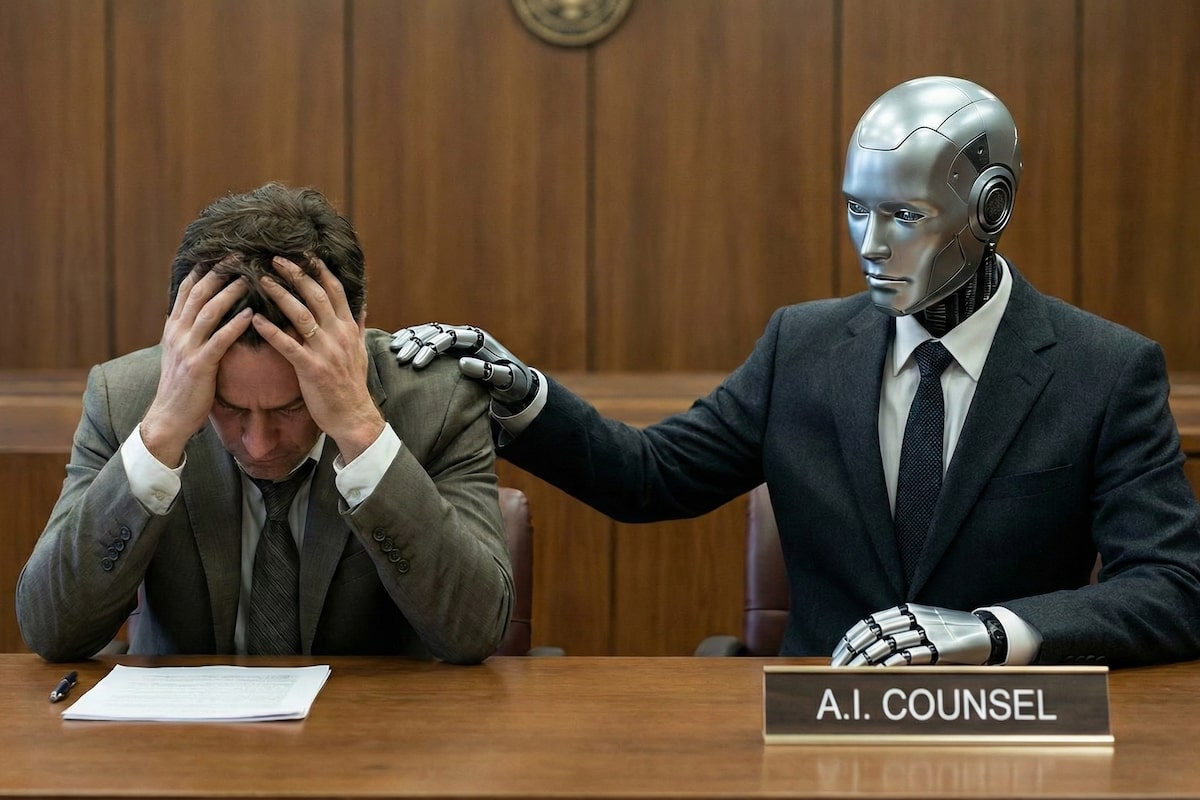
You typed your legal question into ChatGPT because the idea of calling an actual attorney made your stomach turn. We get it. Lawyers are expensive. Legal jargon can be confusing. And here’s this free tool that sounds like it knows everything.
There’s a real issue with that. ChatGPT isn’t searching a legal database when you ask it questions. It’s guessing. Really educated guessing, sure. But guessing nonetheless. And when your case involves your health, your income, or your future, educated guesses aren’t enough.
Let’s break down what AI can actually do for your legal situation and where you need to draw the line.
Key Takeaways
- ChatGPT hallucinates (invents fake information) on 58% to 88% of legal questions, including fabricating court cases that don’t exist.
- Anything you type into ChatGPT loses confidentiality protection. No attorney-client privilege applies, which could hurt your case later.
- AI tools are great for explaining legal jargon and brainstorming questions to ask a real lawyer. They’re terrible for strategy, negotiation, and understanding the human elements that actually win cases.
- DoNotPay, the “world’s first robot lawyer,” had to pay $193,000 to settle FTC charges because it never actually tested whether its legal advice was accurate.
Why is Everyone Suddenly Asking About AI Lawyers?
The appeal makes sense. You can ask ChatGPT to explain your insurance company’s denial letter and get an answer in thirty seconds. No hold music. No consultation fee. No awkward phone call where you’re not sure what to ask.
And for basic inquiries, AI is genuinely helpful. Need to understand what “subrogation” means? ChatGPT can explain it better than most legal dictionaries. Want to brainstorm questions before meeting with an attorney? Good use case. Writing a complaint letter to your landlord about that leak they keep ignoring? AI can probably get you started.
There’s an important distinction here, though. Tools like ChatGPT are general-purpose. They were trained on internet text, not legal databases. Law firms actually use specialized AI tools like Harvey or Casetext that were specifically trained on case law and legal materials. And even those tools require lawyer oversight.
The ChatGPT you’re using at home isn’t the same thing.
What Can ChatGPT Actually Help With?
Let’s be fair. AI has legitimate uses for people dealing with legal issues.
- Translating legal jargon. Paste a confusing contract clause and ask for a plain English explanation. ChatGPT is genuinely good at this. Just don’t rely on it to tell you whether you should sign.
- Brainstorming questions. “What should I ask a personal injury lawyer during a consultation?” is a great prompt. You’ll get a solid list to work from.
- Low-stakes drafting. Need to write a letter to contest a parking ticket? AI can help structure your argument. Writing a complaint to a business that wronged you? Reasonable starting point.
Here’s a safe prompt example: “Explain California’s statute of limitations for personal injury claims like I’m not a lawyer.” You’ll get useful background information. Just remember that understanding a concept and applying it to your specific situation are very different things.
Why Does AI “Hallucinate” Fake Legal Information?
This is where people get burned. ChatGPT doesn’t work the way you think it does.
When you ask ChatGPT a question, it’s not pulling answers from a database of verified facts. It’s predicting the next word in a sequence based on statistical patterns from its training data. If a fake court case “sounds right” based on those patterns, ChatGPT will confidently generate it.
The most famous example: In March 2023, attorney Steven Schwartz filed a legal brief containing six completely fabricated court cases. Cases like “Varghese v. China Southern Airlines” didn’t exist. He got them from ChatGPT. When opposing counsel flagged the problem, Schwartz went back to ChatGPT to find the actual documents. ChatGPT invented those too.
The judge fined him $5,000 and required him to notify every judge whose name appeared on the fake opinions.
Research from the Journal of Legal Analysis found ChatGPT-4 hallucinates at least 58% of the time when asked direct questions about federal court cases. Other models like Llama 2 hallucinate up to 88% of the time. And the AI can’t tell you when it’s making things up. It sounds equally confident whether the information is real or invented.
What Are the Real Risks of Using AI for Your Legal Case?
Three big ones.
- You’re giving up confidentiality. Everything you type into ChatGPT gets logged and retained. OpenAI employees and contractors can access your conversations for up to 30 days. More importantly, no attorney-client privilege applies to ChatGPT conversations. OpenAI CEO Sam Altman has acknowledged this problem directly. If you upload details about your car accident, medical records, or settlement discussions, that information could potentially be discovered by the other side’s lawyers.
- The law changes faster than AI learns. Most models have a knowledge cutoff date. California updates dozens of statutes every January 1st. Recent changes include amendments to equal pay statutes, wage claims, and AI discrimination rules. If your case involves a law that changed after ChatGPT’s last training update, you’re getting advice based on old rules.
- AI doesn’t understand strategy. ChatGPT might know what the law says. It has no clue how to apply it. It can’t read an insurance adjuster’s tone during negotiations. It can’t anticipate how a jury might react to certain evidence. It can’t identify when the other side is bluffing.
When Should You Use AI vs. Hire an Attorney?
| Situation | AI Helpful? | Human Lawyer Needed? |
|---|---|---|
| Understanding legal terms | Yes | No |
| Drafting a parking ticket appeal | Yes | No |
| Small claims dispute under $2,000 | As assistant | Maybe |
| DUI or criminal charges | Research only | Yes, absolutely |
| Car accident or injury claim | Research only | Yes, absolutely |
| Any case with jail time risk | Research only | Yes, absolutely |
The pattern is pretty clear. The more that’s at stake, the less you should rely on AI for anything beyond basic research.
Why Can’t AI Calculate What Your Injury Claim is Worth?
Testing from October 2025 showed just how unreliable AI settlement estimates are. For an identical broken wrist injury, ChatGPT’s estimates ranged from $66,000 to $3.5 million, depending on how the question was framed. That’s a 7x difference.
The problem is context. AI applies generic multipliers to medical bills. It doesn’t understand that you can’t pick up your kids anymore because of your back injury. It doesn’t factor in that your spouse has to help you shower now. It can’t convey to an insurance company why your life will never be the same.
Pain and suffering calculations require human judgment. So does negotiating with adjusters who are trained to minimize payouts. So does knowing when to push harder versus when to take a settlement offer.
When Should You Actually Call a Lawyer?
Use AI to research and prepare. Let it help you understand concepts and organize your thoughts. But when your health, income, or future are on the line, don’t let a chatbot drive.
If you’ve been injured in an accident, you’re dealing with insurance companies that have entire legal departments working against you. They’re not using ChatGPT. They’re using experienced adjusters and attorneys who do this every day.
You deserve someone in your corner who actually understands your situation. Not a tool that guesses at answers and can’t tell you when it’s wrong.
DK Law offers free consultations with no obligation. We work on contingency, which means you pay nothing upfront. If AI gave you information about your case and you’re not sure whether to trust it, let a real attorney take a look.
DK All the way


From Your Case to Compensation, we take your case all the way.
Schedule a Free Consultation
Get Expert Legal Advice at Zero Cost.
At DK Law we’re with you – all the way.
Get a Free Consultation with our experts today!