Holiday Crime and Burglary Statistics: The Rise of Porch Pirates
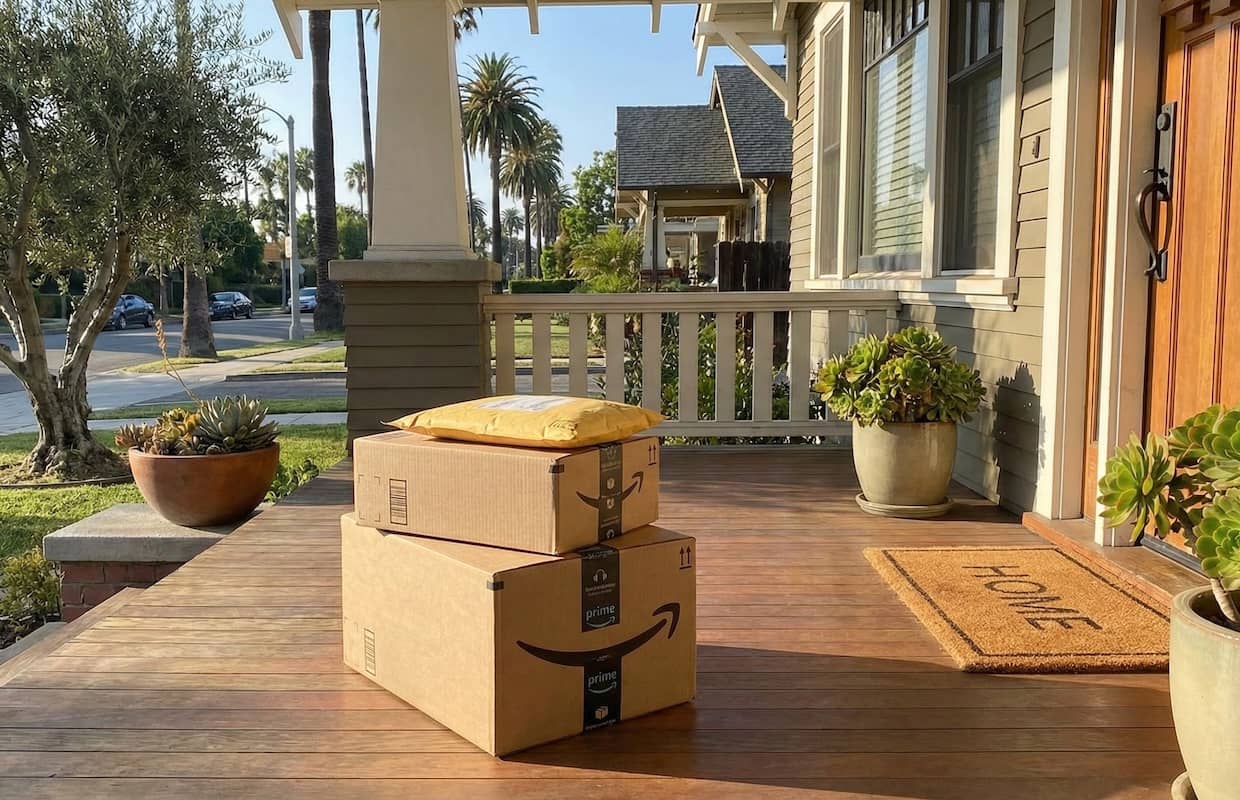
December is the worst month for property crime in America. Empty homes, packages piling up on porches, and distracted shoppers create ideal conditions for thieves. FBI data confirms it: 66,676 property crimes were recorded in December 2024, a 10.8% jump from November and the highest month of the year.
Here’s what the latest statistics reveal about holiday crime, who’s most at risk, and what California residents should know.
Key Takeaways
- December property crime spiked 10.8% compared to November in 2024, making it the highest-crime month of the year for three consecutive years
- 37 million packages worth $12 billion were stolen by porch pirates in the past year, with nearly 60% of thefts happening from November through December
- Apartment residents face 3.5x higher theft rates than single-family homeowners
- 60% of burglars avoid homes with visible security cameras, according to University of North Carolina research
- California’s burglary rate dropped 18.8% since 2019, the largest decrease of any crime category in the state
1. December Is Consistently America’s Worst Month for Property Crime
For three years running, December has recorded the highest property crime numbers of any month. In 2024, FBI data showed 66,676 property crime offenses in December, representing a 10.8% increase from November.
The pattern makes sense when you think about what December looks like. Almost 80 million people traveled 50 miles or more just for Thanksgiving 2024, according to AAA. Those empty homes advertise themselves. Add shorter daylight hours, packages stacking up on porches, and everyone’s attention focused on holiday shopping, and you get prime conditions for opportunistic theft.
2. The U.S. Recorded Nearly 6 Million Property Crimes
Despite the December spike, the annual numbers show improvement. The FBI’s 2024 report recorded an estimated 5,986,400 property crime offenses, marking an 8% drop from 2023.
That’s still roughly one property crime every five seconds. And the month-by-month breakdown reveals that the holiday season accounts for a disproportionate share. December’s 66,676 offenses represent roughly 13% above the monthly average.
3. Florida Has the Highest December Burglary Rate
State-level data shows dramatic variation in December burglary risk. Florida averaged 88.5 burglary incidents per 100,000 people between 2020 and 2023, nearly four times the national December average.
Washington State recorded 46.6 burglaries per 100,000, about double the national figure. North Carolina averaged 31.8 per 100,000, roughly 41% higher than the U.S. mean.
The concentration of holiday tourists in Florida likely plays a role. Vacation rentals sitting empty, rental cars packed with luggage, and visitors unfamiliar with local crime patterns create opportunities that don’t exist in the same way elsewhere.
4. Porch Pirates Stole $12 Billion in Packages Last Year
“Porch pirates” is what people call thieves who steal packages from doorsteps. It’s become a massive problem. Security.org’s 2024 report found 58 million Americans lost packages to porch pirates, with total losses exceeding $12 billion.
The average stolen package was worth $204. That adds up fast when you consider the scale.
The holiday season exacerbates this problem. Online shopping surges, delivery volumes spike, and packages sit on porches longer while people are at work or traveling.
5. Holiday Package Theft Peaks in November and December
The timing isn’t subtle. Roughly 57% of all package thefts occur during November and December, according to research tracking seasonal patterns.
Los Angeles data illustrate this concentration. The city recorded 436 package thefts in December 2024, compared to an average of 295 per month throughout the year. That’s a 48% spike during the holiday season.
6. Apartment Residents Face 3.5 Times Higher Package Theft Rates
Where you live matters significantly for package theft risk. Apartment residents were victimized 3.5 times more often than homeowners in recent tracking periods, according to Security.org’s analysis.
This disparity also creates more anxiety. People living in apartments are 1.5 times more likely to worry about stolen holiday gifts and feel anxious while waiting for deliveries.
7. 60% of Burglars Avoid Homes With Visible Security Cameras
Where you live matters significantly for package theft risk. Apartment residents were victimized 3.5 times more often than homeowners in recent tracking periods, according to Security.org’s analysis.
This disparity also creates more anxiety. People living in apartments are 1.5 times more likely to worry about stolen holiday gifts and feel anxious while waiting for deliveries.
8. 60% of Burglars Avoid Homes With Visible Security Cameras
Security measures work, according to research. A University of North Carolina study found 60% of burglars said they would avoid homes with visible security systems.
Separately, an Urban Institute review found crime rates dropped 15-20% in neighborhoods where surveillance networks were installed.
The U.S. camera surveillance market reflects this demand. It’s forecast to grow from $6.8 billion in 2025 to $10.9 billion by 2030. Video doorbells specifically have become common. About 45% of American households now have video doorbells, up from 37% in 2023.
9. Most Burglaries Are Crimes of Opportunity
Only 12% of all burglaries are planned in advance. Most thieves admit the decision to break in was impulsive.
This matters for prevention. The goal isn’t to make your home impossible to burglarize. It’s to make it look harder than the house next door. Visible deterrents like cameras, motion lights, and signs suggesting an alarm system work because they change the quick calculation a burglar makes.
10. Neighborhood Watch Programs Reduce Burglaries 16-26%
Community involvement makes a measurable difference. The National Neighborhood Watch reports that communities with active programs experience an average of 16-26% fewer burglaries.
The principle is simple: visibility and vigilance. When neighbors know each other and pay attention to unusual activity, burglars notice. They prefer anonymity. Active neighborhoods deny them that.
During the holidays, this becomes especially valuable. Neighbors can collect packages, vary lighting patterns to make homes look occupied, and report suspicious behavior while residents are traveling.
11. California’s Burglary Rate Has Dropped 18.8% Since 2019
Despite national attention on crime in California, the state’s burglary statistics show significant improvement. According to California Department of Justice data, burglary rates decreased 18.8% from 2019 to 2024, the largest decrease of any crime category.
Overall property crime in California dropped 8.4% in 2024 and is now at its lowest level since at least 1985. The state’s property crime rate fell to 2,082.7 per 100,000, well below national averages.
The one exception is shoplifting, which increased 13.8% in 2024 and is now 47.5% higher than 2019 levels. But residential burglary, the crime most relevant to homeowners, continues trending downward.
12. Police Solve Only About 10% of Property Crimes
Here’s the frustrating reality: law enforcement cleared less than 10% of property crimes in 2024. The national burglary clearance rate hovers around 12%.
Compare that to violent crimes, where clearance rates are significantly higher. Property crimes are harder to solve because they often leave less evidence, have no witnesses, and involve stolen items that are quickly sold or discarded.
13. 41% of Americans Have Been Porch Piracy Victims
Package theft has become remarkably common. 41% of Americans report having been victims of porch piracy at least once, up from 35% in 2022.
One in four Americans had a package stolen in the past year alone. Of those victimized recently, 59% had two or more packages stolen. This isn’t a one-time problem for most people. Once thieves know your address works, they tend to return.
14. Homes Without Security Systems Are 300% More Likely to Be Burglarized
The presence of a security system reduces burglary risk by roughly 300%, according to industry research. Yet 46.9% of American homes still don’t have any security system installed.
Modern systems have become more affordable and accessible. Basic video doorbells cost under $100. Full monitoring services run $15-30 per month. The investment often pays for itself in peace of mind and reduced risk.
15. 34% of Burglars Enter Through the Front Door
The front door remains the most common entry point. 34% of burglars use the front door when breaking into a home. This might seem bold, but it makes sense from the burglar’s perspective. Front doors are often hidden by landscaping, and someone approaching a front door looks less suspicious than someone climbing through a window.
Other common entry points include first-floor windows, back doors, and garage doors. The lesson is that securing obvious entry points matters more than worrying about sophisticated break-in methods. Most burglars aren’t picking locks or disabling alarm systems. They’re finding unlocked doors and open windows.
Can a burglar sue me if they get injured breaking into my home?
California’s Castle Doctrine under Penal Code 198.5 provides strong protections for homeowners defending themselves against intruders. If someone forcibly and unlawfully enters your residence, California law presumes you had a reasonable fear of death or serious injury and permits you to use force, including deadly force, to defend yourself.
That said, there are limits. The Castle Doctrine applies inside your residence, not on your porch, yard, or driveway. You cannot set booby traps designed to injure intruders. And you cannot use deadly force to protect property alone. You must reasonably believe you or someone else faces imminent serious harm.
Should I report package theft to the police?
Yes, even though clearance rates for package theft are low. Reporting creates a record that can help with insurance claims, seller refunds, and establishing patterns that might lead to arrests. You should also report to the seller and shipping company. 57% of theft victims contacted the store or shipper, and many received replacements or refunds.
What’s the difference between burglary and robbery?
Burglary is entering a structure with the intent to commit theft or another felony. It doesn’t require anyone to be present. Robbery involves taking property directly from a person through force or fear. A break-in while you’re at work is burglary. Someone threatening you and taking your wallet is robbery.
What This Means If You’ve Been a Victim
If someone broke into your home or stole from your property, you’re dealing with more than just lost belongings. There’s the violation of your personal space, the anxiety about whether they’ll return, and the practical headaches of insurance claims and police reports.
California law provides several potential avenues for victims:
- Homeowner’s insurance typically covers theft losses, though deductibles and policy limits vary. Document everything stolen with photos and receipts if possible.
- If you were injured during a burglary or home invasion, you may have grounds for a personal injury claim depending on the circumstances. This is especially relevant if inadequate security at an apartment complex or rental property contributed to the crime.
- Negligent security claims can sometimes be brought against property owners who failed to maintain reasonable safety measures. If a landlord ignores broken locks, malfunctioning gates, or known security problems, they may share liability for crimes that result.
DK All the way


From Your Case to Compensation, we take your case all the way.
Schedule a Free Consultation
Get Expert Legal Advice at Zero Cost.
At DK Law we’re with you – all the way.
Get a Free Consultation with our experts today!