


What Are California’s Headlight Laws?
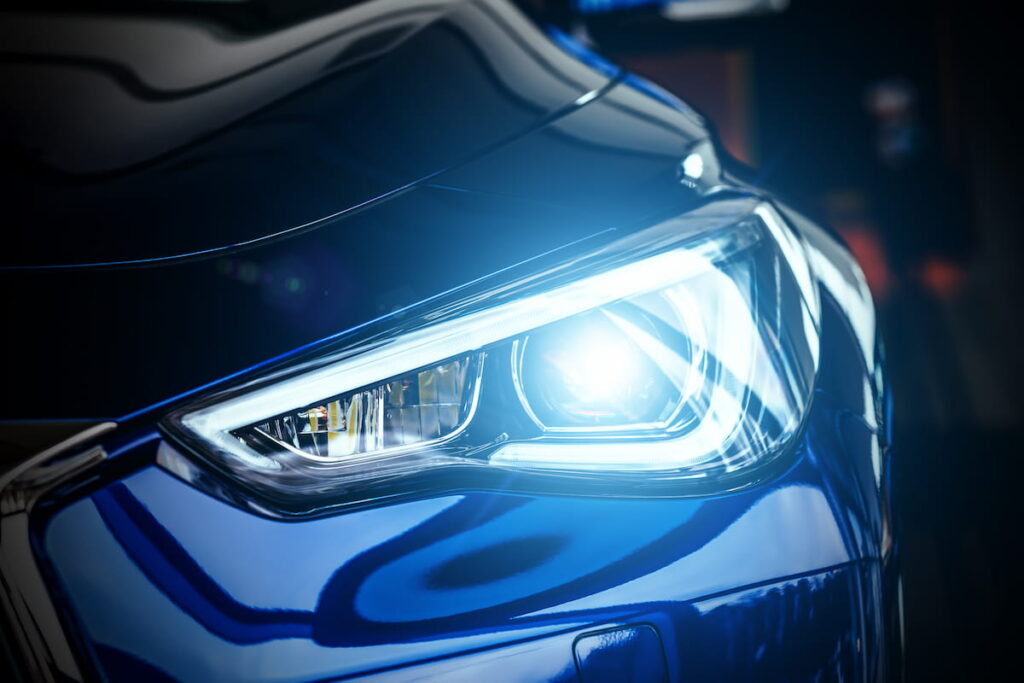
Did you know California has specific headlight laws aimed at reducing the risk of car accidents at night or during inclement weather? As a driver, you need to be aware of the specific times and conditions that require you to use your headlights.
To learn more about California headlight laws, continue reading our blog.
Key Takeaways
- Headlights required 30 minutes after sunset to 30 minutes before sunrise
- Must use headlights when visibility is reduced (rain, fog, snow) or when using wipers continuously
- Headlights must be white or yellow (front) and mounted 22-54 inches from ground
- High beams must dim within 500 feet of oncoming traffic or 300 feet when following
- HID headlights legal if under 2,513 lumens and emit white light
- Fog lamps must be mounted 12-30 inches from ground (maximum 2)
- Violations can establish negligence in accident liability claims
What Are California’s Headlight Laws?
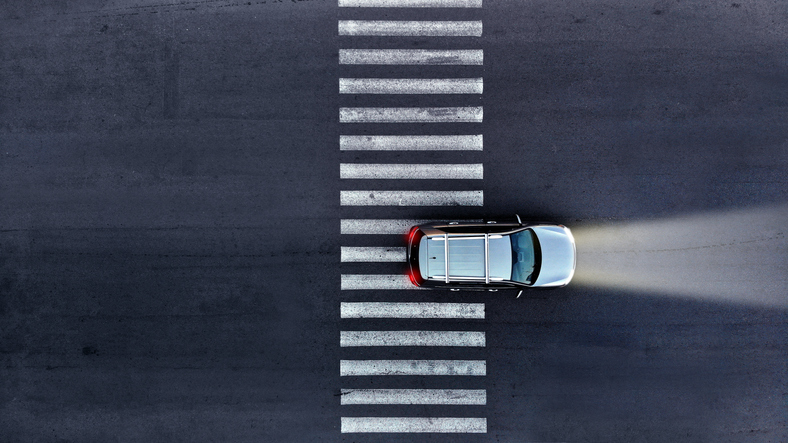
Not all cars have automatic headlights, especially older models. California law requires drivers to turn on their headlights under the following conditions:
- During inclement weather, such as rain, mist, snow, fog, or any time visibility is significantly reduced.
- Thirty minutes after sunset until thirty minutes before sunrise.
- When using windshield wipers continuously due to weather conditions.
California law does not require daytime running lights (DRLs), but if equipped, they must meet federal standards. Certain stretches of California roads, usually mountain roads or crash-prone highways, require daytime headlight use as mandated by the California Highway Patrol.
Important
All vehicles, except motorcycles, must have at least two headlights—one on each side of the front end. Motorcycles must be equipped with at least one headlight that is in good working condition at all times.
California Vehicle Code 25950: Headlamp Color Requirements (White or Yellow)
California Vehicle Code 25950 governs the color and installation requirements for all vehicle lamps and reflectors in California. This code is essential for vehicle owners, as any violation could result in citations, failed inspections, or accident liability.
Front Lighting Requirements:
Color specifications:
- Headlights must emit white or yellow light only
- Fog lamps may emit light in the spectrum from white to yellow
- All reflectors visible from the front must reflect white or yellow light
- Turn signals may show yellow/amber
Headlight mounting requirements:
- Must be installed between 22 and 54 inches from ground level
- Minimum of two headlights required (except motorcycles need only one)
- Must be symmetrically mounted on each side of the vehicle front
Rear Lighting Requirements:
- All lamps visible from the rear must emit red light
- Exception: Backup lamps must emit white light to the rear
- Exception: Turn signals may emit yellow/amber
- Stoplamps on pre-1979 vehicles may show yellow
Important Exceptions and Special Cases:
Pre-1979 vehicles:
- Stoplamps may emit yellow instead of red
- Different reflector requirements may apply
Pre-1974 vehicles:
- Taillamps, stoplamps, and turn signals may appear white when unlit
- Original equipment specifications grandfathered in
Infrared devices (Section 24255):
- May emit primarily infrared radiation
- Visible light must be yellow-to-white (front) or red (rear)
- Cannot resemble required lighting or traffic control devices
Aftermarket Modifications and Compliance:
- All aftermarket lights must meet color requirements
- HID/LED conversions must emit white light (not blue or purple)
- Maximum brightness: 2,513 lumens for high-intensity lights
- Police may cite for any non-compliant lighting color
Quick Reference Table: CVC 25950 Requirements
| Light Type | Required Color | Height Range | Special Notes |
|---|---|---|---|
| Headlights | White or yellow | 22-54 inches | Minimum 2 (except motorcycles: 1) |
| Fog lamps | White to yellow | 12-30 inches | Maximum 2 allowed |
| Front reflectors | White or yellow | N/A | Must be visible |
| Rear lamps | Red | Per manufacturer | White backup lights exception |
| Turn signals | Yellow / Amber | Per manufacturer | Front or rear |
| Brake lights | Red | Per manufacturer | Pre-1979 may be yellow |
Rules on High Beams and Fog Lights
In California, high beams (also known as brights) are legal, but only under certain circumstances, such as when there are no other vehicles around.
Drivers must switch from high to low beams when other vehicles are around, including approaching an oncoming vehicle within 500 feet or following a vehicle within 300 feet. This law prevents high-beam headlights from being projected into the eyes of an oncoming driver, thus blinding the driver.
Fog lights, or fog lamps, are legal in California as long as they are mounted to the front of the vehicle, between 12 and 30 inches from the ground. Fog lights cannot substitute for headlamps and cannot be more than two in number.
Safe Driving Tips at Night
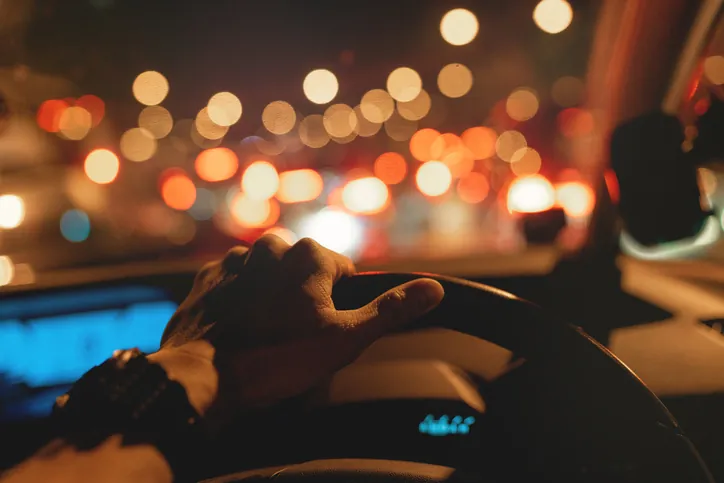
Driving at night is inherently more dangerous than driving during the day due to decreased visibility, tired drivers, and an increased risk of impaired drivers on the road. Here are some essential tips to stay safe while driving after dark:
- Use headlights properly: Make sure to use your headlights from dusk until dawn. Switch to low beams when another car approaches to prevent blinding oncoming drivers.
- Avoid distractions: Keep your attention fully on the road, as hazards can be harder to spot at night.
- Reduce speed: Lower your speed to account for limited visibility and possible unexpected obstacles.
- Stay alert for fatigue: Fatigue is common at night. Take breaks if you’re feeling drowsy to prevent falling asleep at the wheel.
- Watch for pedestrians and animals: Be extra cautious, as these can be harder to spot at night, especially in poorly lit areas.
With Daylight Saving Time ending this year on November 2nd, it will start getting darker much earlier. Be cautious, slow your speed, and make sure your headlights are on!
Liability in Accidents Involving Headlights
Especially in dark, nighttime conditions, all motor vehicle drivers must have their headlights on. A driver who is caught violating California’s headlight statutes may likely be found liable to pay for resulting accident-related injuries.
California follows the comparative negligence rule, which considers the driver’s potential negligence and how it contributed to the crash. Drivers who fail to turn on their headlights in inclement weather or violate another headlight statute can be presumed negligent.
However, in many motor vehicle accidents, both drivers hold a degree of liability. While one driver may not be using their headlights, the other driver could be speeding over the speed limit. In this case, both drivers could be held liable. It is best to consult with an experienced attorney if liability is disputed.
In Need of a Car Accident Expert?

Car accidents, especially at night or in low-light conditions, can be particularly dangerous and occur unexpectedly. If you sustained injuries in a nighttime car accident with a driver without headlights on, you may be eligible to receive financial compensation.
DK Law can help you recover what is rightfully yours in a car accident claim filed against the negligent party. Call our law office for a free consultation at (844) 317-4096.
DK all the way


From Your Case to Compensation, we take your case all the way.
Schedule a Free Consultation
Get Expert Legal Advice at Zero Cost.
At DK Law we’re with you – all the way.
Get a Free Consultation with our experts today!

Time Matters After an Accident
The sooner you speak with an attorney after an accident, the stronger your claim can be. Early action helps preserve evidence and protect your rights.
No Win No Fee | Available 24×7