Los Angeles Local Insider
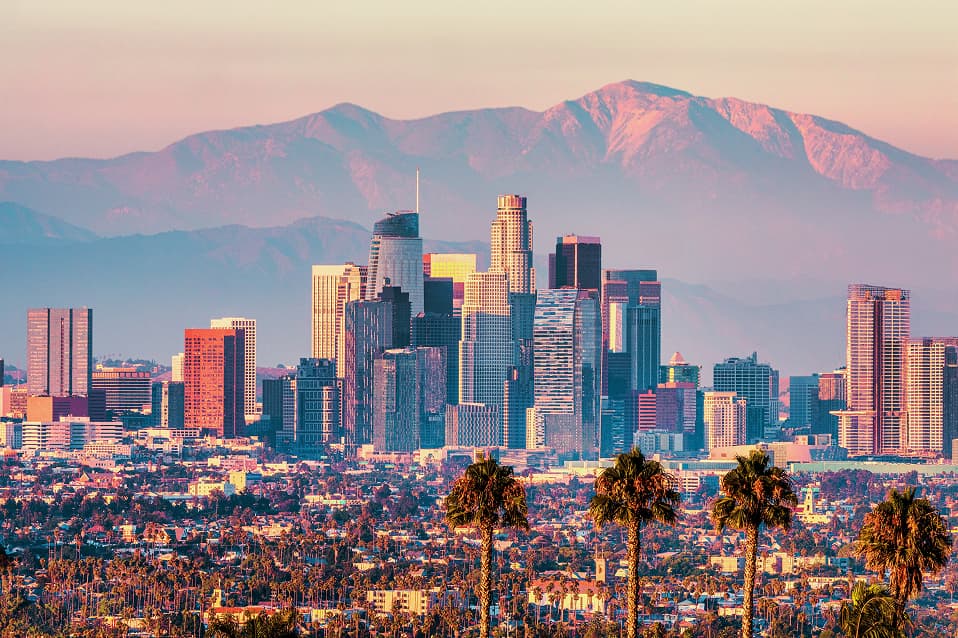
Los Angeles offers the ultimate urban lifestyle as the entertainment capital, with unmatched cultural attractions, global influence, diverse communities, and a safety score of 46.2.
DK Law Safe Score Index
Our Safe Roads Index analyzes statewide crash data to highlight the safest — and most dangerous — cities for California drivers.
Los Angeles Traffic Safety Snapshot
A closer look at 2022 collision data and statewide rankings across key safety categories.
TRAFFIC SAFETY OVERVIEW
330+ traffic fatalities
Highest in California (2023)
Los Angeles recorded over 330 traffic deaths in 2023—more than the city’s homicide count. This represents a 77% increase since 2015, when Vision Zero launched with the goal of eliminating traffic deaths by 2025.
HIT-AND-RUN Crashes
28% of Fatal Crashes
Among the highest rates in the nation
More than one in four fatal traffic accidents involve a driver who fled the scene—far exceeding most major US cities and complicating investigations for victims.
DANGEROUS INTERSECTIONS
66 Serious Collisions
Figueroa & Slauson (worst in city)
South Figueroa Street at Slauson Avenue recorded 66 serious injury collisions between 2021-2024. Sepulveda & Roscoe in the Valley (65 collisions) sees a major wreck roughly every three weeks.
PEDESTRIAN SAFETY
159 pedestrian fatalities
Pedestrians account for 50% of all traffic fatalities
Pedestrians account for roughly half of all LA traffic deaths. The unhoused population faces catastrophic risk—killed at 45 times the national average rate. High-risk areas include Downtown, Koreatown, and Hollywood.
Bicycle Safety
21-24 bicyclist fatalities annually
50% increase since 2015
Cyclist fatalities have risen sharply despite Mobility Plan promises. Limited protected bike lanes and dangerous “door zones” contribute to the risk. High-risk corridors include Venice Blvd, Sunset Blvd, and major Downtown streets.
OVERALL SAFETY INDEX
Composite Safety Score 46.2
Composite Safety Score: 46.2
Los Angeles’s safety score reflects elevated risk across all categories, with particular concerns in pedestrian safety, hit-and-run rates, and the failure of Vision Zero to achieve meaningful progress.
Source: California Office of Traffic Safety (OTS) 2022 Rankings for Los Angeles
Welcome to the City of Angels. Sprawling across 469 square miles of coastal plains, mountain foothills, and urban grid, Los Angeles is less a single city than a constellation of neighborhoods—each with its own personality, cuisine, and unwritten rules.
It’s where 3.8 million people speak 140 languages, where taco trucks serve alongside Michelin-starred restaurants, and where you can surf at sunrise and ski by sunset (in winter, at least).
Key Facts:
- City Incorporated: April 4, 1850 (founded September 4, 1781 as Spanish pueblo)
- Population: 3.8 million (city) / 13 million (county)
- Nicknames: City of Angels, La-La Land, Tinseltown, The Entertainment Capital of the World
- Median Household Income: $80,366 (but median home price exceeds $950,000)
- Fun Fact: Los Angeles was founded by 44 settlers of mixed Native American, African, and European descent—making it one of America’s most diverse cities from its very first day.
Demographics:
- 47.2% Hispanic/Latino
- 28.3% White (non-Hispanic)
- 11.8% Asian
- 9% Black/African American
- Other/multiracial residents make up the remainder
- 35.4% foreign-born residents
- 140+ languages spoken—no single ethnic group holds a majority
Housing:
- 63.7% renters / 36.3% homeowners
- Median home value: ~$950,000
- Median 1BR rent: $2,500+
Sources: U.S. Census Bureau; California Department of Finance; LA Almanac
Local’s Tip
“LA rewards those who dig deeper. The tourist traps on Hollywood Blvd don’t represent the city—the neighborhood taco stand, the secret hiking trail, the dive bar with live jazz on Tuesday nights… that’s the real LA.” – r/AskLosAngeles, Reddit.
Los Angeles City Highlights
- Safety Score: 46.2/100 – This score reflects crash frequency, pedestrian and cyclist fatality rates, hit-and-run incidents, and infrastructure gaps across 6,614 miles of city streets. LA recorded 52,000+ car accidents in 2022 alone. High-risk corridors include the I-405, I-10, and major arterials like Figueroa and Western.
- Urban Crime Context – Los Angeles sees approximately 30 crimes per 1,000 residents, with property crime (especially vehicle theft and burglary) concentrated around transit stations, tourist areas, and commercial corridors. Violent crime clusters in specific neighborhoods; many residential areas feel considerably safer than citywide statistics suggest.
- Diverse, Rent-Heavy City – With a median household income of $80K, a homeownership rate of just 36.3%, and a median home value near $950K, LA is predominantly a renter’s city. The city hosts the largest Korean community outside Asia, the largest Mexican community outside Mexico, and significant populations from virtually every country on Earth.
- Location Advantage – Los Angeles sits at the center of Southern California, with LAX providing global connectivity, the Port of LA handling more cargo than any Western Hemisphere port (9+ million containers annually), and a freeway system connecting the entire basin.
- Entertainment Capital Lifestyle – Home to Hollywood and the global entertainment industry, with major studios like Universal, Warner Bros., Netflix, and Disney headquartered here. LA draws 50+ million visitors annually to its world-class museums and cultural scene. “Silicon Beach” spans Venice, Santa Monica, and Playa Vista, home to 500+ tech companies, including Google, Snap, YouTube, and Amazon, with Google’s campus occupying the former Spruce Goose hangar.
History & Origins of Los Angeles
Long before Hollywood, the Los Angeles Basin was home to the Tongva people for at least 7,000 years. Their largest settlement, Yaanga, stood near present-day Union Station. The Tongva fished, hunted, and traded extensively, developing sophisticated watercraft (plank canoes called ti’at) to navigate between the mainland and Catalina Island, which they called Pimu.
In 1542, Spanish explorer Juan Rodríguez Cabrillo sailed into San Pedro Bay, but settlement didn’t arrive until the Portolá expedition of 1769. Mission San Gabriel Arcángel was founded in 1771, followed by the establishment of El Pueblo de Nuestra Señora la Reina de los Ángeles on September 4, 1781, with 44 settlers of mixed Native American, African, and European descent. The original pueblo was located near the LA River, where Olvera Street stands today.
The Mexican period (1821-1848) saw the mission system collapse, and ranchos rise in its place. The Treaty of Guadalupe Hidalgo (1848) transferred California to the United States. Los Angeles incorporated on April 4, 1850, with just 1,610 residents—five months before California became the 31st state.
The dusty pueblo transformed rapidly:
- 1876: Southern Pacific Railroad arrives
- 1892: Oil boom begins in Los Angeles
- 1910: Hollywood film industry arrives (Nestor Studios)
- 1913: LA Aqueduct opens, bringing Owens Valley water
Within decades, the small town became a global metropolis. The Tongva place names, however, persisted: Pacoima, Tujunga, Topanga, Cahuenga, Azusa—they echo across the modern city today.
Check out these historic sites when you visit:
- Olvera Street & El Pueblo de Los Angeles – The oldest street in LA and the original pueblo site. Today, a Mexican marketplace with historic adobes, including Avila Adobe (1818), the city’s oldest standing residence. Free walking tours available.
- Mission San Gabriel Arcángel – Founded in 1771, this mission predates LA itself. The history is complex, but the site is architecturally significant and has been recently restored after a devastating 2020 fire.
- Los Encinos State Historic Park – Preserves Tongva and Spanish rancho history in Encino, including natural springs that sustained indigenous communities for millennia.
- Watts Towers – Simon Rodia’s handcrafted folk art masterpiece, built over 33 years (1921-1954) from steel, mortar, broken pottery, seashells, and found objects. A National Historic Landmark in South LA and one of the most remarkable outsider art sites in the world.
- Bradbury Building – Stunning 1893 Victorian court building in Downtown LA, famous from Blade Runner, 500 Days of Summer, and countless other films. The skylit atrium with its ornate ironwork is breathtaking. Open to visitors during business hours.
- Kuruvungna Springs – A recently restored sacred Tongva site at University High School in West LA. One of the few places where you can learn about indigenous LA directly from cultural educators.
Fun Fact
The Bedford Falls set from “It’s a Wonderful Life” (1946) was originally built on the RKO Ranch in Encino, California.
The Neighborhoods
Los Angeles isn’t one city. It’s dozens of distinct neighborhoods stitched together by freeways. Understanding LA means understanding its neighborhoods. Each has its own personality, its own rhythms, its own unwritten rules about where to eat and when to avoid traffic.
Koreatown
Koreatown is LA at its most electric: a three-square-mile district where neon signs blaze in Korean and Spanish, where 24-hour restaurants serve galbi jjim at 3 AM, and where the density of karaoke bars, spas, and BBQ joints rivals Seoul itself.
Despite the name, K-Town is actually majority Latino (~50%) with Korean Americans comprising about a third of the ~100,000 residents. This diversity is part of its charm. You’ll find Oaxacan mole at Guelaguetza blocks from hand-cut noodles at Hangari Kalguksu, with Peruvian rotisserie chicken in between.
The history runs deep. The first Korean immigrants arrived in 1902, including independence activist Dosan Ahn Chang Ho. But the community didn’t truly take root until the Hart-Celler Act of 1965 opened Korean immigration. In 1968, Lee Hi Duk opened Olympic Market at 3122 W Olympic Boulevard—the first Korean grocery in LA. He spent over a decade lobbying city officials, and in 1980, Los Angeles officially designated the area “Koreatown.”
Boundaries: Wilshire Blvd (north), Pico Blvd (south), Vermont Ave (east), Western Ave (west). The core is around 6th Street & Alexandria.
The Vibe: Dense, urban, 24-hour energy. Art Deco terra cotta architecture meets K-pop fashion. Young professionals, Korean families, USC/UCLA students, and everyone in between. Parking is a nightmare—”Biggest complaint is parking, much like the rest of LA,” notes one resident. But the food makes it worth the hassle.
Getting There: Metro B Line (Vermont/Beverly, Vermont/Santa Monica) or D Line (Wilshire/Western, Wilshire/Normandie, Wilshire/Vermont). Excellent bus connectivity makes this one of LA’s most transit-friendly neighborhoods.
Cost of Living: Average 1BR runs $1,800-$2,500. More affordable than adjacent Hollywood or Beverly Hills. Popular with students and young professionals.
Cultural Amenities: Korean Festival & Parade (annual, Olympic Blvd), KTOWN Night Market (annual, RFK Community Schools), Da Wool Jung (Koreatown Pavilion Garden gateway monument at Olympic & Irolo), Vision Theater (Art Deco, 1932), Korean American Museum, KYCC (Koreatown Youth & Community Center), KIWA (Koreatown Immigrant Workers Alliance).
Don’t Miss: Late-night galbi jjim at Sun Nong Dan (Reddit loves it), cocktails at The Prince (Mad Men and New Girl filming location—look for the red booths), spa day at Wi Spa, bossam at Kobawoo (since 1985).
South LA & Leimert Park
Filmmaker John Singleton called Leimert Park the “Black Greenwich Village,” and the comparison fits. This tree-lined South LA neighborhood has been the cultural heart of Black Los Angeles for decades, nurturing artists, musicians, and activists who shaped the city’s identity.
Developed in 1928 by Walter H. Leimert and the Olmsted Brothers (of Central Park fame), the neighborhood features curving streets, pocket parks, and a village center—unusual for LA’s grid pattern. After racial covenants ended in 1948, Black families transformed it into a thriving cultural hub. Today’s population of ~11,800 is roughly 80% Black.
Cultural institutions include the Vision Theater (1932, Spanish Colonial Revival) and Art + Practice, founded by artist Mark Bradford to support foster youth while presenting contemporary art. Every Sunday, drum circles draw crowds to Leimert Plaza Park. The monthly Art Walk and Leimert Park Jazz Festival celebrate the neighborhood’s artistic spirit, while Juneteenth has been celebrated here since 1949.
Destination Crenshaw, a 1.3-mile open-air museum along Crenshaw Boulevard, celebrates Black LA through 100+ works by Black artists, described as the “commercial and cultural spine of Black Los Angeles.”The 2022 Metro K (Crenshaw) Line brought new transit access with stations at Martin Luther King Jr. and Leimert Park, connecting the neighborhood to the rest of LA.
The Vibe: Proud, artistic, rooted. Sunday jazz and spoken word. Multigenerational families who’ve been here for decades alongside young artists drawn by the creative energy and (for now) relative affordability.
Boundaries: Exposition Blvd (north), Western Ave (east), Vernon Ave (south), Crenshaw Blvd (west).
Don’t Miss: Sunday drum circle at Leimert Plaza Park, Art + Practice gallery, Eso Won Books (one of the nation’s premier Black bookstores), World Stage jazz venue, walking Destination Crenshaw.
“I lived in the neighborhood for 12 years; it is a walkable community. Neighbors are friendly, and we watch out for each other. 99% of my neighbors take pride in keeping the community neat and clean.” – Trulia review.
Downtown LA & The Arts District
For most of LA’s history, downtown emptied at night as office workers fled to the suburbs. Over the past two decades, loft conversions, new high-rises, and destination restaurants have transformed DTLA into a legitimate 24-hour neighborhood with roughly 100,000 residents.
The sub-districts each offer distinct character: the Financial District’s glass towers, Bunker Hill’s cultural institutions, Little Tokyo’s historic Japanese American community, Chinatown’s restaurants and galleries, the Historic Core’s pre-war architecture, and the Arts District.
The Arts District evolved from an industrial zone when artists moved in during the 1970s, seeking affordable studio space. In 1981, the city passed the AIR (Artist in Residence) ordinance legalizing live/work arrangements. The Brewery Art Colony opened in 1982, transforming a 32-acre former Pabst Blue Ribbon facility into artist studios.
Today, the Arts District features converted lofts, world-class galleries like Hauser & Wirth (in a restored flour mill) and ICA LA (free admission), and acclaimed restaurants like Bestia. Street art and murals cover nearly every wall. Art Share LA provides 30 subsidized live/work lofts for artists. The 2023 Regional Connector made Downtown a true transit hub, linking previously separate Metro lines. You can now ride from Pasadena to Santa Monica without transferring at Union Station.
The Vibe: Industrial chic meets creative class. Gallery openings, rooftop bars, morning coffee at Verve. Walk Score: 80 (very walkable by LA standards). The DTLA Residents Association (founded 2024) hosts Third Thursday neighborhood mixers.
Boundaries (Arts District): Alameda St (west), 1st St (north), LA River (east), Violet St (south).
Getting There: Metro A Line & E Line to Little Tokyo/Arts District Station.
Don’t Miss: Grand Central Market (since 1917—40+ food vendors including Tacos Tumbras a Tomas and Eggslut), Angels Flight funicular (“shortest railway in the world”), The Last Bookstore (labyrinthine used bookstore in a former bank), Angel City Brewery taproom, Little Tokyo’s ramen and izakayas, EightyTwo (40+ arcade/pinball games with full bar).
Hollywood
Hollywood is both a place and an idea. The neighborhood that gave its name to global film is a dense, diverse district where iconic landmarks meet everyday LA life.
Incorporated in 1903, Hollywood merged with Los Angeles in 1910 for water access. Film studios arrived almost immediately—Nestor Studios in 1911, drawn by reliable sunshine, varied landscapes, and distance from East Coast patent enforcers. By the 1920s, Hollywood became synonymous with movies, even as production migrated to Burbank, Culver City, and the Westside.
The landmarks are legendary: The Hollywood Sign (1923, originally “Hollywoodland”), the Hollywood Walk of Fame (2,800+ brass stars across 1.3 miles), TCL Chinese Theatre (1927, with celebrity handprints), the Dolby Theatre (home of the Academy Awards since 2001), Capitol Records Building (1956, designed like a stack of records), and the Hollywood Bowl (iconic 17,500-seat outdoor amphitheater).
After decline in the 1980s-90s, revival came with the 1999 Metro Red Line (now B Line) and 2001 Hollywood & Highland complex opening.
Today’s Hollywood is diverse and dynamic. Population density (22,193 people/sq mile) makes it the 7th densest area in LA County. Demographics: 42% Latino, 41% White, 7% Asian, 5% Black. Median household income is $33,694—this is a working neighborhood where film history meets vibrant urban life.
Sub-Neighborhoods: Franklin Village, Little Armenia, Thai Town (home to Bib Gourmand winners Jitlada and Sapp Coffee Shop), Whitley Heights, Yucca Corridor.
The Vibe: Tourist chaos along Hollywood Boulevard, surprisingly normal everywhere else. Dense and diverse.
Getting There: Metro B Line (Hollywood/Western, Hollywood/Vine, Hollywood/Highland)
Don’t Miss: Griffith Observatory at sunset (take the DASH shuttle to avoid parking), Hollywood Bowl concerts (June-September—bring a picnic, it’s tradition), Musso & Frank Grill (since 1919, Old Hollywood steakhouse), Amoeba Music (massive record store), hiking to the Hollywood Sign via multiple trails.
“Because of its history and famous sites like the Hollywood Walk of Fame, it also attracts hordes of tourists, so even though this is a very walkable neighborhood you’ll often need to maneuver around groups of visitors. Traffic tends to be frustrating any time of day.” – Local guide.
Venice Beach
Venice exists because tobacco millionaire Abbot Kinney dreamed of recreating Italy in California. In 1905, he opened “Venice of America” with 16 miles of canals, imported gondolas, Venetian arches, and a massive pier. On opening day, 40,000 Angelenos arrived by trolley to witness his vision.
Most canals were paved over in 1929, but six remain—restored in 1991-93 and now lined with multimillion-dollar homes. Venice joined Los Angeles in 1925 but never lost its independent spirit.
Through the 20th century, Venice became a haven for bohemians, beatniks, and artists. The counterculture hub of the 1960s-70s attracted creative minds including Charles and Ray Eames, who had their office on Abbot Kinney from 1943-1950s, and architect Frank Gehry, who built some of his first radical houses here.
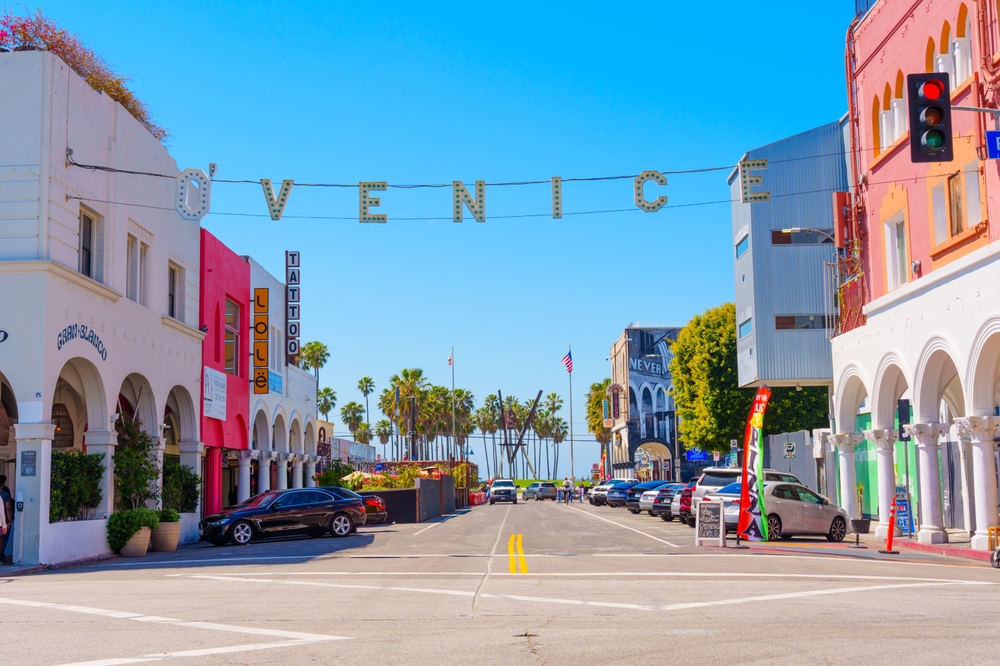
Today, the Ocean Front Walk boardwalk offers street performers, Muscle Beach bodybuilders, skaters, and carnival energy along 2.5 miles of pedestrian promenade. Abbot Kinney Boulevard has transformed into a boutique-lined destination GQ called “the coolest block in America.”
The tech boom of the 2010s created “Silicon Beach.” Google leased space in the Frank Gehry-designed Binoculars Building, and Snap Inc. was born in a boardwalk bungalow in 2011. Median household income is $67,647, with 68.8% of residents renting.
The Vibe: Bohemian roots meet tech money. Street performers and startup founders. Still weird, but increasingly wealthy.
Don’t Miss: Venice Canals at sunset (the most beautiful walk in LA), Gjelina on Abbot Kinney, Gjusta bakery/deli (same team), Muscle Beach, Venice Breakwater (solid surf spot), the Venice Sign on Windward Avenue.
“Venice is a great place to grow up. Having lived there for more than half my life, I can’t think of anywhere else I’d rather live. The people are vibrant and full of life.” – Homes.com review.
West LA & Century City
Century City didn’t exist until 20th Century Fox needed cash. In 1961, the studio sold off 176 acres of backlot to developers to cover Cleopatra‘s infamous cost overruns. The first building (Gateway West) opened in 1963; the Century Plaza Hotel, designed by Minoru Yamasaki (who later designed the World Trade Center), followed in 1964.
Today, Century City is one of LA’s premier employment centers. Office towers, talent agencies, law firms, and corporate headquarters. The Westfield Century City mall (422,000 sq ft) anchors the retail scene. Residential towers house a population that skews older (26% are 65+, the highest in LA County) and wealthier (median income $125K+).
The community has a significant Persian/Iranian population. 21% of residents were born in Iran, the largest single origin country for immigrants in the area. This is part of LA’s broader “Tehrangeles” phenomenon, concentrated on the Westside.
West Los Angeles, more broadly, is a diverse, relatively walkable area adjacent to UCLA and Westwood, with a mix of single-family homes, condos, and apartments.
The D Line Metro extension opens here in 2026, finally connecting the Westside to downtown by subway—a project decades in the making.
The Vibe: Corporate and polished. Lunch meetings and power shopping. Clean, safe, and expensive.
San Fernando Valley
“The Valley” is home to 1.8 million people across 260 square miles—more populous than Philadelphia. Separated from the rest of LA by the Santa Monica Mountains, the Valley offers space: single-family homes with backyards, good public schools, and family-friendly neighborhoods.
Sherman Oaks exemplifies the Valley at its best: tree-lined streets, excellent schools, and 18 miles of Ventura Boulevard commerce. Population hovers around 70,000, with median household income near $100,000.
Encino, to the west, features historic ties to the rancho era. Los Encinos State Historic Park preserves Tongva and Spanish colonial history, including natural springs that sustained indigenous communities for millennia.
The Valley’s biggest challenge is separation from the rest of LA. The Santa Monica Mountains form a natural barrier, and crossing the Sepulveda Pass on the 405 can take an hour during rush hour—400,000 drivers make this trip daily. That’s set to change. The Sepulveda Transit Corridor, a 13-mile underground subway approved January 2025, will connect the Valley to the Westside in under 20 minutes by 2033. Stations at Van Nuys, Sherman Oaks, and UCLA will transform commuting patterns.
That’s set to change. The Sepulveda Transit Corridor, a 13-mile underground subway approved January 2025, will connect the Valley to the Westside in under 20 minutes by 2033. Stations at Van Nuys, Sherman Oaks, and UCLA will transform commuting patterns.
The Vibe: Suburban, family-oriented, more affordable. Hot in summer (10-15° warmer than the coast). Underrated dining scene along Ventura Boulevard. People who grew up in the Valley often return to raise their own kids.
Recreation: Sepulveda Basin Recreation Area — golf courses, wildlife reserve, 2,000 cherry trees (spectacular in bloom). Van Nuys Sherman Oaks Recreation Center — 67 acres. Easy access to Santa Monica Mountains trails.
Getting There: Metro B Line terminates at North Hollywood; Metro G Line (Orange) bus rapid transit runs across the Valley.
Don’t Miss: Casa Vega Mexican (since 1956—classic Valley institution), Sherman Oaks Castle Park (mini golf and arcade), Sepulveda Basin.
Top Things to Do in Los Angeles
Griffith Observatory & Griffith Park
2800 E Observatory Rd | FREE admission (planetarium $10 adults, $6 children) | Tue-Fri 12-10pm, Sat-Sun 10am-10pm (closed Monday)
The most visited public observatory in the world, and for good reason. The 1935 Art Deco building houses a Zeiss telescope, the Samuel Oschin Planetarium—all while offering spectacular views of the LA Basin, the Hollywood Sign, and (on clear days) the Pacific Ocean.
Featured in Rebel Without a Cause and La La Land. The views at sunset are unforgettable.
Griffith Park surrounding the observatory is the largest urban park in the US—4,210 acres of urban wilderness with 50+ miles of hiking trails, the LA Zoo (270+ species), and the Greek Theatre outdoor concert venue.
Tip
Parking costs ~$10/hour and fills up fast on weekends. Take the DASH shuttle (35¢ with TAP card) from the Greek Theatre lot instead.
The Getty Center
1200 Getty Center Dr | FREE admission (parking $20) | Tue-Sun 10am-5:30pm
World-class art museum with Van Gogh’s “Irises,” Rembrandt, and a stunning Impressionist collection. Richard Meier’s architecture—1.2 million square feet of Italian travertine—is a destination in itself. The Central Garden by Robert Irwin changes with the seasons. Panoramic views stretch to the Pacific. Tip: Pack a picnic—eating on the grounds is encouraged.
The Broad
221 S Grand Ave | FREE (advance reservation required) | Tue-Sun 10am-5pm (Thu until 8pm)
Contemporary art museum featuring Yayoi Kusama’s “Infinity Mirrored Room” (timed tickets—book early), plus Warhol, Basquiat, Koons, and more. The building itself, “The Veil and the Vault” by Diller Scofidio + Renfro, is an architectural landmark with its honeycomb exterior.
LACMA
5905 Wilshire Blvd | $20 adults | Mon-Tue-Thu 11am-6pm, Fri 11am-8pm, Sat-Sun 10am-7pm
Largest art museum in the Western US. Instantly recognizable from Chris Burden’s Urban Light installation, 202 restored cast-iron streetlamps that have become an LA icon and Instagram staple. The collection spans 6,000 years.
Adjacent to the La Brea Tar Pits (active paleontology site where you can watch excavations) and the new Academy Museum of Motion Pictures.
Hollywood Bowl
2301 N Highland Ave | Prices vary | June-September
Iconic 17,500-seat outdoor amphitheater and LA Philharmonic summer home. One of the best live music experiences anywhere. Bring a picnic and wine—it’s tradition. The stacked seating against the Hollywood Hills creates perfect acoustics.
Venice Beach & Canals
Ocean Front Walk | FREE
The boardwalk offers street performers, Muscle Beach bodybuilders, skaters, and cheerful chaos. The Venice Canals—six restored waterways lined with multimillion-dollar homes—are a world apart, quiet and impossibly photogenic. Visit the canals at sunset for the best light.
Universal Studios Hollywood
100 Universal City Plaza | ~$109+ | Daily
Theme park and working studio. The Studio Tour shows actual backlots where movies are made; you’ll see sets from Jaws, Psycho, and War of the Worlds. The Wizarding World of Harry Potter is worth the price for fans.
Getting There: Metro B Line to Universal/Studio City station.
Grand Central Market
317 S Broadway | FREE entry | Daily 8am-10pm
40+ food vendors in a 1917 landmark building. Tacos Tumbras a Tomas, Eggslut, Shiku, McConnell’s Ice Cream, and more. This is where office workers, tourists, and Downtown residents all converge. Ride Angels Flight funicular nearby—”the shortest railway in the world” (298 feet).
Additional Attractions
| Attraction | Location | Admission | Notes |
|---|---|---|---|
| Natural History Museum | Expo Park | $15 | Dinosaur Hall, gem collection |
| California Science Center | Expo Park | FREE | Space Shuttle Endeavour |
| LA Zoo | Griffith Park | $22 adults | 270+ species |
| Santa Monica Pier | Santa Monica | FREE | Pacific Park rides extra; Route 66 endpoint |
| The Last Bookstore | DTLA | FREE | Labyrinthine used bookstore in former bank |
Seasonal Events
| Event | When | Location |
|---|---|---|
| Tournament of Roses Parade | January 1 | Pasadena |
| Academy Awards | March | Dolby Theatre |
| Coachella | April | Indio (2 hours east) |
| LA Pride | June | West Hollywood |
| CicLAvia | Multiple dates | Various (car-free streets) |
| Korean Festival & Parade | Sept/Oct | Koreatown |
| Dia de los Muertos | Nov 1-2 | Olvera Street, Hollywood Forever Cemetery |
| Marina del Rey Holiday Boat Parade | December | Marina del Rey |
Where to Eat & Drink
LA’s food scene is arguably the best in America—not because of fine dining (though that exists), but because of the staggering diversity at every price point. Jonathan Gold spent decades documenting the strip-mall treasures; his legacy lives on in a city where first-generation immigrants cook for their own communities, and everyone else is welcome at the table.
Koreatown Essentials
Korean BBQ:
| Restaurant | Specialty | Address | Notes |
|---|---|---|---|
| Soowon Galbi | Premium KBBQ | 856 S Vermont Ave | Since 1986; legendary marinated short ribs |
| Kang Ho Dong Baekjeong | KBBQ | 3465 W 6th St | Celebrity chef-owned; theatrical tableside service |
| Park’s BBQ | Premium KBBQ | 955 S Vermont Ave | Wagyu options; upscale vibe |
Traditional Korean:
| Restaurant | Specialty | Notes |
|---|---|---|
| Sun Nong Dan | Galbi jjim | 24hr on Western Ave; torched tableside; Reddit favorite |
| Kobawoo | Bossam | Since 1985; best pork belly wraps in LA |
| Hangari Kalguksu | Hand-cut noodles | Family-run gem; chicken kalguksu |
| Soban | Banchan | 16 banchan dishes; incredible black cod |
| Lee Ga | Mul naengmyeon | Fresh buckwheat noodles in icy beef broth |
| Sun Ha Jang | Duck BBQ | Only serves duck; reservations recommended |
| Young King | Korean-Chinese | Best jajangmyeon in the city |
Late Night & Bars:
| Venue | Type | Notes |
|---|---|---|
| Dan Sung Sa | Late-night tavern | All-wood interior; skewers and soju until 2 AM |
| The Prince | Iconic bar | Red interior; Mad Men, New Girl filming location |
| Dwit Gol Mok | Hidden dive | Enter through Caffe Bene parking lot |
| Frank n’ Hank | Dive bar | Western Ave classic |
Modern/Fusion:
| Restaurant | Specialty | Notes |
|---|---|---|
| Kinn | Fine dining | 7-course prix fixe $72 |
| Jilli | Modern sool jib | Rigatoni Alla Kimchi Vodka; natural wines |
| Tokki | Truffle fusion | Truffle kimchi fried rice |
Not Korean (But in K-Town):
| Restaurant | Cuisine | Notes |
|---|---|---|
| Guelaguetza | Oaxacan | James Beard “American Classic”; mole negro worth traveling for |
| Pollo a La Brasa | Peruvian | 8th & Western; rotisserie chicken, addictive green aji sauce |
| Biryani Kabob House | Pakistani | Hyderabadi lamb biryani |
Across the City
Silver Lake / Echo Park:
- Sqirl — The ricotta toast that launched a thousand Instagram posts
- Pine & Crane — Excellent Taiwanese; counter-service; dan dan noodles
- Alimento — Pasta-focused neighborhood gem
- Para Ti — Modern Mexican; Chef Andrew Ponce
Highland Park / Northeast LA:
- Villa’s Tacos — Michelin Bib Gourmand; roadside legend turned institution
- Triple Beam Pizza — Hip hop-themed; excellent pies
- Hippo — Tasting menu at accessible prices
- Café Birdie — All-day café in a former gas station
Arts District / DTLA:
- Bestia — Legendary Italian; house-made pastas; reserve weeks ahead
- Wurstküche — Gourmet sausages (duck & bacon) and Belgian fries
- EightyTwo — 40+ arcade/pinball games with full bar
- Bavel — Middle Eastern from the Bestia team
Venice / Santa Monica / Westside:
- Gjelina — California cuisine on Abbot Kinney; perpetually packed
- Gjusta — Bakery/deli from Gjelina team
- Bay Cities Italian Deli (Santa Monica) — The Godmother sandwich is pilgrimage-worthy
- Cassia — Southeast Asian; Vietnamese-French grand café style
- Rustic Canyon — Farm-to-table; excellent wine bar
Culver City:
- Destroyer — Jordan Kahn’s breakfast/lunch spot
- Vespertine — Two Michelin stars; immersive architectural experience
- Lukshon — Southeast Asian; Chef Sang Yoon
Hollywood:
- Musso & Frank Grill — Since 1919; Old Hollywood steakhouse
- Providence — Three Michelin stars; seafood tasting menus
Thai Town (Bib Gourmand Central):
- Jitlada — Legendary Thai; insane spice levels
- Sapp Coffee Shop — Thai boat noodles
Late-Night Eats (After 11pm)
| Restaurant | Neighborhood | Notes |
|---|---|---|
| Sun Nong Dan | Koreatown | 24 hours on Western Ave |
| Canter’s Deli | Fairfax | 24 hours; classic Jewish deli; matzo ball soup at 3 AM |
| Tacos 1986 | Multiple | Late-night Tijuana-style tacos |
| Bludso’s Bar & Que | Hollywood | BBQ until 2am weekends |
| Dan Sung Sa | Koreatown | Tavern vibes until 2 AM |
Michelin Stars (2025)
LA earned its first three-Michelin-star restaurant when Providence (5955 Melrose Ave) received the honor in 2025 for its seafood tasting menus.
| Restaurant | Stars | Cuisine | Location | Price |
|---|---|---|---|---|
| Providence | ⭐⭐⭐ | Seafood | Hollywood | $$$$ |
| Vespertine | ⭐⭐ | Contemporary | Culver City | $$$$ |
| n/naka | ⭐⭐ | Modern Kaiseki | Palms | $$$$ |
| Mélisse | ⭐⭐ | French-American | Santa Monica | $$$$ |
| Restaurant Ki | ⭐ | Modern Korean | Little Tokyo | $$$$ (NEW 2025) |
| Holbox | ⭐ | Mexican Seafood | South LA | $$ (affordable!) |
| Hayato | ⭐ | Japanese Omakase | DTLA | $$$$ |
| Shibumi | ⭐ | Kappo | DTLA | $$$$ |
| Gucci Osteria | ⭐ | Italian | Beverly Hills | $$$$ |
| Osteria Mozza | ⭐ | Italian | Hollywood | $$$ |
Bib Gourmand (Best Value): Guelaguetza, Jitlada, Sapp Coffee Shop, Howlin’ Ray’s, Villa’s Tacos
Getting Around in Los Angeles
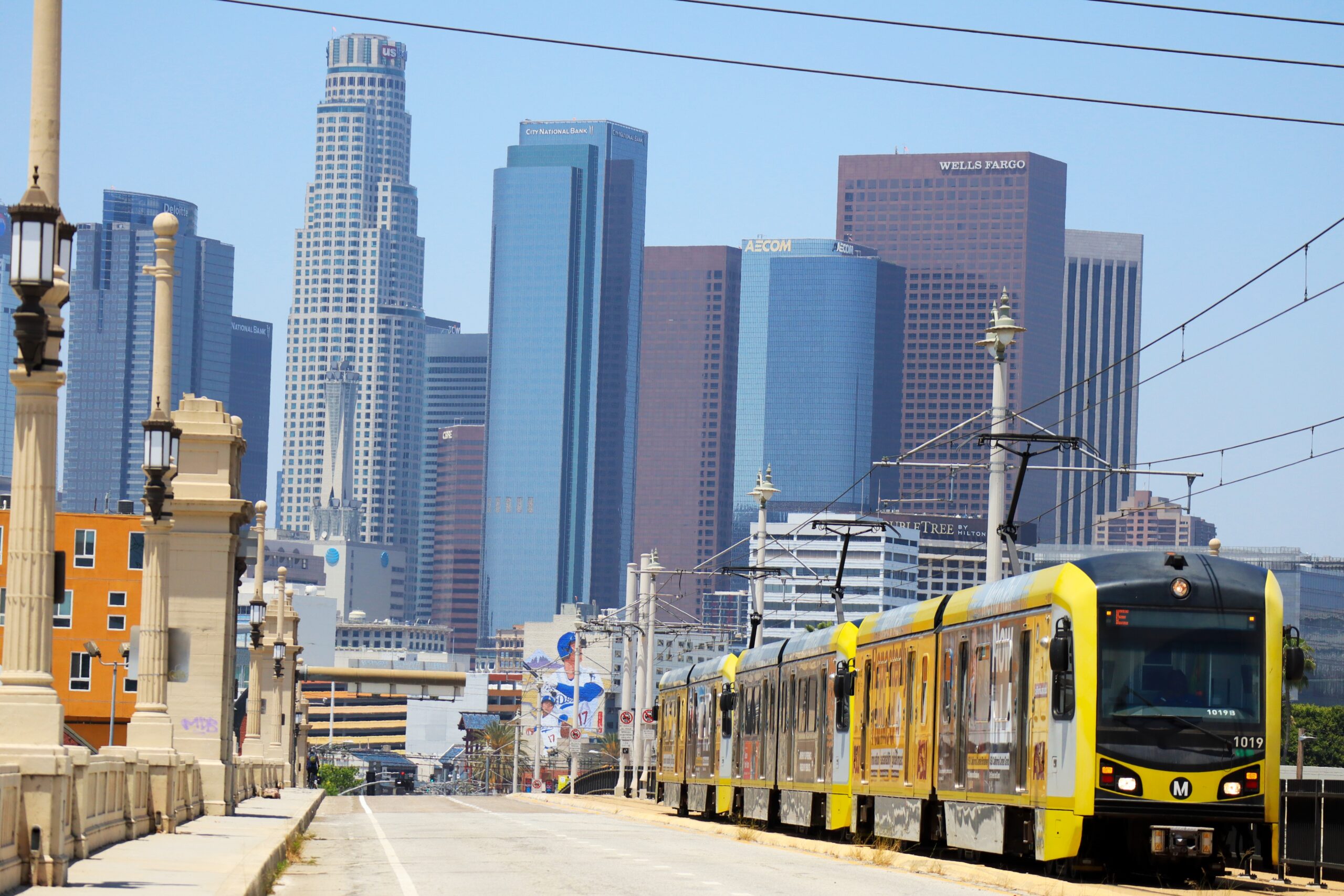
LA is a car city—6,614 miles of streets and legendary freeways built for automobiles.
Average commute: 31 minutes. Rush hour reality: much longer.
Metro Rail System
| Line | Route | Key Stops | Notes |
|---|---|---|---|
| A Line | Pomona ↔ Long Beach | Union Station, Pasadena, Little Tokyo, Long Beach | World’s longest light rail |
| B Line | North Hollywood ↔ Union Station | Hollywood/Highland, Universal City, NoHo | Subway; Valley connection |
| D Line | Wilshire/Western ↔ Union Station | Koreatown stations | Extending to Westwood 2026 |
| E Line | Downtown LA ↔ Santa Monica | USC, Culver City, Santa Monica | Beach access |
| C Line | Redondo Beach ↔ Norwalk | Aviation/LAX | Airport connector |
| K Line | Expo/Crenshaw ↔ Westchester | Leimert Park, Inglewood | Opened 2022 |
| G Line | Chatsworth ↔ North Hollywood | Valley BRT | Bus rapid transit |
Fares: $1.75 base; $5 daily cap (after 3 rides); $18 weekly cap. TAP card required.
Coming Soon:
- D Line to Century City/Westwood (2026)
- Sepulveda Transit Corridor: Valley to Westside in 20 min (2033)
- A Line extension to Claremont (under construction)
Freeways
| Freeway | Name | Notes |
|---|---|---|
| I-405 | San Diego Freeway | Worst congestion in US; avoid Sepulveda Pass 7-10am, 3-7pm |
| I-10 | Santa Monica Freeway | Beach to downtown; brutal PM westbound |
| US-101 | Hollywood Freeway | Downtown through Hollywood to Valley via Cahuenga Pass |
| I-110 | Harbor Freeway | Downtown to Port of LA; most dangerous segment (162 accidents/mile) |
| I-5 | Golden State Freeway | North-south through eastern LA |
Traffic Reality: Angelenos lose 59 hours annually stuck in traffic. The 405 through Sepulveda Pass is legendarily brutal. Plan around rush hour (7-10 AM, 3-7 PM) or lose hours of your life.
LAX Access
- K Line: Aviation/LAX station + free shuttle to terminals
- FlyAway buses: From Union Station ($9.75), Van Nuys, others
Dangerous Intersections
| Rank | Intersection | Neighborhood | Serious Collisions (2021-24) | Notes |
|---|---|---|---|---|
| 1 | S. Figueroa & Slauson | South LA | 66 | Most dangerous in city |
| 2 | Sepulveda & Roscoe | San Fernando Valley | 65 | Near 405; wreck every ~3 weeks |
| 3 | Figueroa & Manchester | South LA | 61 | High-speed arterial |
| 4 | Vermont & Florence | South LA | 19 | Heavy pedestrian traffic |
| 5 | Manchester & Normandie | Manchester Square | 18 | Major arterial crossing |
Additional High-Risk Intersections: Highland & Hollywood Blvd (tourist pedestrian congestion), Wilshire & Western (Koreatown—high pedestrian traffic, red-light running), Victory & Lindley (Reseda—near schools), Devonshire & Reseda (Northridge).
Most Dangerous Road Segment: I-110 between San Pedro and US-101—162 accidents per mile.
Contributing Factors: Freeway proximity (drivers exiting at 70mph onto city streets), poor pedestrian infrastructure, high-speed arterial corridors, complex merges, limited visibility, and commercial truck traffic.
City Services & Essentials
Los Angeles City Hall
200 N Spring Street, Los Angeles, CA 90012
Phone: (213) 473-3231
Hours: Monday – Friday, 8:00 am to 5:00 pm
Los Angeles Police Department (LAPD) Headquarters
100 W 1st Street, Los Angeles, CA 90012
Non-Emergency: (877) 275-5273 or 311
USPS Main Post Office (Terminal Annex)
900 N Alameda Street, Los Angeles, CA 90012
Phone: (800) 275-8777
Hours: Monday – Friday, 9:00 am to 5:00 pm; Saturday, 9:00 am to 3:00 pm; Closed Sunday
Los Angeles Public Library (Central Library)
630 W 5th Street, Los Angeles, CA 90071
Phone: (213) 228-7000
Hours: Monday – Thursday, 10:00 am to 8:00 pm; Friday – Saturday, 9:30 am to 5:30 pm; Sunday, 1:00 pm to 5:00 pm
Hospitals & Emergency Care
| Hospital | Address | Phone | Type | Notes |
|---|---|---|---|---|
| Cedars-Sinai | 8700 Beverly Blvd | (310) 423-3277 | Level I Trauma | Largest nonprofit hospital in Western US; 886 beds |
| UCLA Ronald Reagan | 757 Westwood Plaza | (310) 825-9111 | Level I Trauma | Top-ranked nationally in multiple specialties |
| LA County + USC | 2051 Marengo St | (323) 226-2622 | Level I Trauma | Safety-net hospital; major teaching hospital |
| Children’s Hospital LA | 4650 Sunset Blvd | (323) 660-2450 | Pediatric | One of best pediatric hospitals in US |
| Kaiser Permanente LA | 4867 Sunset Blvd | (833) 574-2273 | HMO | Major Kaiser facility |
Urgent Care Chains: CityMD, Providence ExpressCare, Cedars-Sinai Urgent Care (multiple locations)
Why Locals Love Los Angeles
Los Angeles consistently ranks as a favorite city because it offers:
- The Weather – 284 sunny days, 70°F average, Mediterranean climate. Flip-flops in December? Absolutely.
- The Diversity – 140+ languages, authentic ethnic enclaves (Koreatown, Little Tokyo, Thai Town, Little Ethiopia, Little Armenia), and every cuisine on Earth.
- The Outdoors – Surf, hike, and ski in one day. 75 miles of coastline, Santa Monica Mountains, Griffith Park’s 4,210 acres, and Big Bear is just two hours away.
- The Creative Energy – Everyone’s working on something: films, startups, music, art. The hustle is relentless, the inspiration endless.
- The Food – Strip-mall treasures and Michelin stars coexist. Street tacos, 24-hour Korean BBQ, The Godmother at Bay Cities, mole at Guelaguetza—LA takes food seriously.
- The Entertainment – Live music nightly, comedy legends (The Comedy Store, Largo), major sports (Dodgers, Lakers, Rams, more), and Hollywood Bowl concerts under the stars.
- The Neighborhoods – Each area has its own vibe: Silver Lake hipsters, Valley families, Venice creatives, Koreatown night owls. Find your people.
Why They Complain
- The Traffic – The 405 through Sepulveda Pass is legendary for gridlock; the 10 westbound in the evening is brutal. Average commute is 31 minutes—but that’s an average. The 405 alone costs Angelenos 59 hours annually.
- The Cost – Median home: $950K+. Median 1BR rent: $2,500+. Gas prices highest in the nation. Childcare averages $2,000+/month.
- The Homelessness – 75,000+ unhoused in LA County. The crisis is visible and heartbreaking, with encampments in most neighborhoods. Ongoing policy debates yield few results.
- The Sprawl – LA is 469 square miles. You will plan your social life around traffic patterns.
- The Car Dependency – Metro is improving, but most Angelenos still need a car. That means insurance, gas, parking, and all the associated headaches.
- The Air Quality – Smog persists despite improvements. “Ozone action” days in summer. Wildfire smoke is increasingly common during fire season.
- The Earthquakes – San Andreas Fault proximity; building codes are strict, but a major quake is statistically overdue. Preparedness is essential, but most people don’t prepare.
Tips for Thriving in LA
- Give it time – Most struggle year one. Those who stick it out for two years often fall hard for the city. LA rewards patience.
- Live close to work – This single decision determines your quality of life. A great apartment 45 minutes away will make you miserable; a decent one 15 minutes away changes everything.
- Find your neighborhood – LA neighborhoods function like separate cities. Explore until you find yours, then invest in it. Know your local spots—that’s how you build community.
- Learn the freeways – The 405 is always bad, the 10 clears after 7 PM, the 110/101 interchange is a nightmare. Use Waze religiously and leave 15 minutes earlier than you think you need to.
- Prepare for earthquakes – Keep an emergency kit (water, food, flashlight, first aid). Secure tall furniture.
- Sign up for wildfire alerts – Fire season runs September to December. If you live in hillside areas, know your evacuation routes and sign up for alerts.
Local’s Tip
“You have to build your LA. The city doesn’t hand you a social life—you have to find your people, your spots, your rhythms. Once you do, there’s nowhere better.” – Longtime Angeleno
If You’ve Been Injured
Los Angeles streets claimed 330+ lives last year and left thousands more with serious injuries. With 52,000+ car accidents annually in the city proper, understanding your rights matters.
Common Accident Types in LA:
- Car accidents on congested freeways and arterials (I-405 Sepulveda Pass, I-10, I-110)
- Pedestrian accidents on streets designed for cars, not people (Downtown, Koreatown, Hollywood—50% of traffic deaths are pedestrians)
- Bicycle accidents on roads lacking protected infrastructure (Venice Blvd, Sunset Blvd)
- Rideshare accidents involving Uber/Lyft (9+ million trips annually in LA County)
- Truck accidents on corridors serving the Port of LA (I-710, I-110)
- Hit and run incidents (28% of fatal crashes involve a fleeing driver—one of the highest rates in the nation)
- Motorcycle accidents on canyon roads (Mulholland, Angeles Crest) and freeway on/off ramps
After Any Accident:
- Seek medical attention – Even if injuries seem minor, document everything
- Document the scene –Photos, witness contact info, police report number
- Don’t give recorded statements – to the other party’s insurance without legal guidance
- Contact an attorney quickly – California statute of limitations is 2 years for personal injury
- Preserve evidence – Keep damaged property, clothing, and medical records
Why Choose a Local Attorney:
An attorney who knows LA understands which intersections have documented histories of accidents, how rush hour timing affects liability arguments, and how to navigate the LA Superior Court system—the largest unified trial court in the US, with 580+ judges across 36 courthouses. Local relationships with judges, adjusters, and opposing counsel matter.
DK Law serves Los Angeles with experienced personal injury attorneys who understand local traffic patterns, dangerous intersections, and the complexities of navigating LA courts. Spanish and Korean-language services available for Koreatown and the broader Korean American community—we understand the cultural nuances and can communicate with medical providers, insurance companies, and courts in both languages.
Free consultation. No fee unless we win.
Call us today for a free case review. We can meet you at home, at the hospital, or virtually – whatever works best for you.
Last updated: February 2026
Los Angeles By The Numbers
Discover what makes this city stand out – where community pride meets California comfort.
3.8M+
Residents
The second-largest U.S. city, with 3.8 million residents in the city and 13 million across LA County.
1781
Year Founded
Founded as a Spanish pueblo in 1781, incorporated as an American city on April 4, 1850.
$80K+
Median Household Income
Median household income of $80,366, though the median home price exceeds $950,000.
38.1
Median Age
A diverse, dynamic community with a median age of 38.1.
Explore By What Matters Most
Whether you’re searching by location or case type, we’ll help you get exactly where you need to be.
Find Us Near You
Browse all cities and counties we serve.
See where our attorneys are winning cases every day.

Explore Legal Focus Areas
From car accidents to wrongful death, see every type of case we handle with confidence.

DK All the way


From Your Case to Compensation, we take your case all the way.
Schedule a Free Consultation
Get Expert Legal Advice at Zero Cost.
Were you injured in an accident in Los Angeles?
We Can Help You. Call Us For a Free Consultation Today.
At DK Law we’re with you – all the way.
Get a Free Consultation with our experts today!