California Motorcycle Helmet Laws: A Complete Guide
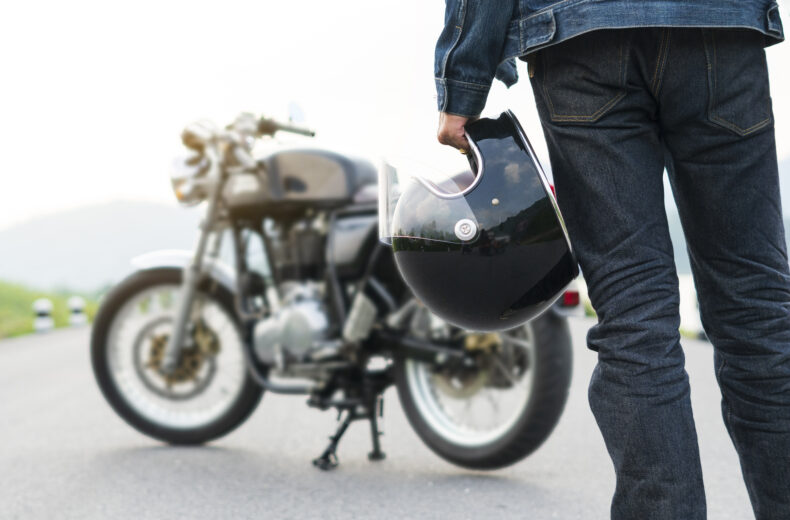
With 800,000 registered motorcycles and counting, it comes as no surprise that California has more motorcycle riders than any other state in the U.S. With miles of coastline, wide-open desert roads, and forested enclaves, California is a motorcyclist’s dream destination.
Whether you’re a seasoned pro, a new rider, or just visiting The Golden State, it’s important to know the universal motorcycle helmet laws in California. Read on to find out more.
Motorcycle Helmet Laws
California is one of 17 states that have a universal helmet law. Other states have partial helmet laws that only require riders under a certain age to wear a helmet. The California Vehicle Code requires all riders and passengers, regardless of age or experience, to wear a U.S. Department of Transportation (DOT) compliant motorcycle safety helmet that meets Federal Motor Vehicle Safety Standard 218.
The law applies not only to motorcycles but also to motor-driven cycles and motorized bicycles. Whichever helmet style a rider chooses, it must meet the following criteria:
- Meets U.S. DOT safety standards: The motorcycle helmet must have a manufacturer-applied DOT sticker or label on the back.
- Snug fit: The helmet should fit comfortably on the head and not shift around.
- Has no obvious defects: The helmet should not have any obvious defects, including frayed straps, loose padding, or cracks.
- Is securely fastened to the head: A motorcycle safety helmet that is securely fastened to the head will protect a rider in the event of a motorcycle accident.
According to the California Highway Patrol, riding without a helmet can result in a fine of up to $250 per offense and/or one year of probation. In addition to a helmet, the California DMV recommends that riders wear additional face and eye protection, such as a face shield, well-fitting leather gloves, a reflective leather or long-sleeve jacket, pants with heavy, protective padding, and sturdy boots.
What Are the 6 Types of Motorcycle Helmets?
The most important safety gear a rider can have is a motorcycle helmet. There are many different types of motorcycle helmets available on the market, each with its own pros and cons. The best type of helmet will depend on riding style, the type of motorcycle, and personal preferences. These are the six types of motorcycle helmets:
1. Full-face helmet
This is the most protective type of helmet, covering the entire neck and head, including the face and chin. Full-face helmets typically have a face shield that protects the eyes from wind and debris. This type of helmet is suitable for all terrains and riding styles.
2. Modular helmet
Also known as a flip-up helmet, a modular helmet combines features of both full-face and open-face helmets. It has a hinged chin bar that can be flipped up, allowing riders to lift the front of the helmet and expose their face without fully removing the helmet.
3. Open-face helmet
Also known as a 3/4 helmet, an open-face helmet covers the top, sides, and back of the head, but leaves the face exposed. It typically does not have a chin strap, providing less protection compared to full-face helmets. Open-face helmets are popular among riders who prefer a more open and unrestricted riding experience, and they are commonly used for cruisers, scooters, and café racers.
4. Off-road/dirt bike helmet
These helmets are specifically designed for off-road or motocross riding, featuring extended visors, enhanced ventilation, and additional protection for the chin, mouth, and nose. Off-road helmets are a good choice for riders who frequent dirt trails and mountainous terrain.
5. Dual-sport helmet
These helmets are designed for both on-road and off-road riding. They typically feature a combination of elements from full-face and off-road helmets, including a visor, an extended chin bar, and good ventilation.
6. Half helmet
Also known as a skull cap or a beanie helmet, a half helmet covers only the top of the head, leaving the face, ears, and neck exposed. Half helmets offer the least protection among all helmet types and are not recommended for riders who prioritize safety. However, they are sometimes preferred for their minimalistic design and lightweight feel.
When choosing a motorcycle helmet, it is important to consider the following factors:
- Fit: The helmet should fit snugly, but not too tightly. There should be no gaps between the helmet and your head. A DOT-approved helmet will have a sturdy chin strap.
- Label: A helmet must have a label indicating the manufacturer’s name, size, model, construction materials, month, and year of manufacture.
- Ventilation: A good helmet will have a 1-inch-thick layer of polystyrene foam liner. The helmet should have good ventilation to keep your head cool and comfortable.
- Weight: Helmets that meet federal safety standards typically weigh about 3 pounds. A helmet should be lightweight so that it does not weigh you down.
- Price: Motorcycle helmets can range in price from a few hundred dollars to a few thousand dollars. It is important to find a helmet that fits your budget.
Why Are Universal Helmet Laws Important?
Universal helmet laws are very effective in protecting riders and reducing serious injuries in motorcycle accidents. According to the CDC, wearing a helmet reduces the risk of a serious head injury by up to 70%. Additionally, after California’s helmet law took effect on January 1, 1992, the number of motorcyclist fatalities decreased by 37%.
Wearing a helmet significantly reduces the risk of serious and often fatal head injuries, including traumatic brain injuries (TBI) and skull fractures. Brain injuries, which can range from mild to severe, are extremely common among riders who do not wear a helmet or choose a helmet that is not DOT-approved. A traumatic brain injury requires months of rehabilitation, and damage can be irreversible.
We Represent Injured Motorcyclists in California
If you were injured in a motorized bicycle or motorcycle accident, you need the right legal representation to advocate for you. Our personal injury law firm specializes in accidents caused by negligence, and we have a 99% success rate of obtaining maximum compensation.
Whether or not you were wearing a safety helmet at the time of the accident, our motorcycle accident attorney can help you through the recovery process. Learn more about your motorcycle accident case and next steps in a completely free consultation.
Call us 24/7 at (866) 949-0439 or send us a message online.
DK All the way


From Your Case to Compensation, we take your case all the way.
Schedule a Free Consultation
Get Expert Legal Advice at Zero Cost.
At DK Law we’re with you – all the way.
Get a Free Consultation with our experts today!