


5 Things Suits Characters Did That Would Get Real Lawyers Arrested, Disbarred, or Both
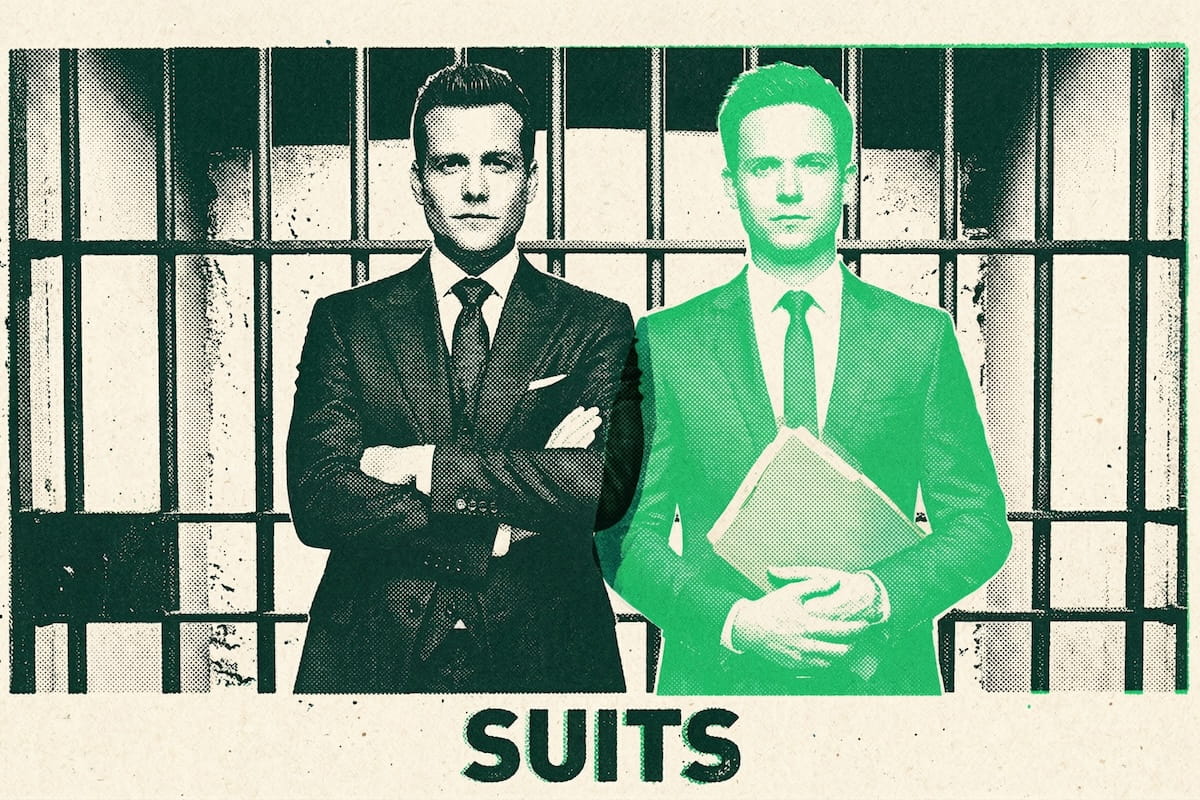
The beloved legal drama turns 15 this June. We rewatched it with a lawyer’s eye, and the rap sheet is worse than we remembered.
Fifteen years ago this June, USA Network premiered a show built on a premise so legally reckless it makes jaywalking look quaint: a college dropout with no law degree walks into a top Manhattan firm and starts practicing law. Millions of viewers loved it. Actual lawyers watched through their fingers.
Suits ran for nine seasons, earned a second life as Netflix’s most-watched acquired series, and even spawned a short-lived Los Angeles spinoff. But the show’s relationship with actual legal ethics was, to put it charitably, creative. The characters didn’t just bend the rules. They shattered statutes, violated professional conduct codes, and committed felonies with the confidence of people who’d never heard of a bar disciplinary committee.
We went back and identified five of the most egregious legal violations on the show, then checked them against real law. Here’s what would actually happen if Harvey, Mike, Donna, and Louis tried this in the real world.
1. Mike Ross Practices Law Without a License. For Years.
This is the big (and obvious) one. The entire premise of Suits is that Mike Ross, a brilliant college dropout, gets hired as an associate at Pearson Hardman by passing himself off as a Harvard Law graduate. He drafts motions, takes depositions, negotiates settlements, appears in court, and advises clients. All without a law degree or bar admission.
On the show, this is treated as a manageable secret. In reality, it’s a crime. In every state! Though the severity varies more than you’d think.
New York (where the show is set): Under Judiciary Law § 478 and Education Law § 6512, unauthorized practice of law is a Class E felony. That carries up to four years in prison, plus fines and restitution. New York upgraded this from a misdemeanor in 2013, specifically because the old penalties weren’t deterring fraud. The legislature found that consumers, particularly immigrants, were being devastated by unlicensed practitioners. Mike wouldn’t just be fired. He’d be indicted.
California: Business & Professions Code §§ 6125 and 6126 make unauthorized practice a misdemeanor for first-time offenders, carrying up to one year in county jail and a $1,000 fine. But repeat offenders face a mandatory minimum of 90 days, and in certain circumstances the charge can be filed as a wobbler, meaning prosecutors can elevate it to a felony carrying up to three years.
Texas: Penal Code § 38.123 classifies unauthorized practice as a Class A misdemeanor, with up to one year in jail and $4,000 in fines. But here’s the kicker: a second conviction bumps it to a third-degree felony, punishable by up to 10 years in prison and $10,000 in fines. Texas also separately makes it a third-degree felony just to falsely hold yourself out as a lawyer under Penal Code § 38.122. That’s exactly what Mike does every day he shows up to work.
Florida: Since 2004, unauthorized practice under § 454.23 is a straight third-degree felony. No misdemeanor warmup. That means up to five years in prison and $5,000 in fines on the first offense. Florida upgraded the penalty after a wave of immigration fraud cases demonstrated the serious harm unlicensed practitioners can cause.
And Mike’s exposure doesn’t stop with his own criminal liability. Harvey Specter, Jessica Pearson, and eventually others who learn Mike’s secret are all potentially on the hook, too. New York’s Rules of Professional Conduct, Rule 5.5(b), flatly prohibits a lawyer from aiding a non-lawyer in the unauthorized practice of law. Education Law § 6512 makes knowingly aiding unlicensed practice a Class E felony in its own right. Harvey wouldn’t just lose his license. He could share a cell block with Mike.
2. Donna Shreds a Confidential Memo in the Coastal Motors Case
In Season 2, Donna Paulsen discovers a memo she signed years earlier related to the Coastal Motors case. She believes the document proves Harvey knew about product defects. Panicking, she shreds it. The memo turns out to have been planted by Daniel Hardman to frame Harvey, but by then the damage is done: Donna is fired, and the firm faces a lawsuit.
The show treats this as a dramatic personal crisis. The law would treat it as a felony.
New York Penal Law § 215.40 criminalizes tampering with physical evidence: destroying, altering, or concealing evidence related to a pending or prospective proceeding. When the underlying case involves a felony, evidence tampering is a Class D felony carrying up to seven years in prison. Even where the underlying matter is civil, the destruction of documents relevant to litigation triggers spoliation sanctions that can include striking pleadings, adverse inference instructions, or monetary penalties. Courts have held that spoliation can rise to the level of criminal obstruction of justice when the destruction is deliberate. Donna’s clearly was, even if her motives were protective rather than malicious.
Under the Rules of Professional Conduct, Rule 3.4(a) prohibits lawyers (and by extension those acting on their behalf) from obstructing access to evidence or destroying material with potential evidentiary value. The fact that Donna isn’t a lawyer doesn’t shield the firm. Harvey and Jessica, as supervising attorneys, bear responsibility for the conduct of non-lawyer employees under their direction.
In a real firm, this wouldn’t just get Donna fired. It would trigger a disciplinary investigation into every attorney who knew about it, and it could result in sanctions severe enough to threaten the firm’s ability to continue operating.
3. Mike Fabricates Emails to Bluff Opposing Counsel
While working on a case with Jack Soloff, Mike shows Jack a folder of incriminating emails purportedly from the opposing party, showing them laughing about people they’d ripped off in a financial scheme. Jack asks how Mike obtained the files. Mike deflects: “There are some things I like to keep to myself.” Basically, telling Jack that what he doesn’t know won’t hurt him. Trust me on this one.
Jack does. In a meeting with the opposing party, Mike brandishes the emails as leverage. Opposing counsel correctly objects that they were clearly obtained illegally and would never be admissible. Mike concedes the point, but counters that they can find employees to corroborate the content under immunity deals. The other side panics and bolts. Jack, who had trusted Mike, is furious.
The twist: Mike didn’t steal the emails. He fabricated them entirely as a bluff.
This might be the most legally catastrophic scene in the entire series. The fact that the emails were fake doesn’t make it better. It makes it worse.
Rule 3.4(b) of the Rules of Professional Conduct is unambiguous: a lawyer shall not falsify evidence. Creating fake documents, even ones you never intend to introduce in court, and presenting them as real to opposing counsel in a negotiation constitutes fraud. Rule 8.4(c) prohibits conduct involving dishonesty, fraud, deceit, or misrepresentation. Mike hits every word in that list.
Beyond ethics rules, fabricating documents can constitute criminal fraud and forgery under New York Penal Law. And the fact that Mike used fabricated evidence to extract a concession in a negotiation means the opposing party could pursue civil fraud claims as well.
In reality, this move would result in immediate disbarment proceedings. If Mike had a license to disbar, which of course he doesn’t, which circles us right back to item one. Jack Soloff, meanwhile, would face his own disciplinary exposure for using evidence he knew had questionable provenance without conducting due diligence.
4. Harvey Receives Evidence From a Mysterious Source on the Street
Harvey has a pattern of meeting informants and private investigators in places that feel more John le Carré than corporate law: park benches, street food carts, dimly lit parking garages. In one memorable scene, a source hands him a flash drive next to a hot dog stand. Harvey never asks where the information came from, takes it back to the office, and uses it.
This one is genuinely grayer than the others, which is part of what makes it interesting.
A lawyer isn’t automatically prohibited from receiving evidence from an anonymous or third-party source. If someone drops a flash drive on your desk, you can examine it. Harvey could plausibly argue that the information was an anonymous tip, and in civil litigation, the exclusionary rules that govern criminal cases don’t apply with the same force. There’s no Fourth Amendment issue when a private party obtains evidence, even improperly, as long as the lawyer didn’t direct the illegal conduct.
But “plausibly defensible” is a long way from “ethical.” Rule 8.4(c) still prohibits conduct involving dishonesty, and Rule 4.4(a) prohibits using methods of obtaining evidence that violate the legal rights of third parties. If Harvey has reason to believe the evidence was stolen (and the clandestine handoff certainly suggests that), he has an obligation to at minimum investigate its provenance. Deliberately avoiding that question to maintain plausible deniability is what lawyers call “willful blindness,” and ethics committees don’t look kindly on it.
Harvey’s real-world play here would be to receive the evidence, flag its uncertain provenance to the court, and seek a ruling on admissibility before using it strategically. What he actually does, deploying it without question, is the kind of shortcut that generates bar complaints.
5. Louis Litt Helps Charles Forstman Evade Taxes
When Louis Litt gets drawn into a deal with the notorious financier Charles Forstman over Gillis Industries, Forstman makes his terms clear: the money flows through Switzerland and the Cayman Islands to avoid taxes. As a sweetener (and an insurance policy), Forstman insists Louis personally take $1 million from the deal, ensuring that Louis can’t turn on him without incriminating himself.
Louis, desperate to one-up Harvey and terrified of going back to Jessica empty-handed, agrees.
This isn’t an ethics violation. This is a federal crime.
Tax evasion under 26 U.S.C. § 7201 carries up to five years in prison and fines of up to $250,000. Routing money through foreign accounts specifically to evade tax obligations is textbook conduct under the statute. It’s exactly the kind of scheme the IRS Criminal Investigation Division was built to prosecute. Louis’s personal $1 million cut makes him a direct participant, not just a facilitator.
Louis would also face exposure under the Bank Secrecy Act for failing to report foreign financial accounts, and potentially under money laundering statutes for helping structure transactions to conceal their nature. His law license? Gone. The New York bar treats felony convictions involving moral turpitude (a category that unquestionably includes tax fraud and money laundering) as grounds for automatic disbarment.
The bitter irony is that Forstman designed the arrangement precisely to create this mutually assured destruction. In the real world, Louis’s best move would have been to report the illegal terms immediately and walk away. His second-best move, once he’d already agreed, would have been to retain separate criminal counsel and cooperate with prosecutors. Instead, he does what Suits characters always do: he keeps the secret and hopes for the best.
The Verdict
Suits is a beautifully constructed show about charismatic people making terrible legal decisions with absolute confidence. That’s what made it fun. But if Pearson Hardman were a real firm, it wouldn’t have survived Season 1. Between the unauthorized practice, evidence tampering, fabricated documents, and federal tax crimes, the entire partnership would be under indictment before the mid-season break.
The real lesson? Dramatic television needs conflict, and legal ethics exist precisely to prevent it. Every rule the Suits characters break was written because some real lawyer somewhere tried something similar, and real people got hurt. The show is entertaining because its characters operate in a world without consequences. The law exists because the rest of us don’t.
What could your case be worth?
Get a quick estimate in under 2 minutes
Explore By What Matters Most
Whether you’re searching by location or case type, we’ll help you get exactly where you need to be.
Find Us Near You
Browse all cities and counties we serve.
See where our attorneys are winning cases every day.

Explore Legal Focus Areas
From car accidents to wrongful death, see every type of case we handle with confidence.

At DK Law we’re with you – all the way.
Get a Free Consultation with our experts today!

Time Matters After an Accident
The sooner you speak with an attorney after an accident, the stronger your claim can be. Early action helps preserve evidence and protect your rights.
No Win No Fee | Available 24×7