Does Physical Therapy Work for Whiplash? What Studies Show
Whiplash is one of the most common injuries from a car crash, and one of the most oversold. It affects around four million Americans a year. Search it, and you’ll find clinics promising to fix your neck with the right adjustment, the right machine, the right package of visits. Most whiplash gets better on its own. What you do in the first weeks mostly affects how fast, and the single most effective thing is also the least dramatic: keep moving.
Key Takeaways
- The best-supported treatment for whiplash is active care: reassurance, staying active, and exercise, often paired with hands-on mobilization from a therapist.
- Resting the neck and wearing a soft collar tends to slow recovery down, not speed it up.
- Passive treatments like ultrasound, TENS, and heat have weak or no evidence behind them.
- About half of people recover fully. The other half keep some level of pain or stiffness, and the first three months usually set the pattern.
What is the best treatment for whiplash?
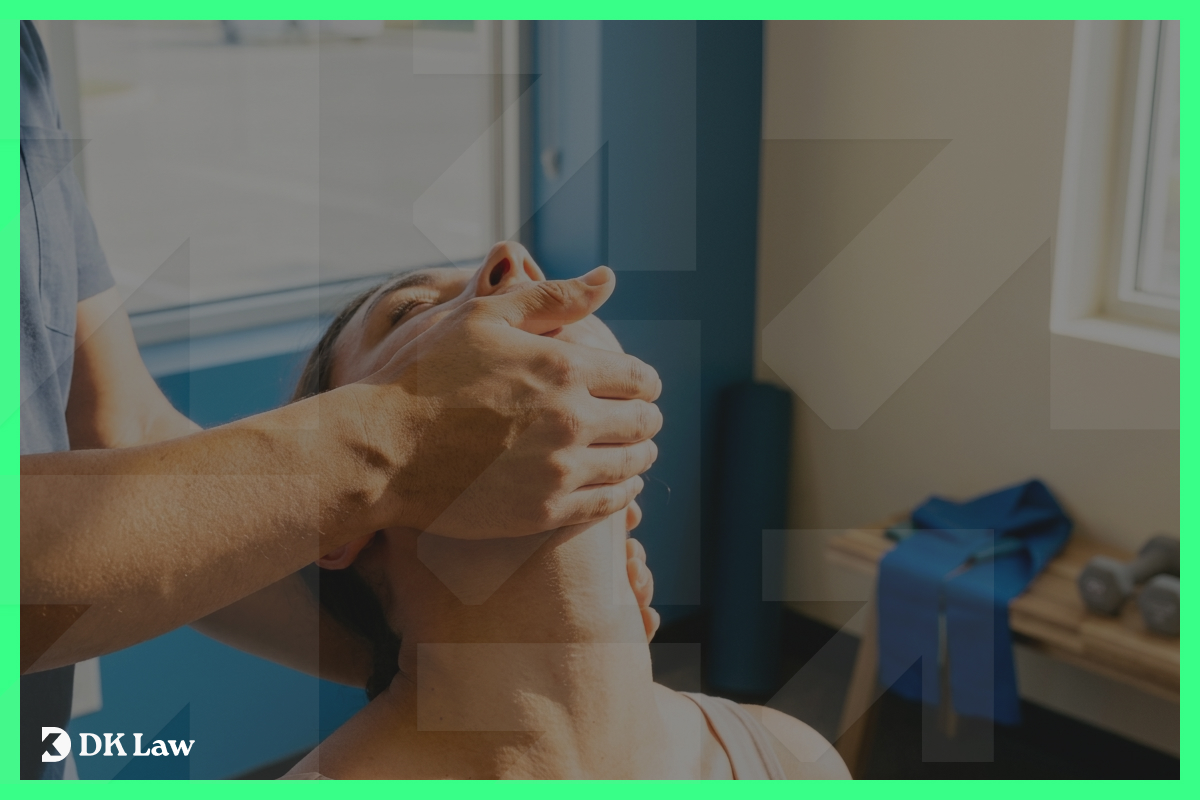
Move it. That’s the short version, and it’s backed by the clinical guidelines physical therapists follow for neck pain, which point to exercise and manual therapy rather than rest. The approach with the most support is what clinicians call multimodal care: a mix of education about what’s going on, reassurance that the outlook is usually good, gentle hands-on mobilization of the joint, and a set of exercises you actually do. Specific neck and shoulder exercises have moderate evidence behind them for ongoing neck pain, which is more than almost any other single treatment can claim.
The studies behind these recommendations are mostly small and imperfect, though, so best-supported does not mean guaranteed to work. It means the evidence leans this way, toward movement and away from sitting still.
Why rest and neck braces can make things worse
The instinct after a neck injury is to protect it. Hold still, put on a collar, wait for the pain to pass. For whiplash, that instinct is usually wrong. Soft collars and immobilization are ineffective and can actually hold recovery back, and one government treatment guideline states flatly that collars should not be used for acute whiplash. When researchers compare people told to rest in a collar with those told to carry on with normal activity, the active group reports less pain and returns to normal neck movement faster.
A stiff, sore neck that you gently keep using recovers better than one you lock down. Counterintuitive, but that’s how it goes.
What actually helps, and what doesn’t
Sort the options by how much evidence stands behind them.
Movement and exercise sit at the top, along with education and reassurance. Hands-on mobilization, meaning the slow, controlled kind a physical therapist does rather than a forceful high-speed manipulation, helps most when it’s paired with exercise instead of done on its own.
Passive treatments sit at the bottom. Therapeutic ultrasound is not worth counting on for lingering whiplash, and heat, electrical stimulation, and similar hands-off gadgets fall in the same weak-evidence category. They might feel nice for an hour. They’re not what gets you better. The pattern holds across the research on neck pain generally: function-focused care beats passive care.
What exercises help whiplash recover?
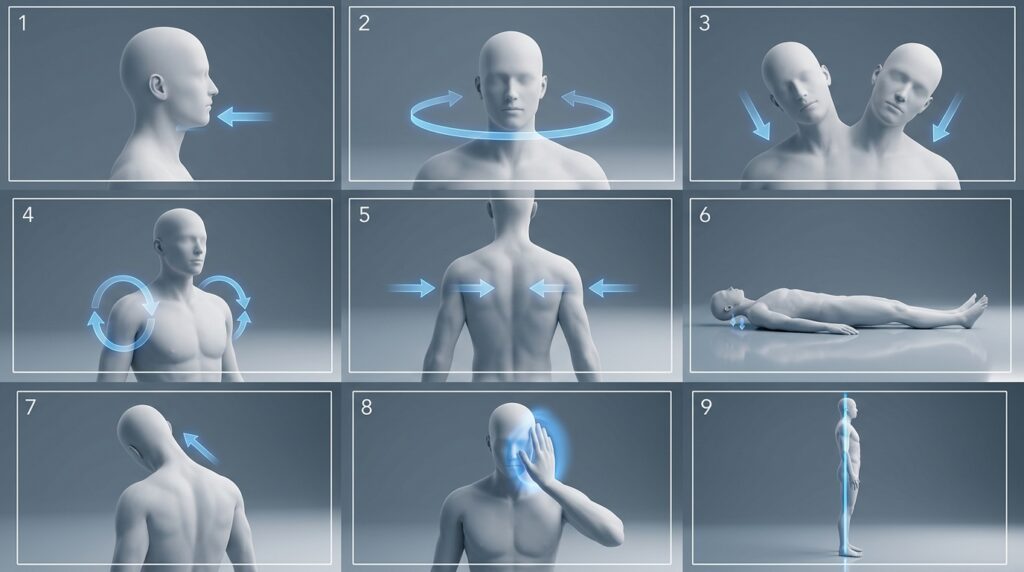
A good program starts gentle and adds load as the neck can take it. A physical therapist sets the pace and the specifics, but the general progression the neck-pain guidelines point to moves through three rough stages.
Early on, the goal is just getting the neck moving again:
- Range-of-motion work: slow turns side to side, tilts, and looking up and down, to fight the stiffness that sets in fast.
- Chin tucks: gently drawing the head back over the shoulders, which works the deep muscles that support the neck and counters the forward-head posture that pain encourages.
- Shoulder rolls and shoulder-blade squeezes: the upper back and shoulders tighten up alongside the neck, and loosening them takes load off it.
As pain settles, the focus shifts to strength:
- Isometric holds: pressing the head lightly against your own hand without actually moving it, which builds strength before the neck can handle movement under load.
- Shoulder-blade and upper-back strengthening: rows and squeezes that support the neck from below.
- Postural endurance: holding an upright, aligned position for longer stretches before fatigue sets in.
Later, the work is about load and control:
- Progressive resistance: for the neck and upper back, added a little at a time.
- Deep neck flexor training: targeted work on the small stabilizing muscles that whiplash tends to weaken.
- Coordination and balance retraining: since whiplash can throw off the head and eye control most people never think about.
Start these under a provider’s guidance rather than off a diagram, and ease off anything that sharply increases pain. The point isn’t any single exercise. It’s the steady move from getting motion back, to building strength, to restoring control.
How long does whiplash take to heal?
Longer than people expect, and unevenly. Roughly half of people with whiplash recover fully. About a quarter are left with moderate to severe lasting pain and disability, and about another quarter with milder ongoing symptoms. Even at six months out, close to half still report some pain and disability. The trajectory tends to lock in early: if recovery is going to happen, most of it shows up in the first three months, with little change after that.
That’s not a reason to panic if you’re not better in a week. Pain from whiplash can take months to fade meaningfully even on a normal recovery path. It is a reason to take the early weeks seriously and get proper care rather than waiting it out in a collar.
Who ends up with long-term symptoms?
Whether whiplash becomes a lasting problem has little to do with how dramatic the crash looked. The strongest predictors are high pain and disability right after the injury, and post-traumatic stress from the event itself. Age, sex, and whether you happen to have an insurance claim are not reliable predictors, despite the old assumption that claimants play it up.
The practical takeaway: if your pain is severe early on, or the crash left you badly shaken, those are the signals to get evaluated properly and stay on top of treatment, not to tough it out alone.
Getting help
If your neck isn’t settling, or the pain is high from the start, see a doctor or a physical therapist. A physical therapist can build the kind of active, progressive program the evidence supports, and check whether anything more serious is going on. Chiropractic is a different approach with a narrower evidence base for the neck, and it’s worth its own look if you’re weighing the two. Either way, the goal is the same: get moving safely, and don’t let the injury quietly settle into something permanent.
This article is general information, not medical or legal advice. For care, see a licensed medical professional.
If a crash left you with a neck injury in California and you’re weighing medical care against a possible claim, DK Law can help you understand your options. Contact us for a free consultation.
DK All the way


From Your Case to Compensation, we take your case all the way.
Schedule a Free Consultation
Get Expert Legal Advice at Zero Cost.
At DK Law we’re with you – all the way.
Get a Free Consultation with our experts today!

Time Matters After an Accident
The sooner you speak with an attorney after an accident, the stronger your claim can be. Early action helps preserve evidence and protect your rights.
No Win No Fee | Available 24×7