


What to Do After a Slip and Fall Accident in California
Most people say they’re fine. It comes out automatically, before you’ve had a chance to work out whether it’s true.
That reflex costs people more than they realize. Not because the words are some kind of confession, but because of what follows. You get up, you apologize to a stranger, you leave. Nobody writes anything down. Somebody mops the floor.
Six weeks later your knee still isn’t right, and there is no record that any of it happened.
Key Takeaways
- Get medical care the same day, even if nothing feels broken. The record connecting your injuries to the fall is created at that visit and nowhere else.
- Ask for a written incident report before you leave, and ask for a copy in your hand.
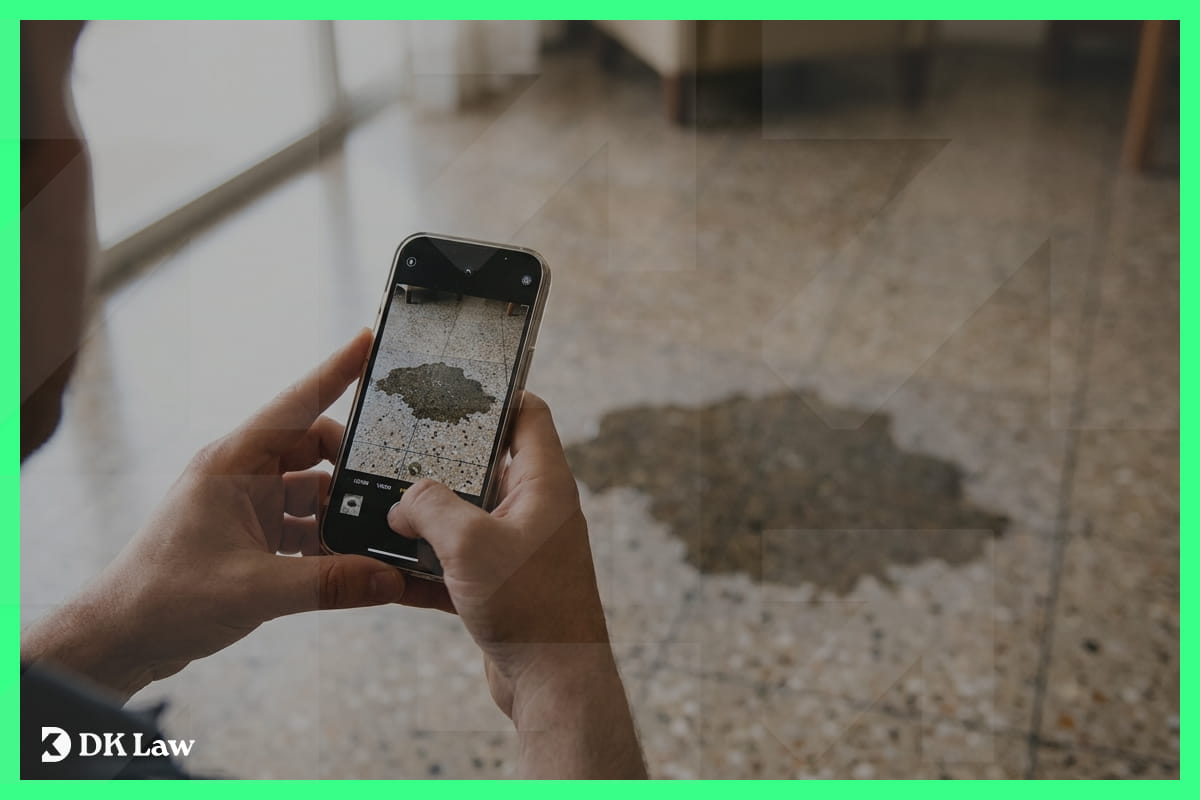
- Photograph the hazard, then photograph the things around it that show how long it had been sitting there.
- Ask whether the location keeps an inspection or sweep log. That document decides more slip-and-fall cases than anything you will photograph.
- If you fell at work on somebody else’s property, you may have two separate claims running at once, and only one of them pays for what the injury actually did to your life.
What should you do first after a slip and fall?
See a doctor the same day. Do not wait and see how it feels later.
Two reasons:
- Adrenaline masks a lot, and head injuries in particular can look like nothing for hours. The CDC lists worsening headache, repeated vomiting, slurred speech, confusion, and unequal pupil size as reasons to get to an emergency room right away after any blow to the head.
- A doctor’s note written the day of the fall says something a note written three weeks later cannot. It ties the injury to the event. A gap in treatment is the first thing an adjuster looks for, and a long one gives them something to argue about that has nothing to do with whether you were actually hurt.
If you cannot get to your own doctor, urgent care counts. So does an emergency room. What matters is that a medical professional wrote down what happened and when.
This article is general information, not medical or legal advice. For care, see a licensed medical professional.
Report the fall before you leave the property
Tell a manager, a supervisor, a landlord, whoever is in charge of the building. Ask them to write an incident report. Then ask for a copy before you walk out the door.
However, plenty of people report a fall, get told a report will be filed, and never see it. Months later nobody can produce it, or the version that turns up describes the fall differently than you remember.
If they will not hand you a copy, photograph the report on the counter. Write down the name of the person who took it and the time. Send yourself a text message describing what happened while you are still standing there, because the timestamp on that message is worth something later.
Keep the description factual. Where you were, what you stepped in or tripped on, what part of you hit the ground. You do not need to explain why it happened, and guessing at that question helps nobody.
What should you photograph?
Photograph the hazard itself, obviously. Wide shot, close shot, a few angles.
Then photograph what’s around it, because that’s the part almost nobody thinks to capture. California juries are asked whether a condition existed long enough that a reasonably careful owner would have discovered it. So what matters most is evidence that shows time has passed, for example:
- Cart tracks running through a spill at the grocery store
- Footprints
- Edges that have started to dry
- Dirt mixed into a puddle
- A scuff pattern on a floor that has clearly been walked on since whatever was spilled got spilled
Any one of those says the hazard sat there long enough to be found, which is a different claim than “the floor was wet.”
Also worth capturing: the lighting, the absence of a warning cone, the shoes you were wearing. Keep the shoes and the clothes and do not wash them.
Ask about the inspection log
This is the single most useful question you can ask.
Most stores, restaurants, and large properties run some kind of inspection routine. Somebody walks the floor on a schedule and signs a sheet, or scans a checkpoint with a handheld. That record exists, and how long it has been since the last inspection is frequently what the whole case turns on.
You will probably not be handed it on the spot. Ask anyway, and note who you asked and what they said. If a lawyer gets involved early enough, that document can be requested before it cycles out of the system. The same goes for surveillance video, which at many businesses overwrites itself on a loop measured in weeks.
What changes if you fell at work?
A fall on the job runs on a different track, and one detail catches people off guard: where you were standing decides how many claims you have.
If you fell on your own employer’s property, workers’ compensation is generally the only route against them. It pays medical treatment and a portion of lost wages without anyone arguing about fault, which is the tradeoff at the center of the system.
If you fell somewhere else while working – a client’s warehouse, a patient’s home, a lobby controlled by a building owner rather than your employer, California law says your comp claim does not affect your right of action against anyone other than the employer. Both can run at the same time. That matters because workers’ compensation pays nothing for pain and suffering. The claim against the property owner is the only one that does.
Two things to know about the comp side:
Your employer has to hand you a claim form within one working day of learning about an injury that costs you time or requires more than first aid. Not thirty days. One. If nobody has given you a DWC-1 form, that is a problem worth naming out loud.
Once you file it, the employer has to authorize treatment while the claim is being reviewed, with liability for that interim care capped at ten thousand dollars. You do not have to sit and wait for an approval letter to see a doctor.
One warning that matters more than the rest. An open workers’ compensation claim does nothing to protect a claim against a property owner. They are separate systems with separate clocks, and people lose the second one while the first is going perfectly well.
What you should avoid saying
Skip the apology. It’s a natural reflex, and everyone understands that, but it still ends up in a report.
Avoid guessing at what happened. Saying something like “I must not have been watching where I was going” speculates about your own conduct before you even know what was actually on the floor. California reduces damages by a person’s share of fault rather than barring the claim entirely, a process our plain-English guide to comparative negligence explains in more detail, but there’s no reason to hand anyone a percentage of fault for free.
Decline the recorded statement, at least until you have talked to someone. An adjuster may call within a day or two, friendly and sympathetic, asking you to walk through it while it is fresh. That conversation is recorded for a reason, and there is a whole playbook behind it that we cover in how to counter insurance adjuster tactics.
Stay off social media about it. Not just photos of you doing something physical, but the check-in, the vague complaint, the joke about being clumsy. Surveillance and social media monitoring are standard, not exotic.
How long do you have to file?
California generally gives you two years from the date of injury to file a personal injury lawsuit, and our full breakdown of the statute of limitations covers the exceptions.
One situation is different enough to flag here: if you fell on public property – a city sidewalk, a county building, a transit platform, a school campus, the deadline to notify the agency is measured in months, not years, and it comes long before you’d ever file a lawsuit. If that describes your fall, talk to someone early rather than assuming you have the standard two years.
Everything else on this page still applies either way: the medical visit, the report, the photographs, and the log.
Talk to someone about your case
Falls look simple and almost never are. The hard question is rarely whether you fell or whether it hurt. It is whether anyone can show the property owner should have dealt with the hazard before you got there, and that question gets answered with evidence that starts disappearing the same afternoon.
If you were hurt in a fall in California, DK Law offers a free consultation. We can talk through what happened, what records still exist, and whether a claim is worth pursuing.
DK All the way


From Your Case to Compensation, we take your case all the way.
Schedule a Free Consultation
Get Expert Legal Advice at Zero Cost.
At DK Law we’re with you – all the way.
Get a Free Consultation with our experts today!

Time Matters After an Accident
The sooner you speak with an attorney after an accident, the stronger your claim can be. Early action helps preserve evidence and protect your rights.
No Win No Fee | Available 24×7